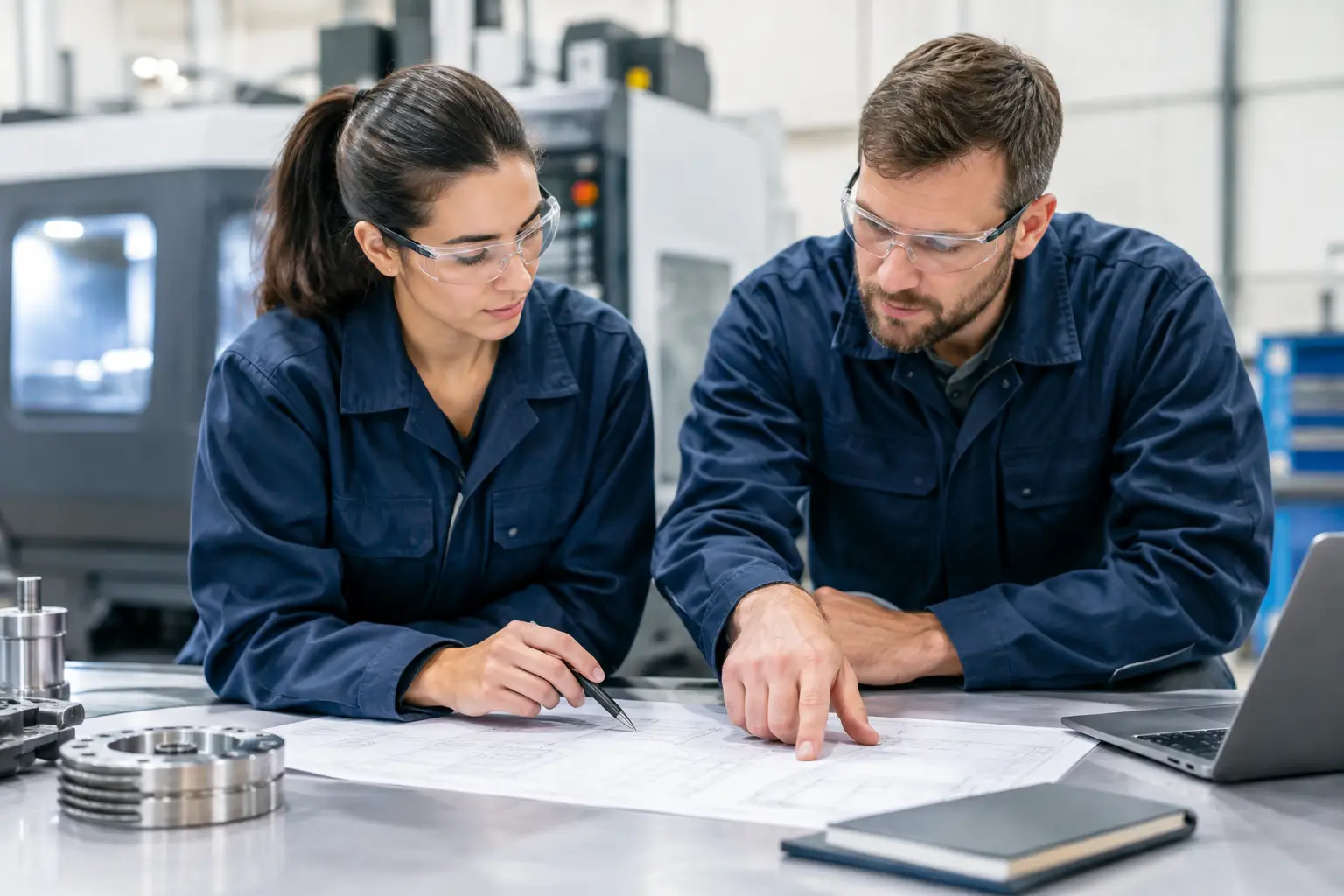
A factory can make almost anything once it has the right information. The expensive mistakes happen before production begins: a product is quoted from an unfinished CAD file, a prototype is mistaken for a production-ready design, or a supplier is selected before the real requirements are defined. Knowing how to prepare for manufacturing means turning an idea into a controlled, repeatable product that can be built at the right quality and cost.
For inventors and growing businesses, this stage is where an exciting concept becomes a commercial decision. It requires more than a good-looking model. You need evidence that the product works, that its components can be sourced, that it can be assembled efficiently, and that a manufacturer can build it consistently.
Manufacturing Starts With Clear Product Requirements
Before requesting quotes or contacting factories, define what the product must do and what cannot be compromised. A manufacturer needs more than dimensions. They need to understand materials, performance expectations, safety considerations, visual requirements, target volumes, and the intended customer experience.
Start with the problem your product solves. Who will use it? Where will they use it? What forces, temperatures, moisture, wear, charging cycles, or cleaning conditions will it face? A consumer kitchen product, for example, needs different material decisions than a medical-adjacent device or an industrial accessory. The answer affects the design, test plan, packaging, and supplier selection.
It also helps to separate must-have requirements from preferences. A particular color, finish, or feature may be desirable, but it could add tooling cost, longer lead times, or a higher failure risk. This does not mean sacrificing the product vision. It means making deliberate decisions before those trade-offs become expensive changes on the factory floor.
Define the business case early
A design can be technically possible and still fail as a business. Set a target unit cost based on your expected selling price, distribution model, shipping costs, retail margins, and planned profit. A factory quote should be measured against a financial model, not simply accepted because it is the lowest number.
Production volume matters too. A process that makes sense for 200 units may be completely wrong for 20,000. Low-volume production may justify machining, hand assembly, or soft tooling. Higher volume can support injection molds, custom fixtures, automated assembly, and supplier commitments that lower the unit cost over time.
How to Prepare for Manufacturing Through Engineering
The transition from prototype to production should be an engineering process, not a leap of faith. A prototype proves that an idea has potential. Manufacturing engineering proves it can be made repeatedly.
Design for manufacturing and assembly
Design for manufacturing, often called DFM, examines whether each part can be produced reliably with the selected process. For plastic parts, this may include wall thickness, draft angles, ribs, parting lines, tolerances, and material shrinkage. For sheet metal, it can involve bend radii, hole placement, weld access, and finishing requirements. For electronics, it includes component availability, board layout, test access, enclosure fit, and assembly sequence.
Design for assembly asks a related question: can people or equipment put the product together quickly and correctly? A design with too many fasteners, hard-to-reach connectors, loose wires, or easily reversed parts increases labor cost and quality risk. Small changes at this point can remove entire assembly steps.
The best solution depends on your product and expected volume. A highly refined design may cost more to tool upfront but save money on every unit. For a first production run, a simpler approach can be smarter if it lets you validate demand without overcommitting capital.
Build prototypes that answer specific questions
Not every prototype needs to look like the final product. Use each prototype to reduce a particular risk. An early proof-of-concept model may test a mechanism or electronic function. A later appearance prototype can evaluate ergonomics, size, and customer response. An engineering prototype should test materials, tolerances, assembly, and performance under realistic conditions.
Avoid treating a 3D-printed model as final proof that a molded, machined, or mass-produced part will behave the same way. Printing is fast and useful, but production materials and processes can change strength, surface finish, flexibility, fit, and long-term durability. Test the design using materials and methods that are as close to production as practical.
For products with moving parts, electronics, batteries, fluid paths, or load-bearing features, create a test plan before the final design freeze. Test the conditions most likely to create returns, warranty claims, or safety issues. A failure discovered during prototyping is useful information. The same failure after inventory has shipped is a costly problem.
Create a Production Package a Factory Can Use
A manufacturer cannot build consistently from a few renderings and verbal instructions. Your production package should communicate exactly what needs to be made, how it should perform, and how quality will be judged.
The package commonly includes:
- Final 2D drawings with dimensions, tolerances, materials, finishes, and revision levels
- Production-ready 3D CAD files for each component and assembly
- A bill of materials with approved components, part numbers, quantities, and supplier details where applicable
- Assembly instructions, wiring diagrams, test procedures, and packaging specifications
- Quality standards that define acceptable and unacceptable parts, including cosmetic criteria
Revision control is essential. Every drawing, CAD model, and specification should have a clear version. If a supplier receives conflicting files, they may build the wrong version, and responsibility becomes difficult to sort out. A disciplined release process protects your schedule and prevents a small change from creating a production mismatch.
Select Suppliers for Capability, Not Just Price
A low quote can become the highest-cost choice if the supplier lacks the right equipment, process knowledge, quality controls, or communication practices. Ask prospective manufacturers what similar products or processes they handle, what volumes they support, how they inspect parts, and how they manage engineering changes.
Request quotes from enough qualified suppliers to understand the market, but do not make the decision on price alone. Compare tooling costs, unit costs at different volumes, lead times, minimum order quantities, payment terms, sampling procedures, and assumptions hidden in the quote. One supplier may include packaging, testing, and inspection while another prices only raw part production.
Communication is part of manufacturing capability. The right partner asks questions when requirements are unclear and identifies risks before cutting tooling or ordering materials. A supplier who agrees to everything without reviewing the design carefully may create problems later.
Run a Pilot Build Before Full Production
A pilot build is the bridge between engineering and launch. It reveals issues that individual prototypes cannot: material shortages, assembly bottlenecks, unclear work instructions, packaging failures, cosmetic inconsistencies, and unexpected labor time.
During the pilot, inspect parts against your approved standards and document every issue. Measure critical dimensions, test functionality, review packaging, and confirm that labels, manuals, and accessories are correct. If the product includes electronics, verify charging, firmware loading, connectivity, and final functional testing. If it will be sold in regulated or safety-sensitive categories, confirm the applicable compliance path before committing to a large production order.
Do not rush past this stage because the product looks finished. The pilot is where you learn whether the factory can reproduce your approved sample at scale. A short delay to correct tooling, clarify instructions, or improve a fixture is usually far less costly than reworking hundreds or thousands of units.
Protect Cost, Quality, and Intellectual Property
Prepare for normal production variation. Set acceptable tolerances and cosmetic limits rather than expecting every unit to be identical. Define which features are critical to safety, function, fit, and appearance, then focus inspection where it matters most. Over-inspecting noncritical details raises cost without necessarily improving the customer experience.
At the same time, protect the value you have created. Keep ownership, confidentiality, tooling rights, and file access clear in your supplier agreements. If intellectual property is central to your business, coordinate product development with a patent strategy early enough to avoid public disclosure issues and poorly documented invention details.
Industry of Concepts helps clients connect those decisions, from functional prototypes and engineering validation to manufacturing preparation and patent-oriented development. The goal is not simply to make a product once. It is to create a product you can confidently produce, improve, and bring to market.
Your first production run does not need to be perfect, but it must be intentional. Make the next decision based on tested facts, complete documentation, and a realistic understanding of cost. That is how an idea earns the chance to become a product customers can trust.