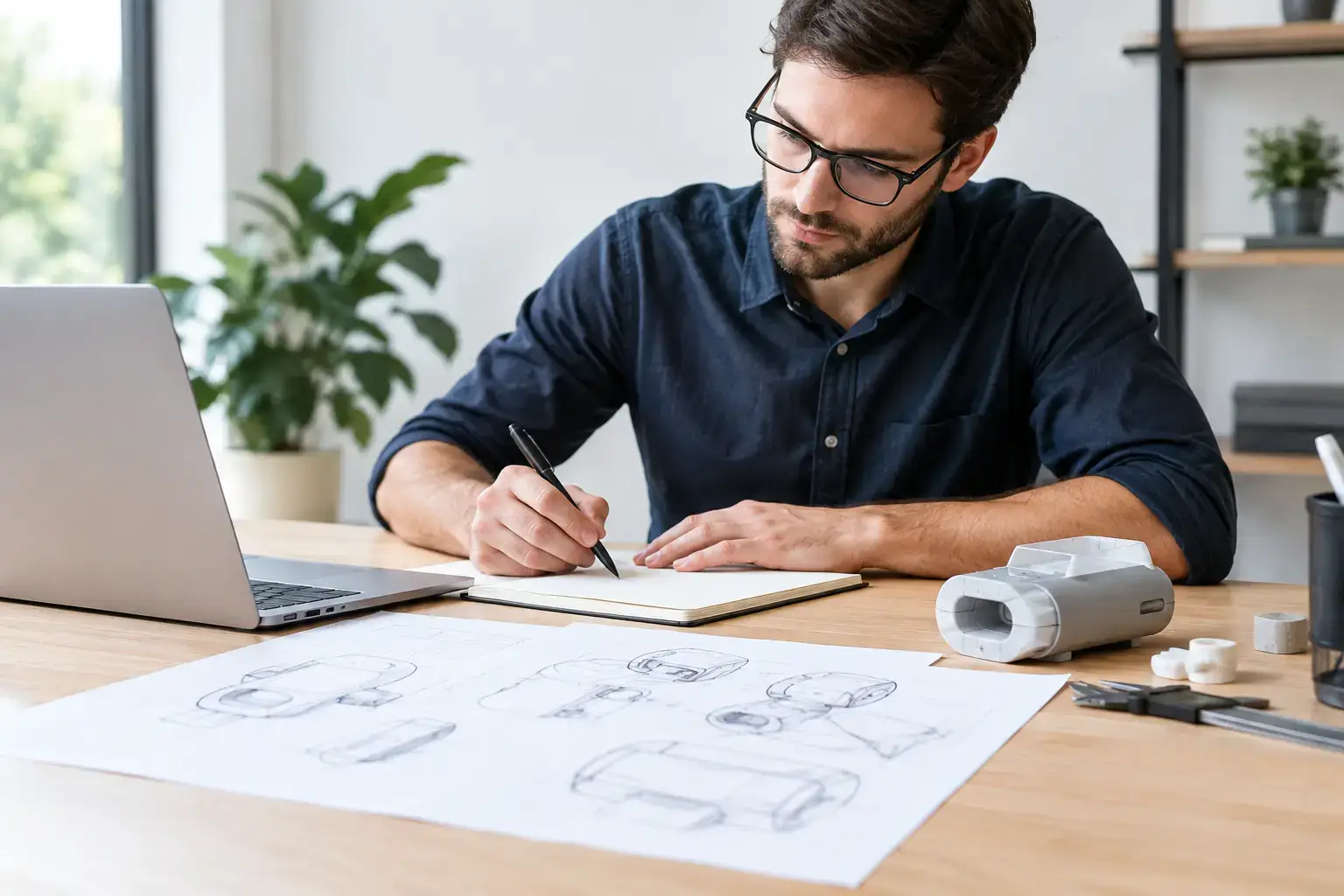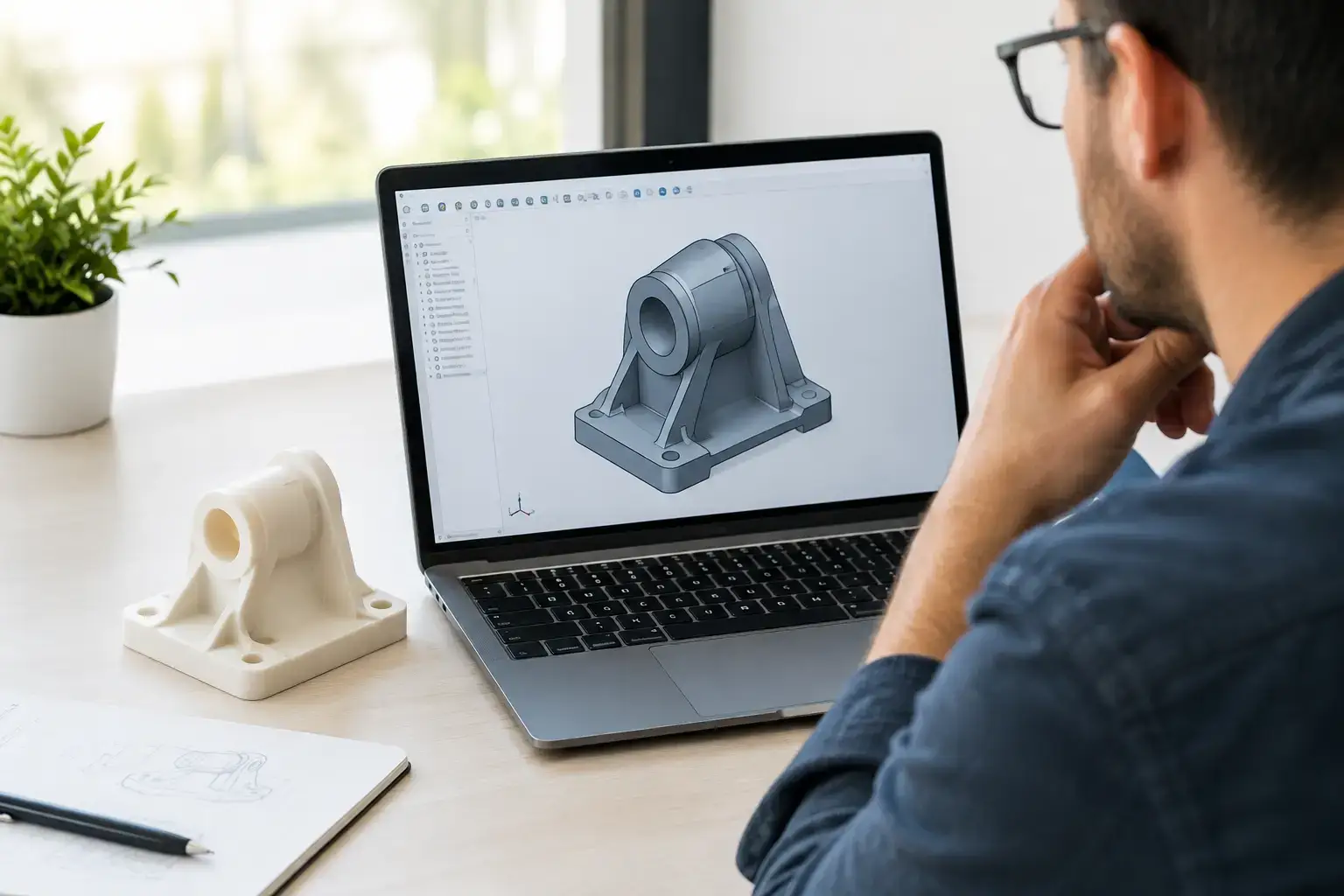
A sketch can explain an idea. A conversation can create momentum. But computer modeling is where a product begins to face practical questions: Will the parts fit? Can it be manufactured? Is there room for the battery, fasteners, wiring, or internal mechanism? Before money is committed to tooling or multiple prototype rounds, a well-built digital model gives inventors and product teams something real to evaluate.
For entrepreneurs, that shift matters. It turns a concept from something you can describe into something an engineer, prototype shop, manufacturer, and patent professional can review with far greater clarity.
What computer modeling does for a new product
Computer modeling is the process of building a detailed digital representation of a product and, when needed, its individual components and assemblies. Often created in computer-aided design software, or CAD, the model defines geometry, dimensions, materials, moving relationships, and other engineering details that cannot be reliably communicated through hand sketches alone.
For a simple product, that may mean modeling an enclosure, cap, latch, or mounting feature. For a more complex invention, it can include housing geometry, internal electronics, motors, gears, springs, circuit board locations, seals, buttons, and connection points. Each element is placed with a purpose, then reviewed as part of the whole.
The benefit is not merely a better-looking rendering. A useful model exposes decisions early, when changes are faster and less expensive. A wall that looks fine in a sketch may be too thin for molding. A moving arm may collide with the housing. A battery compartment may leave no room for the switch. These are normal development findings, not failures. Finding them digitally is far preferable to finding them after a prototype has already been built.
From a rough idea to an engineering-ready design
The right level of modeling depends on where the product is in development. An early concept does not need every screw, texture, and production detail on day one. It needs enough definition to answer the most urgent questions about use, size, layout, and technical feasibility.
Start with how the product must work
Before a designer models the outer shape, the development team needs a clear understanding of the product’s purpose. What problem does it solve? Who uses it? What must happen when the user presses, pulls, carries, mounts, charges, opens, or cleans it?
This conversation establishes requirements. For example, a handheld device may need to fit a certain hand size, survive a drop, hold a replaceable component, and operate with one hand. A kitchen product may need to accommodate heat, moisture, repeated washing, and food-safe materials. Those requirements influence the model from the first dimensions onward.
A good development partner will also identify assumptions that need to be tested. Some can be reviewed digitally. Others require a physical prototype. The point is to make informed choices instead of moving forward on guesswork.
Build the form around the function
Industrial design and engineering should work together. The external appearance has to attract buyers and communicate how the product is used, but internal components need physical space and support. The most successful models balance both needs.
This is where many independent inventors run into trouble when they rely only on a visual rendering. A beautiful image may not show wall thickness, assembly points, draft angles, tolerances, or the volume required for working components. It can sell a vision, but it cannot always guide production.
A production-minded computer model considers the outside and the inside. It asks whether parts can be assembled, whether they can be serviced when necessary, and whether the manufacturing process supports the intended design. That discipline protects the concept while preparing it for real-world execution.
Why digital testing saves time and prototype costs
Computer modeling gives a team a controlled environment for reviewing the product before physical materials are ordered. Dimensions can be adjusted, assemblies can be checked for interference, and design alternatives can be compared without starting from scratch.
For products with moving parts, this is especially valuable. A hinge, slider, latch, gearbox, or dispensing mechanism may work in theory yet fail when component clearances are considered. Modeling helps reveal where motion is restricted, where force may be concentrated, and where parts need refinement.
Digital analysis can also be useful, depending on the product. Engineering teams may evaluate structural loading, heat, airflow, fluid behavior, or electrical layout. Not every invention needs every type of analysis. Running advanced simulations on a basic consumer item can add cost without creating meaningful value. On the other hand, skipping analysis for a product that carries load, generates heat, or contains a critical mechanism can create avoidable risk.
The right question is not, “How much modeling can we do?” It is, “What decisions must we make before we build?” That keeps development focused and helps founders spend their budget where it has the greatest impact.
Computer modeling for prototypes and patent support
A digital model often becomes the bridge between concept development and rapid prototyping. Once the geometry is established, files can be prepared for 3D printing, CNC machining, sheet-metal fabrication, or other prototype methods. The model gives prototype makers a defined starting point, reducing ambiguity and helping the first build better reflect the intended design.
Physical prototypes still matter. They reveal how a product feels in the hand, how users interact with it, and whether the mechanism performs as expected outside a computer screen. But the prototype should be informed by a thoughtful model, not used as a substitute for basic engineering planning.
Detailed computer modeling can also support patent-oriented product development. A model helps document the configuration of components, their relationships, and the functional features that make an invention distinct. It can provide clear visual material for discussions with patent counsel and help a team describe the invention with greater consistency.
That said, a CAD model does not by itself create patent protection, and an engineering firm should not promise legal outcomes. Patentability and filing strategy require qualified legal guidance. What strong product development can provide is a more developed, technically coherent invention for that process.
Design for manufacturing should begin before tooling
Many products look achievable until manufacturing requirements enter the discussion. Injection molding may require consistent wall thickness, proper draft, and careful attention to undercuts. Machined parts have tool-access limits. Metal components may need bend allowances and joining strategies. Electronics must be protected from impact, heat, moisture, and electrical interference.
Addressing these factors during computer modeling is far less disruptive than correcting them after tooling begins. Tooling changes can be expensive, and late redesigns can delay a launch just when a startup needs momentum.
This does not mean every early model must be locked into a final manufacturing process. In fact, early flexibility is valuable. A team may prototype in 3D-printed plastic while planning a future molded housing, or test a mechanism with off-the-shelf components before designing custom parts. The model should evolve as the product earns more investment and the production plan becomes clearer.
Choosing the right development partner
The value of computer modeling depends on the people behind it. A modeler can create accurate geometry, but product development requires broader judgment: how a user will interact with the product, how components will be sourced, what a prototype needs to prove, and what manufacturing method makes commercial sense.
Inventors and businesses should look for a team that asks practical questions before it starts drawing. They should expect clear communication about scope, deliverables, revisions, prototype goals, and the assumptions behind the design. They should also understand who will own the resulting development files and how those files will be used as the project moves forward.
At Industry of Concepts, computer modeling is treated as part of a larger path from idea to working product. The goal is not to create a digital object that sits on a screen. The goal is to make better decisions, build more meaningful prototypes, and move toward a product that can be protected, produced, and brought to market.
Your idea does not need to arrive fully engineered. It needs a clear purpose and the willingness to test it. With the right model and the right technical guidance, the next version of your concept can be one that is ready to build.