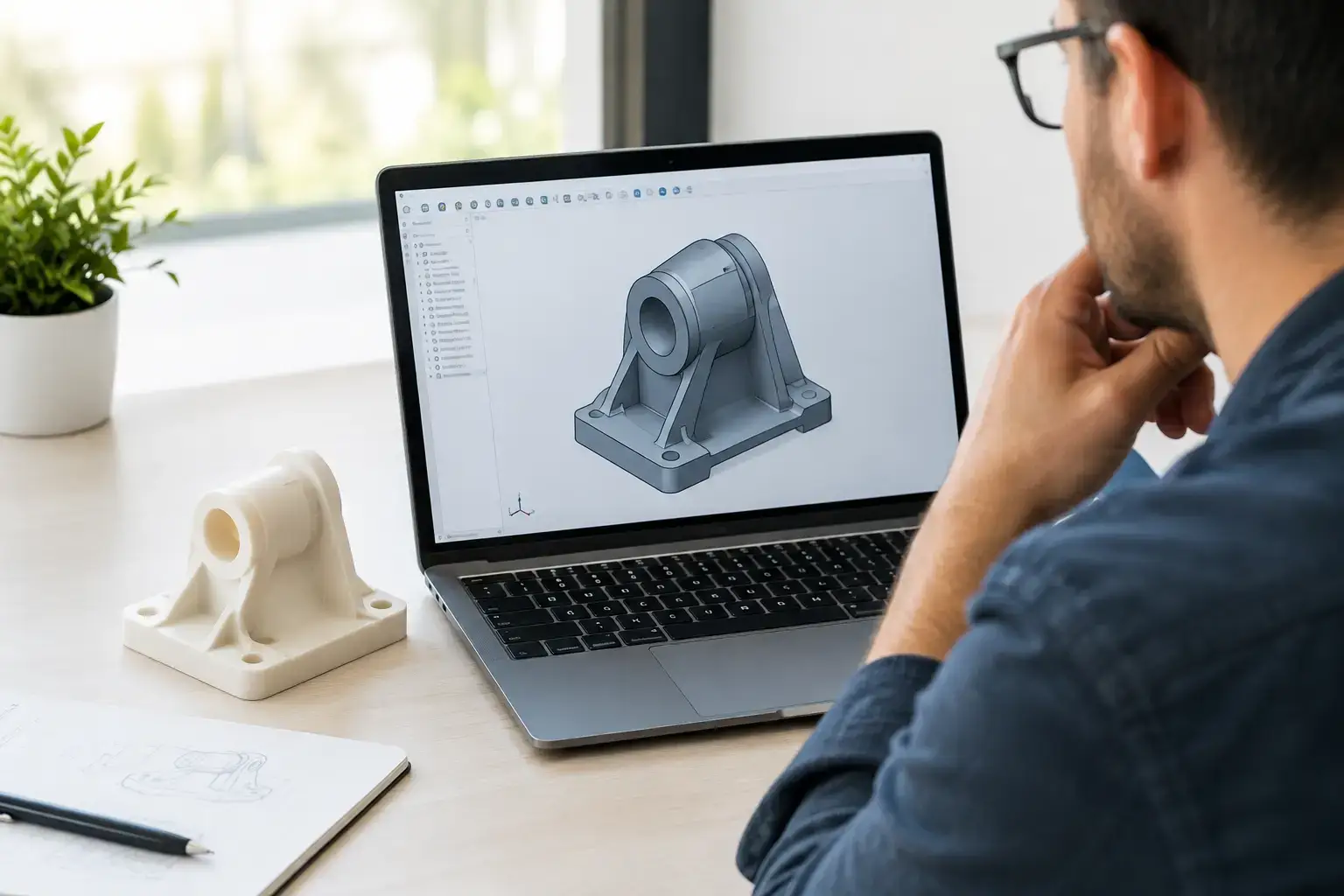
A prototype can prove that your idea works. It does not automatically prove that you own every drawing, CAD file, line of code, invention detail, or improvement created along the way. This intellectual property ownership guide helps inventors and product founders establish control before a promising idea becomes a costly dispute.
When you hire a designer, engineer, prototype shop, manufacturer, or software developer, you are bringing valuable expertise into your project. You are also creating new questions: Who owns the work product? Can the contractor reuse it? What happens if the relationship ends? Clear answers should be built into the project from the start.
Why Intellectual Property Ownership Must Be Decided Early
Many product ideas begin with a conversation, a notebook sketch, or a rough proof of concept. At that stage, ownership can feel obvious. The inventor had the idea, so the inventor assumes everything that follows belongs to them.
Legally and commercially, it is not always that simple. A product development partner may create technical drawings, circuit designs, firmware, tooling concepts, test methods, renderings, or manufacturing documentation. Without a written agreement that addresses ownership, rights may remain with the person or company that created those materials.
That uncertainty can slow down patent filings, fundraising, licensing, manufacturing quotes, acquisitions, and product launches. A buyer or investor will want to know that the company selling the product has the right to use and transfer the intellectual property behind it. If key rights are unclear, your leverage drops.
The best time to address ownership is before detailed development begins. It is much easier to define expectations in a proposal or development agreement than to reconstruct them after a prototype is complete.
Know What You May Be Protecting
Intellectual property is not one thing. A single market-ready product may involve several forms of protection, each with different rules and ownership considerations.
A patent may protect a new and useful invention, such as a mechanical feature, manufacturing method, electronic system, or functional improvement. A design patent may protect the product’s ornamental appearance. Copyright can apply to original drawings, software code, written materials, and certain creative design elements. A trademark protects brand identifiers, including names, logos, and product branding. Trade secrets can cover confidential know-how, formulas, specifications, processes, supplier information, and other business information that gains value from staying private.
Not every product needs every type of protection. A consumer device with a distinctive mechanism may call for a utility patent strategy, while a brand-led product may place greater emphasis on trademarks and trade secret controls. The right approach depends on what makes your product valuable and how competitors could copy it.
Your Idea and the Work Created Around It
A useful distinction is between your background intellectual property and project-created intellectual property. Background IP includes what you owned or developed before hiring a partner: your original concept, research, sketches, brand assets, prior patent filings, and proprietary methods.
Project-created IP is the work developed during the engagement. This can include refined mechanisms, CAD models, engineering calculations, test fixtures, source code, prototype documentation, and production-ready files. Your agreement should state which category each item belongs to and who owns it.
Be especially careful when a development partner contributes pre-existing tools, libraries, standard components, or engineering methods. A capable firm should be able to distinguish between its reusable internal know-how and the custom deliverables created specifically for your product. You may need broad rights to use the deliverables without requiring the firm to give away every general-purpose process it has developed over years of work.
Get Ownership Terms in Writing
Verbal promises are not enough when a product has commercial potential. Your written agreement should clearly address ownership, confidentiality, payment, and deliverables. It should also identify the legal entity that will own the IP. If you are forming a company, decide whether the individual inventor or the company will be the owner before filing patents and signing development contracts.
An effective agreement generally explains that the client owns defined project deliverables upon payment, or that the developer assigns all right, title, and interest in specified inventions and materials to the client. The exact language matters. A statement that says you can “use” the work may only provide a license, not ownership.
If patentable inventions may arise, the agreement should include an assignment obligation and a commitment to sign additional documents needed for patent filings or ownership transfers. This becomes critical if an engineer, consultant, or contractor later leaves the project.
Do not assume the phrase “work made for hire” solves every issue. It has specific legal applications and may not cover all materials or all independent-contractor relationships. A direct assignment provision is often needed. Work with qualified intellectual property counsel to review agreements and filing strategy for your situation.
Questions to Resolve Before Development Starts
Before you approve a proposal, get practical answers to these questions:
- What exact deliverables will I receive, including native CAD files, source files, drawings, specifications, and test reports?
- When does ownership transfer: at creation, at final payment, or under another milestone?
- Will the development firm retain rights to pre-existing tools, standard components, or general know-how?
- Who owns improvements, alternative designs, and inventions created during testing?
- Is everyone who works on the project bound by confidentiality and IP assignment obligations?
- What happens to my files and rights if the project pauses or ends early?
These are business questions as much as legal ones. Clear terms reduce confusion, protect the relationship, and give the project a cleaner path toward commercialization.
Protect Confidential Information Before You Share Details
Non-disclosure agreements can be useful, but they are only one part of a sound protection plan. An NDA should identify confidential information, explain permitted use, and require reasonable care in handling your materials. It should also account for common exceptions, such as information that is already public or independently developed.
At the same time, an NDA does not transfer ownership. It does not guarantee patent rights. It does not replace a development agreement with clear assignment language.
Be disciplined about what you share and when. Keep dated records of your concept development, including sketches, prototype photos, technical notes, design revisions, and communications. Use controlled file access, identify confidential documents, and avoid publishing key invention details before you understand the patent consequences.
Public disclosure can affect patent options, particularly outside the United States. Showing a product at a trade show, posting a detailed demonstration online, launching a crowdfunding campaign, or offering the invention for sale can create timing issues. Speak with patent counsel before public exposure if protection is part of your business plan.
Ownership Risks in Prototyping and Manufacturing
Prototyping is where an idea becomes real, which is exactly why ownership details become more valuable. A prototype shop may make custom tooling, modify a design for manufacturability, or create files required for production. A manufacturer may recommend material changes, alter dimensions, or develop assembly methods.
Those contributions can be useful and necessary. But they should not create uncertainty about who controls the final product. Your agreements should address prototype materials, tooling, molds, manufacturing drawings, quality documentation, and approved design changes.
Tooling ownership deserves special attention. If you pay for a custom mold, fixture, jig, or production tool, confirm who owns it, where it will be stored, who can access it, and what happens if you move production to another supplier. Paying for tooling does not always mean you automatically receive unrestricted possession or transfer rights.
Manufacturing partners also need enough information to do their work, but they should not receive broader rights than necessary. Limit use of your designs and specifications to the authorized project. If a supplier develops a process improvement that is broadly applicable, the ownership arrangement may require negotiation. There is no one-size-fits-all answer, but silence is rarely in your favor.
Keep a Clean Chain of Title
A clean chain of title means you can show how ownership moved from each creator to the final owner, usually you or your company. This is one of the most practical outcomes of good IP planning.
Maintain a central project file containing signed NDAs, development agreements, contractor assignments, employee invention agreements, patent filing documents, invoices, design records, and version-controlled deliverables. If you add a co-founder, consultant, or specialist engineer, make sure their agreement addresses inventions created in connection with the business.
For startup founders, this should happen before serious fundraising. Investors may ask whether all founders, employees, and contractors have assigned relevant IP to the company. A missing signature can become a major diligence issue, even when everyone involved is acting in good faith.
Turn Ownership Into a Commercial Advantage
Strong ownership terms do more than prevent disputes. They help you make decisions with confidence. You can seek manufacturing quotes, license your invention, pursue patent protection, bring in investors, sell through retail channels, or negotiate a future acquisition knowing that the underlying assets are organized.
Product development works best when engineering, documentation, and intellectual property planning move together. At Industry of Concepts, the goal is not simply to build a prototype that looks convincing. It is to help create a functional development path that supports protection, production, and a stronger commercial position.
Your idea deserves more than a handshake and a folder of files. Establish ownership early, document every contribution, and make each development decision with the future value of your product in mind.