A functional prototype versus mockup decision can determine whether your next development dollar reveals a real problem or merely produces a convincing-looking object. For inventors and product founders, both are valuable. The mistake is treating them as interchangeable when they answer very different questions.
A mockup helps people see, hold, and react to an idea. A functional prototype helps you prove that the idea can actually do what you claim. Knowing which one you need first keeps development focused, supports stronger conversations with engineers and manufacturers, and helps you avoid wasting your ideas on the wrong type of build.
Functional Prototype Versus Mockup: The Core Difference
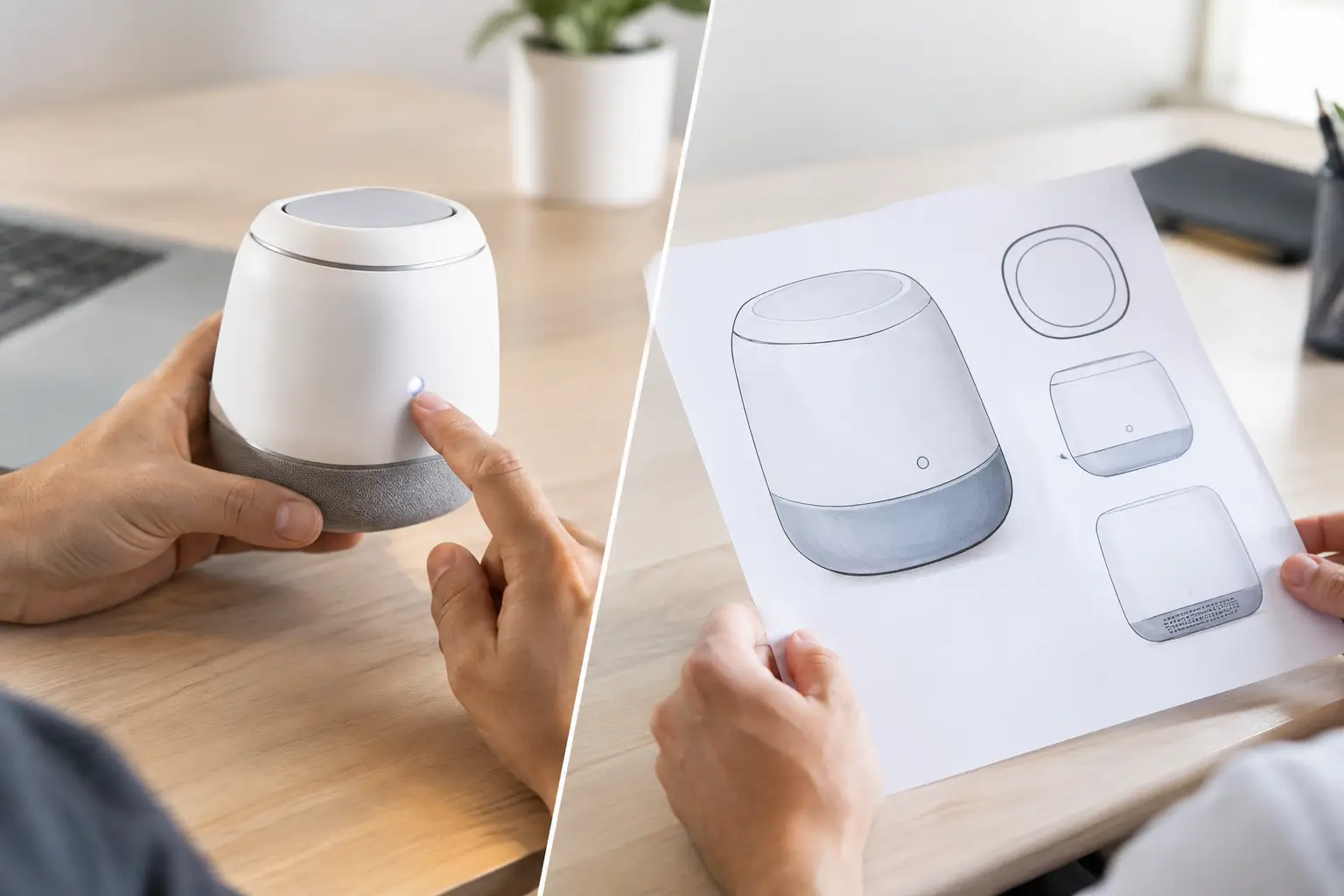
A mockup is a visual or physical representation of a product. It may show the intended size, shape, user interface, colors, materials, or brand direction. It can range from a foam model to a 3D-printed shell, a polished rendering, or a non-working display unit. Its primary job is communication.
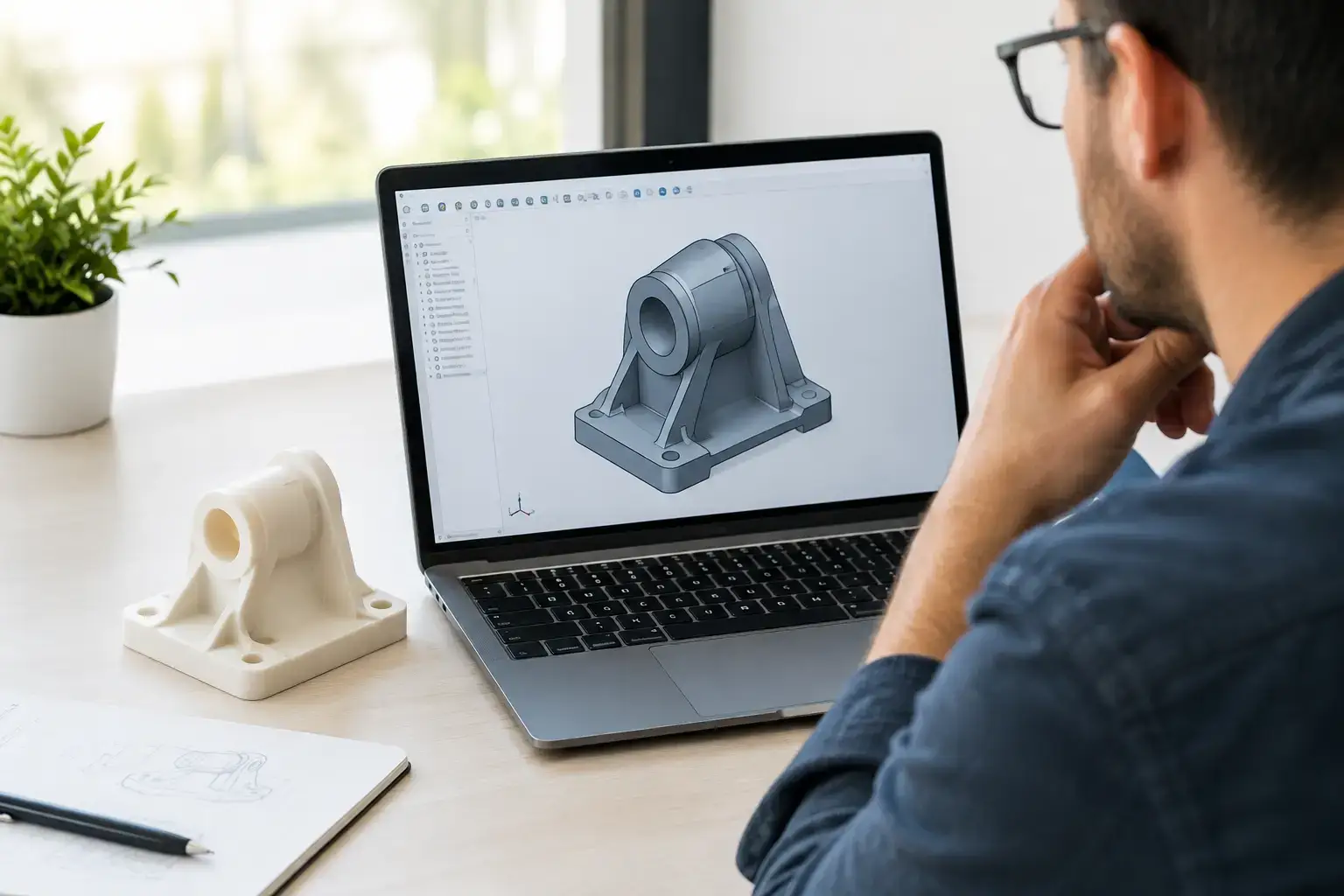
A functional prototype is built to test performance. It contains enough working components, mechanisms, electronics, software, or material behavior to demonstrate a specific function. It may not look finished. In fact, many of the most useful functional prototypes look rough because their purpose is to expose engineering questions early.
Consider a smart water bottle. A mockup might show the bottle’s profile, cap design, display location, and grip. It can help prospective users decide whether the product feels premium, portable, or easy to use. A functional prototype would test whether the sensor reads water intake accurately, whether the electronics survive moisture, whether the battery lasts, and whether the cap mechanism seals reliably.
One model sells the vision. The other tests the promise.
What a Mockup Can Tell You
A mockup is often the right early investment when the biggest unknown is not technical feasibility but product direction. Maybe you need to know whether a kitchen tool fits comfortably in a hand, whether a wearable looks too bulky, or whether a countertop device takes up an acceptable amount of space.
For founders seeking early feedback, a mockup can make an abstract idea tangible. It gives investors, potential customers, retail buyers, and collaborators something specific to react to. People are far more likely to offer useful feedback when they can see the proposed product rather than imagine it from a verbal description.
Mockups also help align a development team. A simple model can prevent costly misunderstandings around proportions, button locations, assembly layout, or the overall user experience. If the product must make a strong first impression, visual design deserves attention before expensive tooling or detailed engineering begins.
Still, a mockup has limits. It cannot prove that a mechanism will operate thousands of times without failure. It cannot establish that a device is safe, manufacturable, or compliant with applicable requirements. A great-looking model can create false confidence if everyone forgets that it was never designed to work.
What a Functional Prototype Can Tell You
A functional prototype is where an invention begins to face reality. It is designed around a hypothesis: the latch will withstand repeated use, the heating element will reach the required temperature, the motor will move the load, the sensor will detect the target condition, or the app will control the device as intended.
That focus matters. Rather than trying to make every feature work perfectly at once, an effective prototype tests the highest-risk assumption first. If an invention depends on a novel dispensing mechanism, proving that mechanism should usually take priority over choosing the final housing texture or retail packaging.
Functional testing can reveal issues that are difficult to identify in a drawing. Parts may bind. Heat may build up. Batteries may drain too quickly. A material that seemed ideal may flex, crack, or wear unexpectedly. These are not failures of the invention process. They are the useful findings that allow a product to improve before larger investments are made.
For patent-oriented development, a functional prototype can also help an inventor describe the invention with greater clarity. Seeing how components interact often exposes alternative configurations, essential features, and areas where the design needs refinement. However, a prototype itself does not provide patent protection. Protection depends on filing strategy and the quality of the patent application, so inventors should seek appropriate legal guidance before publicly disclosing an invention.
When Should You Build a Mockup First?
Start with a mockup when user acceptance, appearance, ergonomics, or physical fit is the main question. This is common for consumer products where the form factor affects whether someone will buy or use the product at all.
A mockup is especially useful when you need to make an early choice between several design directions. A founder developing a travel accessory, for example, may need to compare a compact version, a foldable version, and a larger premium version. Building basic models can make the trade-offs obvious without committing to complex engineering.
It is also the practical choice when you need to communicate an idea before functionality can be developed. Early-stage fundraising conversations, internal approvals, and preliminary market feedback may benefit from a well-made mockup. The key is to present it honestly. Do not imply that a display model has been performance-tested if it has not.
When Should You Build a Functional Prototype First?
Build a functional prototype first when the central value of your product depends on technical performance. Medical-adjacent devices, electromechanical products, connected hardware, tools, appliances, and inventions with moving parts often fall into this category.
If the product will only succeed if it performs a difficult task, prove that task as early as possible. A beautifully designed device that cannot achieve its core function is not closer to market than a rough test rig that confirms the underlying concept works.
This approach can feel less exciting because the first prototype may include off-the-shelf parts, exposed wires, temporary fixtures, or a simple enclosure. But it gives you evidence. That evidence guides engineering decisions, informs cost estimates, and allows you to make better decisions about whether to continue, pivot, or simplify the concept.
The Best Development Path Is Often Both
The choice is not always mockup first or prototype first. Many successful products use both in parallel, with each model answering a different question.
A physical mockup may be used to refine grip, dimensions, and visual appeal while an engineering prototype tests the internal mechanism. The design team can then combine what they learn into a more integrated alpha prototype. This staged process avoids a common problem: spending heavily on a polished enclosure before confirming that the internal components can fit, operate safely, and be assembled efficiently.
As development progresses, the distinction becomes less sharp. A later prototype may be both functional and visually representative. It may incorporate custom parts, closer-to-final materials, refined electronics, and an enclosure designed for real user testing. At that point, the goal is not just proof of concept. It is reducing risk before manufacturing.
Ask the Right Question Before You Spend
Before commissioning either model, define what you need to learn. A clear development objective is more valuable than a vague request for a prototype.
Ask whether you need to validate customer interest, physical usability, technical feasibility, manufacturing direction, or a specific patent-related feature. Then identify the one uncertainty that would cause the greatest setback if it were wrong. That uncertainty should shape the next build.
Also be realistic about what the model must prove. A proof-of-concept prototype can validate a mechanism without being ready for factory production. A manufacturing-ready prototype requires deeper attention to tolerances, materials, assembly, sourcing, quality control, and cost. Trying to make the first prototype do every job usually adds time and expense without producing better answers.
Working with an experienced product development partner helps bring structure to these decisions. At Industry of Concepts, the development process can connect industrial design, modeling, engineering, prototyping, and patent-oriented thinking so that each stage supports the next rather than creating avoidable rework.
Do Not Let a Polished Model Hide the Real Risk
A mockup can win attention. A functional prototype can earn confidence. Your product may need both, but it needs them in the right order and for the right reason. Start with the question that matters most, build the model that can answer it, and let real evidence move your idea forward.