A smart patent strategy starts before you spend heavily on tooling, manufacturing, or a public product launch. This patent types comparison helps inventors and product founders understand what each U.S. patent category can protect, where protection stops, and how a functional prototype can strengthen the decisions you make next.
For most physical products, the central question is not simply, “Can I get a patent?” It is: what part of the product creates business value? Is it the way the product works, the way it looks, or both? The answer affects your development priorities, filing approach, budget, and the evidence you need to support a credible application.
Patent Types Comparison: The Three Main Categories
The United States Patent and Trademark Office issues three main kinds of patents: utility patents, design patents, and plant patents. Each category protects a different kind of invention. Choosing the wrong one can leave the most valuable part of your product exposed, while trying to force every feature into one application can create unnecessary cost and confusion.
Utility patents protect how an invention works
A utility patent protects a new and useful process, machine, article of manufacture, composition of matter, or improvement to one of those categories. For product entrepreneurs, this is usually the patent type that matters most. It can protect functional features such as a locking mechanism, a novel sensor arrangement, an improved dispensing method, a battery-management system, or a manufacturing process that produces a new result.
Utility patent protection is defined by written claims. Those claims describe the legal boundaries of the invention. The drawings, specifications, prototypes, and testing data help explain and support those claims, but the claims are what are evaluated when infringement becomes a concern.
A utility patent generally lasts 20 years from the earliest effective nonprovisional filing date, assuming required maintenance fees are paid. It can offer broad commercial value, but it also requires detailed technical disclosure and a careful filing strategy. The USPTO will examine whether the claimed invention is new, useful, adequately described, and non-obvious in view of earlier public information, known as prior art.
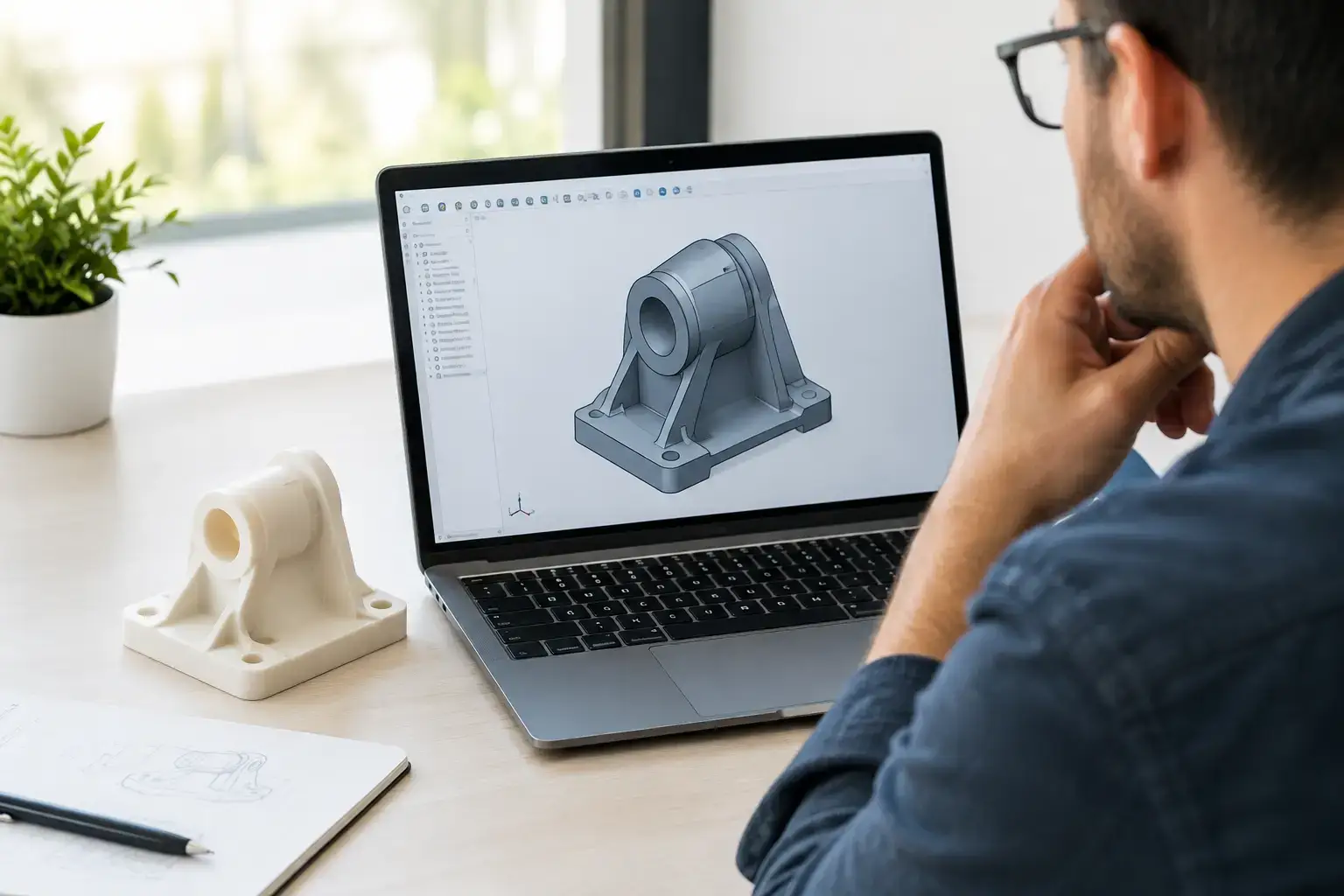
For a mechanical or electromechanical product, a working proof-of-concept can be especially valuable. It may reveal engineering constraints, alternative configurations, and the specific functional features worth protecting before the application is prepared.
Design patents protect how a product looks
A design patent protects the ornamental appearance of an article of manufacture. In practical terms, it covers the nonfunctional visual design of a product, not the way the product operates. The protection may apply to the overall shape, surface ornamentation, visual configuration, or a combination of these elements.
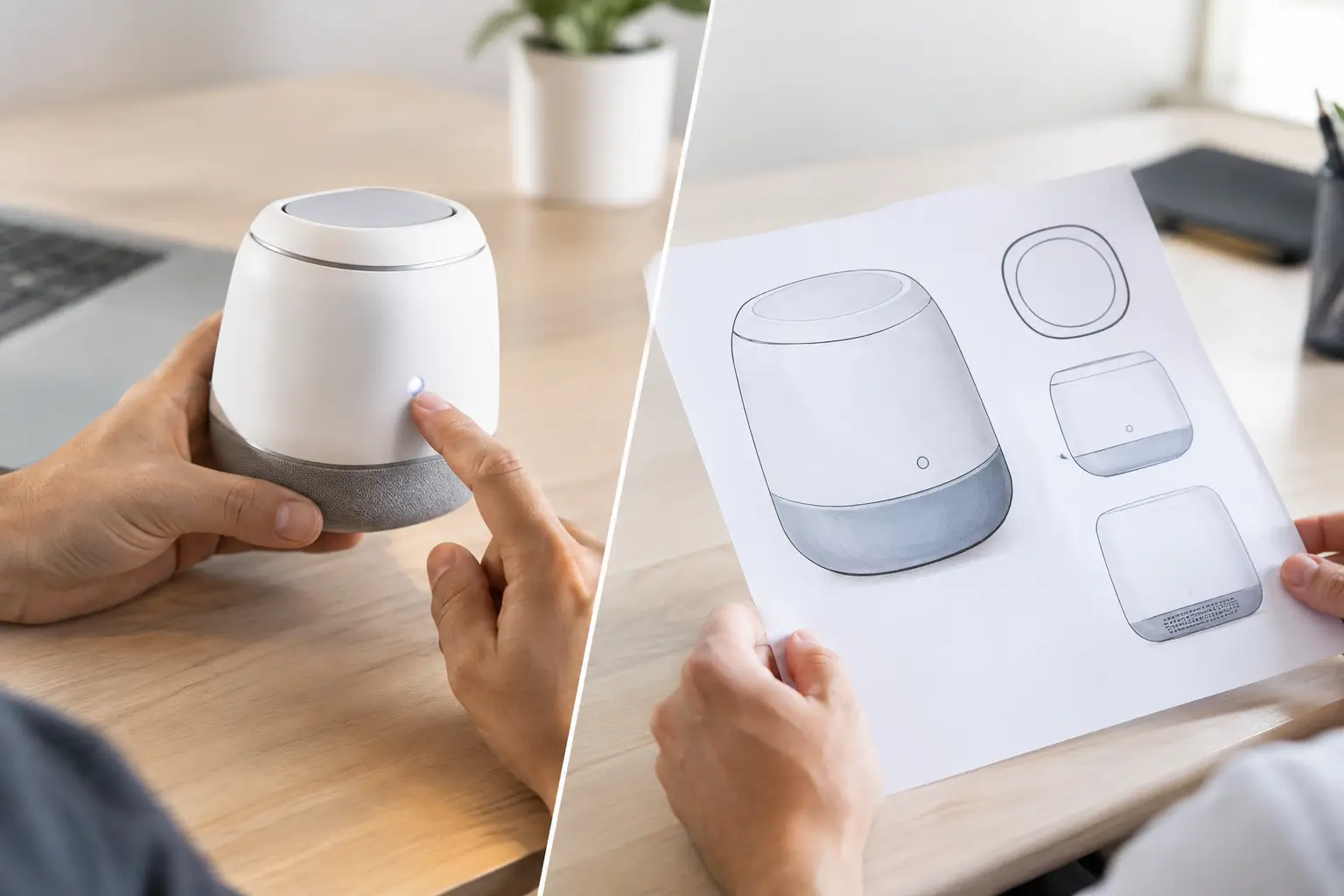
Consider a consumer product with a distinctive housing, handle profile, button layout, or repeating visual pattern. If competitors could make a product that performs the same function but its appearance is a meaningful part of brand recognition and customer appeal, a design patent may be worth considering.
Design patents rely heavily on drawings. Solid lines typically show the claimed design, while broken lines can show environmental structure or portions not being claimed. That makes industrial design decisions more than cosmetic. The drawings must accurately communicate the visual boundaries of the protection you seek.
A design patent generally lasts 15 years from the date it is granted, with no maintenance fees. It can be more focused and often less expensive to pursue than a utility patent, but it is not a substitute for functional protection. A competitor may be able to change the look of a product while copying the underlying functional concept if no utility patent covers that concept.
Plant patents serve a narrow but important purpose
A plant patent protects a new and distinct plant that has been invented or discovered and asexually reproduced. This category can cover certain cultivated plant varieties, excluding tuber-propagated plants and plants found in an uncultivated state.
Plant patents are not relevant to most manufactured-product startups, but they matter to innovators in horticulture, agriculture, and nursery businesses. Like utility patents, plant patents generally last 20 years from the filing date. They require a clear botanical description and supporting information about the plant’s distinct characteristics and asexual reproduction.
What a Patent Does Not Protect
An idea alone is not patentable. Saying, “I want an app that helps people organize tools,” or “I want a safer stroller,” is the beginning of an invention process, not a patent claim. Patent protection requires a sufficiently developed invention that can be described in detail.
A patent also does not automatically give you the right to make, use, or sell a product. It gives you the right to exclude others from making, using, selling, offering to sell, or importing the claimed invention in the United States. Your own product may still involve other technologies covered by active patents. This is why patentability and freedom to operate are different questions.
Patent protection also has limits by geography. A U.S. patent applies in the United States. If international markets are part of your business plan, filing timing and country selection should be considered early, often before a public launch creates avoidable complications.
Utility vs. Design Patent: When Both May Make Sense
Many market-ready products have both functional and visual value. A new kitchen device may have an internal mechanism that improves performance and an exterior form that makes it recognizable on a retail shelf. A utility patent may address the mechanism, while a design patent may address the distinctive appearance.
Filing both is not automatically the right move. It depends on your product category, budget, competitive landscape, expected product life cycle, and the features that customers and competitors are most likely to value. For a product where function is easily copied but appearance changes quickly, utility protection may deserve priority. For fashion-driven consumer goods with modest technical novelty, design protection may have greater practical value.
The strongest strategy is usually tied to commercialization, not filing activity alone. Ask which features create differentiation, which features can be engineered around, and which details must remain consistent as the product moves toward manufacturing.
Where a Provisional Application Fits
A provisional patent application is not a fourth patent type and never becomes a patent on its own. It is a temporary filing that can establish an early U.S. filing date for adequately disclosed subject matter. It gives an inventor up to 12 months to file a corresponding nonprovisional utility application and potentially claim the benefit of that earlier date.
For early-stage inventors, a provisional application can provide valuable time to refine a prototype, speak with potential manufacturers, validate demand, and prepare for a more complete filing. But it is only as valuable as the disclosure it contains. A thin provisional filed around a vague concept may not support later claims to improvements that were not actually described.
This is where prototype development and patent planning should work together. Engineering drawings, operating details, alternate configurations, material choices, and test results can help document what has truly been developed. If the product changes substantially after filing, new material may require additional filings rather than relying on the original provisional date.
Build Before You Reveal Too Much
Public disclosure can be a serious risk. In the United States, inventors may have a limited one-year grace period after certain disclosures of their own invention, but many foreign jurisdictions do not offer the same protection. A trade show presentation, crowdfunding page, online video, public sale, or unprotected conversation can affect filing options.
The practical approach is to develop enough of the concept to identify the invention, document it carefully, and seek qualified patent counsel before broad public exposure. Non-disclosure agreements may be useful in certain business discussions, but they are not a replacement for filing when patent rights are at stake.
Keep dated records of design iterations, test results, CAD files, prototype photographs, and decisions about how the product works. These materials support development discipline and can make discussions with engineers, patent professionals, investors, and manufacturers far more productive.
Choose Protection Based on the Product You Intend to Sell
The best patent path is rarely chosen from a sketch alone. A sketch can communicate an opportunity; a developed concept reveals the functional relationships, manufacturing realities, and design details that may deserve protection.
Industry of Concepts helps inventors turn early ideas into engineered prototypes that can support smarter patent-related decisions. Before committing to a filing path, make sure the product has been developed far enough to show what is truly new, useful, and commercially worth defending. That is how you protect more than an idea – you protect a product with a real path to market.