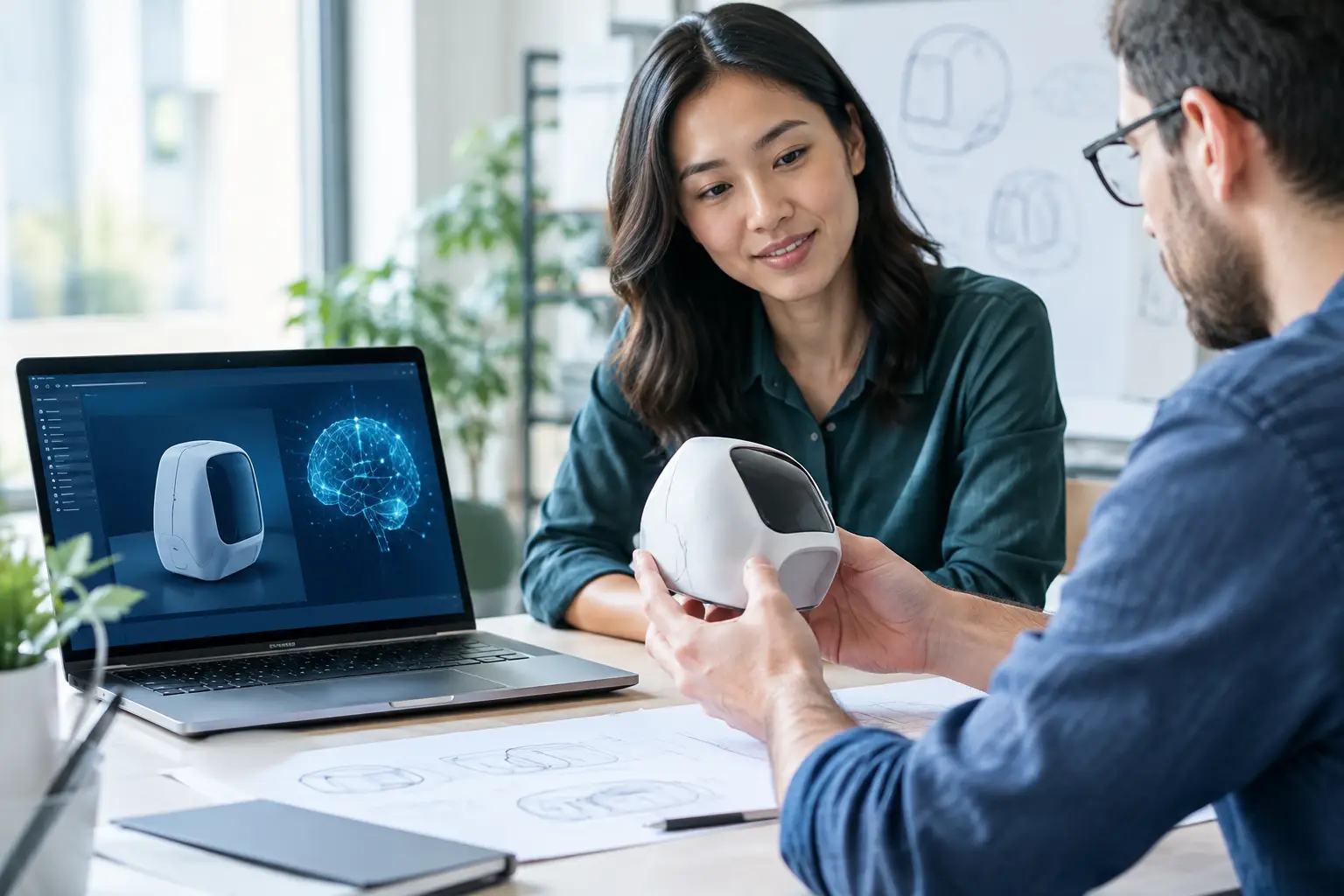
A lot of products fail long before engineering begins. The problem is not always bad design or weak execution. Often, it starts earlier, when the original concept is too vague, too crowded, or too disconnected from a real market need. That is why understanding what is idea generation in product development matters. It is the stage where raw thoughts are shaped into product directions worth testing, building, and protecting.
For inventors, founders, and companies trying to move quickly, this phase is not about sitting in a room waiting for inspiration. It is a practical process for identifying opportunities, clarifying user problems, and turning early thinking into concepts that can survive the real demands of prototyping, engineering, manufacturing, and commercialization.
What is idea generation in product development?
Idea generation in product development is the process of creating, refining, and selecting product concepts that solve a real problem and have a realistic path to market. It happens at the front end of development, before detailed engineering, before tooling, and usually before major capital is committed.
At this stage, the goal is not to produce a finished design. The goal is to create enough strong options that a team can evaluate what deserves to move forward. A good concept should make sense from more than one angle. It should answer a user need, fit market demand, and show at least a plausible path toward technical feasibility and intellectual property value.
This is where many first-time inventors get stuck. They may have a promising thought, but not a clear product definition. Businesses can run into the same issue when internal teams jump straight into design without pressure-testing the concept first. Idea generation creates structure around that uncertainty.
Why idea generation matters more than most people think
A weak idea can be prototyped beautifully and still fail. A strong idea, even in rough form, gives the entire development process a better foundation. It helps guide industrial design decisions, engineering choices, cost targets, prototype planning, and even patent conversations.
This stage matters because product development is expensive once it gains momentum. Every revision in CAD, every prototype iteration, and every manufacturing adjustment costs time and money. If the starting concept is underdeveloped, those downstream costs rise fast.
Good idea generation reduces that waste. It helps teams ask the right questions early. Who is the user? What problem is serious enough that someone would pay for a solution? What makes this product meaningfully different? Can it be built at a reasonable cost? Is there something potentially protectable in the concept?
Not every answer will be complete at the beginning, and that is normal. But the better the thinking at this stage, the fewer expensive surprises later.
What happens during idea generation in product development
In practice, idea generation is a mix of creative thinking and commercial discipline. It usually starts with a problem, frustration, gap in the market, or technical opportunity. From there, the concept is expanded into possible product directions.
That can involve studying user behavior, examining competing products, identifying shortcomings in existing solutions, and exploring how new materials, mechanisms, or technologies could create an advantage. Sometimes the best idea is a completely new product. Other times it is an improved version of something already on the market, with better usability, stronger performance, lower cost, or broader appeal.
The process often includes rough sketches, feature mapping, early concept descriptions, and basic feasibility conversations. In stronger development environments, idea generation also considers manufacturing realities early. A concept that sounds impressive but cannot be produced affordably may need to be reshaped before it moves any further.
That is one reason this phase should not be treated as pure brainstorming. Creativity matters, but so does filtering. Product ideas need room to expand, but they also need to face real-world constraints.
Where great product ideas usually come from
There is no single source of innovation. Some of the best product concepts come from firsthand frustration. An inventor sees a recurring problem in daily life and starts looking for a better way. Startup founders often build from gaps they notice in a specific industry. Established companies may generate ideas through customer complaints, field observations, technical breakthroughs, or shifts in regulations and supply chains.
Another common source is adjacent improvement. Instead of creating a product category from scratch, a developer identifies a familiar product that performs poorly, feels outdated, or leaves users with workarounds. That kind of opportunity can be powerful because the market already exists. The challenge is standing out with a difference customers will actually value.
This is where experience helps. Many early concepts sound exciting in theory but have no clear buyer, no practical differentiator, or no reasonable route to production. Strong idea generation separates interesting thoughts from viable product opportunities.
What makes an idea worth developing
Not every idea deserves a prototype. A concept becomes worth developing when it begins to show strength in four areas: problem-solution fit, market appeal, technical feasibility, and protectability.
Problem-solution fit means the product addresses something real, not something imagined. If customers do not care enough about the problem, they will not care much about the solution.
Market appeal means there is a realistic customer base and a reason those buyers would choose this product over alternatives. That does not always mean mass market. Niche products can be successful if the demand is clear and the economics work.
Technical feasibility asks whether the idea can actually be built with current methods, materials, and engineering constraints. Some ideas are directionally strong but need to be simplified before they become practical.
Protectability matters because strong concepts often have greater value when they support a defensible market position. That can include patentable features, unique mechanical arrangements, or a novel functional benefit. Not every good product is patentable, but many inventors should consider that angle early.
Common mistakes at the ideation stage
One of the biggest mistakes is falling in love with the first version of an idea. Early concepts are usually incomplete. They need pressure, refinement, and sometimes major revision. Treating the first thought as final can block better solutions.
Another mistake is confusing novelty with value. A product can be different and still not be useful. Customers rarely reward innovation for its own sake. They reward products that solve problems better, faster, cheaper, safer, or more conveniently.
Some teams also skip validation because they want to move fast. Speed matters, but false starts are slower than disciplined progress. A few strategic conversations at the beginning can save months of rework.
Then there is the technical blind spot. A concept may look great in a sketch but become difficult once mechanism design, tolerances, materials, electronics, or assembly enter the picture. That does not mean the idea is bad. It means ideation should be informed by engineering, not isolated from it.
How idea generation connects to prototyping and patents
This is where idea generation becomes especially important for entrepreneurs and inventors. The concepts developed at this stage often shape the entire path forward, including prototype strategy and intellectual property planning.
A proof-of-concept prototype is not built just to show what a product looks like. It is often built to test whether the core idea actually works. If idea generation was sloppy, the prototype may answer the wrong question. If idea generation was thoughtful, the prototype becomes a powerful tool for technical validation, investor conversations, manufacturing planning, and patent support.
The same is true for IP. Patent strategy is stronger when the underlying concept has been explored from multiple angles. Sometimes the most valuable feature is not the obvious one. Through idea generation, teams can identify functional elements, user benefits, and design variations that may strengthen the overall filing strategy.
For clients working with a development partner such as Industry of Concepts LLC, this stage can bridge the gap between a rough invention and a more structured development plan. That matters when the goal is not just to imagine a product, but to bring it to life and protect its value.
What is idea generation in product development really about?
At its core, idea generation in product development is about reducing uncertainty without killing momentum. It gives inventors and businesses a way to think creatively while still making practical decisions. It turns loose inspiration into defined concepts that can be screened, improved, engineered, and commercialized.
The strongest ideas rarely arrive fully formed. They are developed through questioning, testing, and refinement. That process can feel slower at the beginning, but it usually leads to better products and smarter investments.
If you are sitting on an idea, the real question is not whether it sounds exciting. The real question is whether it can become something useful, manufacturable, and worth owning. That is where idea generation earns its place – not as a buzzword, but as the first serious step toward a product that has a chance in the market.