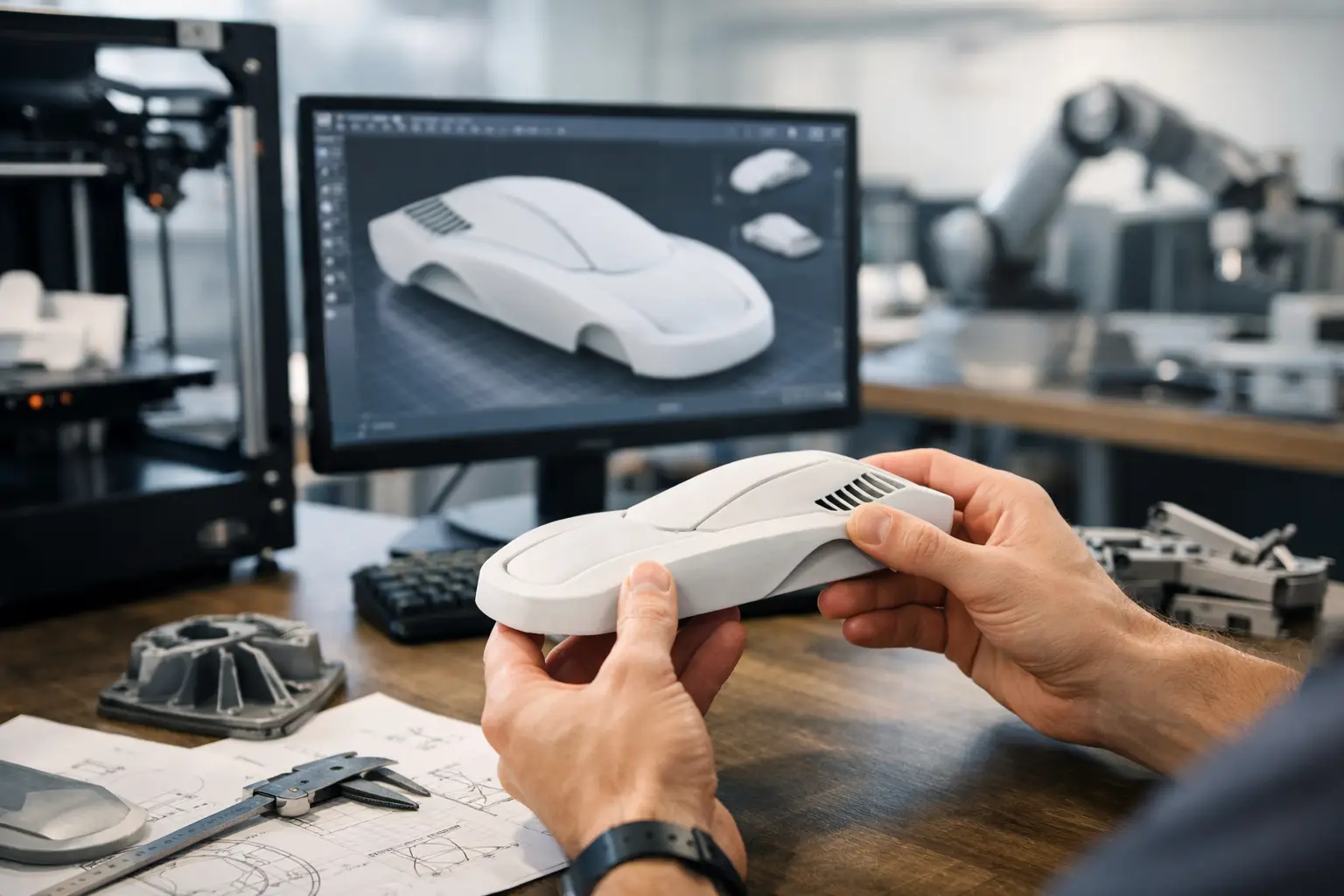
A sketch on a notepad is exciting for about a day. After that, the real question shows up – can this idea become something you can hold, test, improve, and protect? That is where rapid prototyping services make a real difference. They turn uncertainty into evidence, giving inventors, startups, and product teams a practical path from concept to functional development.
For many new products, the biggest risk is not competition. It is building too much, too soon, without learning enough. A prototype helps you answer the questions that matter early: Does the product work? Does the size feel right? Will users understand it? Can the design support a patent strategy? Is it realistic to manufacture at a target cost? Those are business questions as much as engineering ones.
What rapid prototyping services actually do
At a basic level, rapid prototyping services take an idea from concept, sketch, or CAD model and convert it into a physical or functional prototype quickly. But speed is only part of the value. A good prototyping partner helps you decide what kind of prototype you need, what it should prove, and how far the design should go before more money is invested.
That matters because not every prototype has the same job. Some are visual models meant to show form and appearance. Others are proof-of-concept builds meant to test a mechanism, electrical function, user interaction, or assembly approach. In many cases, the right path is not a single prototype but a sequence of prototypes, each one solving a different problem.
An inventor may need an early model to communicate a concept clearly. A startup founder may need a more refined unit for investor meetings and customer feedback. A manufacturer may need engineering validation before preparing for production. When the service is done well, the prototype is not just fast. It is purposeful.
Why rapid prototyping services save time and money
It may seem cheaper to skip prototyping and move straight into production planning. In practice, that usually becomes expensive. Design flaws that appear during manufacturing are harder to fix, tooling changes cost more, and user issues discovered late can delay launch.
Rapid prototyping services help reduce those risks by exposing problems while changes are still manageable. A poorly placed switch, a weak hinge, an awkward grip, or an internal component conflict can all look fine on paper. Once built, those issues become obvious. That is exactly the point.
There is also a speed advantage that goes beyond fabrication. Fast iteration creates momentum. Instead of debating assumptions for weeks, teams can review a physical model, make decisions, and move forward. For entrepreneurs working with limited budgets, that kind of clarity matters. It keeps development focused on what the product needs, not what people imagine it might need.
The best prototypes answer a specific question
One of the most common mistakes in product development is asking a prototype to do everything at once. That usually leads to unnecessary cost and confusion. A better approach is to define the objective before the build starts.
If the main question is usability, the prototype may focus on ergonomics and interaction. If the concern is function, internal mechanisms and engineering tolerances may matter more than surface finish. If the product will support patent filing strategy, the prototype may need to show the inventive features clearly enough to document and evaluate them.
This is where experience matters. An engineering partner should not simply ask what you want built. They should help determine what needs to be learned first. That distinction can save months of rework.
Prototype types depend on the stage of development
Early-stage concepts often begin with simple appearance models, rough assemblies, or 3D printed parts that confirm form and layout. As development progresses, prototypes may include moving components, embedded electronics, or custom-machined elements that simulate real-world use.
Later-stage builds may begin to reflect manufacturing intent more closely. That does not always mean using final production materials, but it does mean making design choices that prepare the product for tooling, assembly, compliance, and cost review. The right service provider knows when a fast prototype should remain flexible and when it should start aligning with production reality.
Rapid prototyping services and patent support
For many inventors and entrepreneurs, a prototype is not only about product performance. It is also about protecting the value of the idea. A physical model can help clarify what is novel, how the invention operates, and which features may deserve stronger attention in a patent strategy.
That does not mean every product needs a highly polished prototype before any filing activity. Sometimes early drawings and engineering documentation are enough to support the next legal step. Other times, building a prototype first reveals the details that make the invention stronger and more defensible.
The key is coordination. When prototyping and patent-oriented development are treated as separate tracks, important opportunities can be missed. Design changes may improve function but weaken consistency with earlier documentation. Or a feature that seems minor may actually be central to the invention. A development partner that understands both sides can help align technical progress with intellectual property goals.
What to look for in a prototyping partner
Not all rapid prototyping services are equal. Some shops are excellent at making parts but provide little guidance on product strategy. Others can model a concept well but struggle with engineering depth. If you are developing a new product with real commercial potential, you need more than fabrication. You need judgment.
Look for a team that can evaluate the idea, translate it into a workable design, and explain the trade-offs clearly. Materials, tolerances, electronics, enclosure design, user experience, manufacturability, and cost all influence the right prototype path. A dependable partner will not oversell complexity. They will recommend the simplest build that answers the next important question.
Communication also matters. Inventors and founders are often entering unfamiliar territory, and vague updates create more stress, not less. You should expect direct guidance, realistic timelines, and clear reasoning behind design decisions. Speed matters, but clarity matters just as much.
Affordability is about smart development, not cheap parts
Many clients ask for the lowest-cost prototype possible. That is understandable, especially in early-stage product development. But the cheapest prototype is not always the most cost-effective one. If it fails to test the right features or leads to false confidence, you may spend more correcting the course later.
Real affordability comes from building intelligently. That may mean simplifying a housing, using substitute materials for a non-critical test, or separating aesthetic refinement from functional validation. It may also mean doing enough engineering work upfront to avoid multiple failed iterations.
A strong firm will help you spend money where it creates value and avoid spending where it only adds appearance without insight.
From prototype to market readiness
A prototype is a milestone, not the finish line. Once the concept is validated, the next steps often include design refinement, engineering updates, manufacturing preparation, and documentation for sourcing or patent support. That transition is where many promising products lose momentum.
The handoff is smoother when the same development team can support what comes next. If the people who helped build the prototype also understand industrial design, mechanical engineering, electro-mechanical integration, and production planning, the project moves forward with less duplication and fewer misunderstandings.
That is especially valuable for small companies and individual inventors who do not have an in-house product team. Instead of coordinating multiple vendors, they can work with one partner that understands the full development pathway. Industry of Concepts works in that space by helping clients move from early concept questions to tangible prototypes and practical next steps.
Why this matters for inventors and growing businesses
Ideas have value, but only if they can be tested, improved, and presented with confidence. A credible prototype helps you explain the product to investors, customers, manufacturers, and legal advisors. It creates something real enough to evaluate and strong enough to build on.
That is why rapid prototyping services are not just a technical convenience. They are a business tool. They reduce guesswork, support smarter decisions, and help protect time, money, and intellectual property while a product is still taking shape.
If you have been sitting on an idea because the next step feels unclear, start there. The right prototype does not need to be perfect. It needs to move the idea forward.