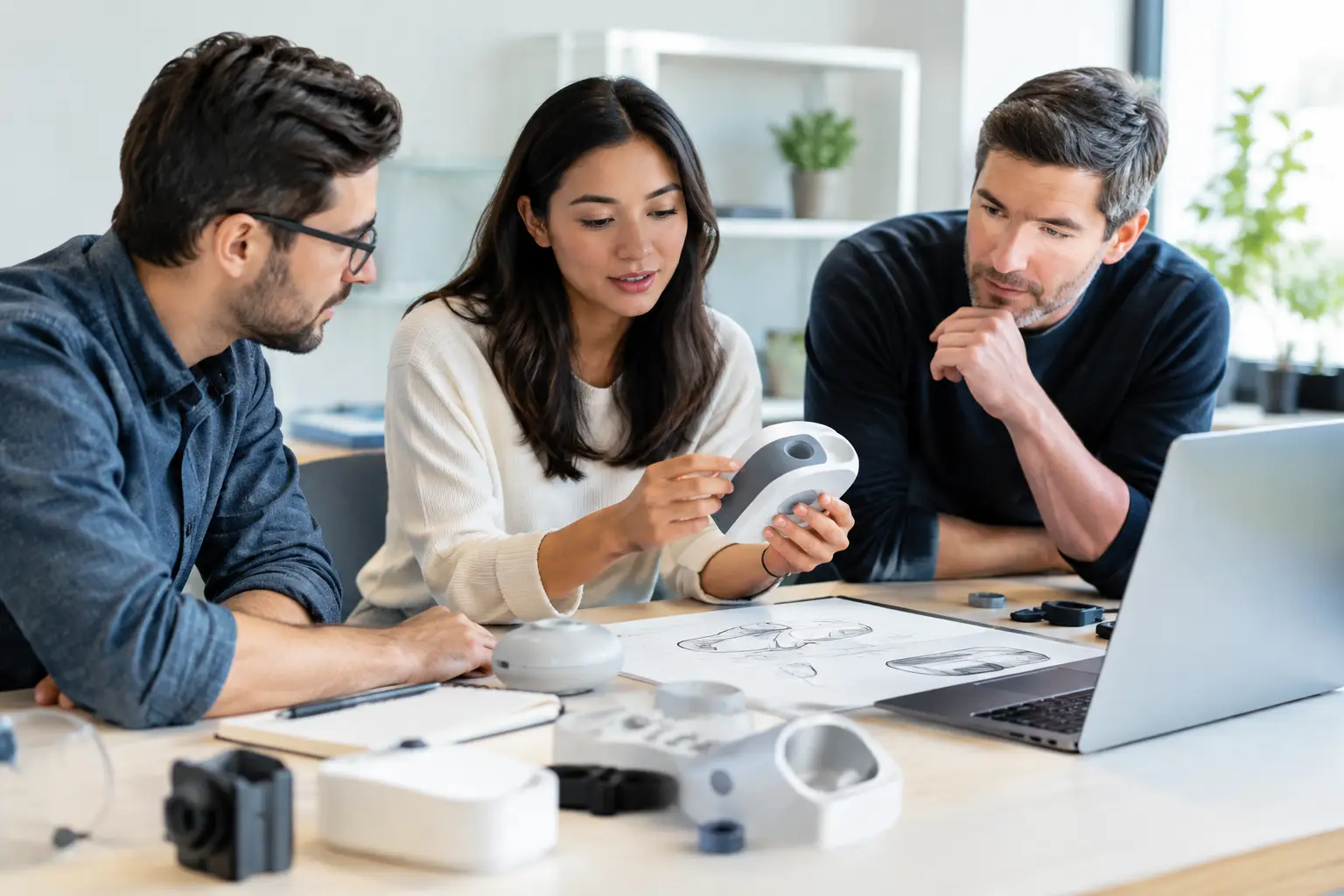
A working prototype can make an invention feel real – and that is often the moment inventors ask, can prototypes be patented? The practical answer is that you generally do not patent the physical prototype itself. You seek patent protection for the invention embodied in it: its useful function, technical arrangement, or distinctive ornamental appearance.
That distinction matters. A prototype may be a rough 3D-printed housing, a hand-built electronic device, or a near-production model. It can provide powerful evidence that your concept works and help you explain it clearly. But the patent application must protect the underlying innovation, not merely the particular sample sitting on your workbench.
Can Prototypes Be Patented Under U.S. Law?
A prototype can support a patent application, but having one does not automatically make an invention patentable. In many cases, an inventor may file before building a prototype. What the U.S. Patent and Trademark Office needs is a sufficiently complete disclosure of the invention so that a skilled person in the relevant field could make and use it.
For a utility patent, the focus is on how a product works, how its parts interact, what problem it solves, and what makes it different from known products. A functional prototype can help confirm those details. It can reveal an overlooked mechanism, demonstrate a technical advantage, and give your patent professional more precise material for describing the invention.
For a design patent, the focus is different. Design protection covers a product’s new, original, and ornamental visual appearance. A prototype, CAD model, or carefully prepared drawings can help establish the look you want to protect. However, a design patent does not generally protect the functional concept behind the product. A competitor may be able to use similar functionality if it is presented in a sufficiently different visual design.
The key question is not whether your prototype looks impressive. It is whether the invention is new, useful, non-obvious in view of prior art, and described clearly enough to support the protection you seek.
What a Prototype Adds to Your Patent Strategy
A prototype is not a legal requirement for most patent filings, but it can be one of the most valuable business and technical tools an inventor has. It takes a concept out of the sketchbook and forces it to confront real-world constraints: materials, dimensions, motion, power, user behavior, safety, durability, and cost.
That process often strengthens a patent strategy in several ways.
First, it helps define the invention accurately. Early ideas are often broad: a better dispenser, safer latch, smarter attachment, or more convenient consumer product. As engineering progresses, the actual inventive feature becomes clearer. You may discover that the meaningful innovation is not the whole product, but a particular locking geometry, circuit arrangement, sensor sequence, internal structure, or method of operation.
Second, a prototype gives you a better basis for technical documentation. Photos, test results, CAD renderings, engineering notes, and component descriptions can all help communicate the invention. These materials are particularly useful when preparing a provisional patent application, provided the application itself contains an adequate written description.
Third, it can expose improvements worth protecting. A first prototype may work, but testing can lead to a more reliable mechanism, a lower-cost assembly, or a better user interface. Those later refinements may justify additional patent filings. Filing one application should not stop product development. It should help you organize it.
Finally, a prototype helps with commercialization. Investors, licensing partners, manufacturers, and early customers usually understand a functional model faster than a verbal explanation. The strongest development programs treat patent planning and prototype development as connected efforts, not separate projects competing for time and budget.
A Prototype Does Not Fix a Weak Patent Position
A polished prototype may have commercial value while still facing patent challenges. Patentability depends heavily on what already exists. Similar products, old patents, published applications, product manuals, videos, academic papers, and online listings can all be prior art.
This is why a patent search and professional review should happen early enough to influence design decisions. If an existing patent covers a central feature of your concept, you may need to redesign, narrow your claims, pursue a different feature, or reconsider the market path. Finding that information before investing heavily in tooling or production can save significant money.
It is also essential to separate patentability from freedom to operate. A new feature in your product may be eligible for patent protection, yet the overall product could still risk infringing someone else’s active patent. Patentability asks whether you may receive a patent. Freedom to operate asks whether you can make, use, or sell the product with acceptable legal risk. They are related, but they are not the same analysis.
File Before You Share the Prototype Publicly
The fastest way to create unnecessary patent risk is to show a prototype publicly before establishing a filing strategy. A product demonstration at a trade show, crowdfunding campaign, online post, sales offer, public pitch, or video can count as a public disclosure.
The United States provides a limited one-year grace period for certain disclosures made by the inventor. But relying on that rule can be risky, and public disclosure may eliminate or severely limit patent rights in many countries outside the United States. It can also create disputes about what was disclosed, when it occurred, and who disclosed it.
The safer business rule is simple: file before public disclosure whenever possible. If you need to show the prototype to an engineer, manufacturer, investor, or potential partner before filing, use appropriate confidentiality procedures. A nondisclosure agreement can be useful, but it is not a substitute for a patent filing, careful documentation, or proper ownership agreements.
Be equally careful with social media. A quick product teaser may feel like marketing progress, but it can reveal technical features that are difficult to take back once copied, shared, or indexed online.
Provisional or Non-Provisional: Which Filing Fits?
For many early-stage inventors, a provisional patent application is a practical first filing. It can establish a U.S. filing date, allow the phrase “patent pending,” and provide up to 12 months to refine the product, assess the market, seek funding, and prepare a non-provisional application.
A provisional application is not examined and does not become a patent by itself. To pursue patent protection, the inventor must file a corresponding non-provisional application within the required deadline. More importantly, the provisional must adequately describe the invention. A rushed filing with incomplete technical detail may fail to support later claims, even if it was filed early.
A non-provisional application is the formal application examined by the USPTO. It includes claims that define the legal boundaries of the invention. It requires greater precision, and it is where strong engineering documentation can make a meaningful difference.
The right choice depends on the maturity of the invention, the speed of development, the competitive environment, available budget, and whether you expect significant changes after testing. There is no advantage in filing a vague provisional simply to say something was filed. The filing should protect what you can actually explain and support.
Build Documentation Alongside the Prototype
As the prototype evolves, maintain organized records of what changed and why. Keep dated design files, sketches, test data, photographs, bills of materials, meeting notes, and versions of the product architecture. These records help your development team communicate efficiently and can support a clearer patent filing.
Ownership deserves the same attention. If a contractor, engineer, designer, or co-founder contributes to the inventive concept, patent ownership and inventor status must be handled correctly. Paying for development does not always automatically resolve ownership issues. Written agreements that address confidentiality and assignment of intellectual property should be in place before the work begins.
Inventorship is also a legal question, not a reward for effort or job title. A person who contributes to the conception of a claimed invention may need to be named as an inventor. Someone who only follows instructions, builds a model, or provides general business advice may not. Get qualified patent counsel to assess this carefully before filing.
Turn the Prototype Into a Business Asset
The best prototype is not merely a model that works once. It is a decision-making tool. It should help you test the customer experience, validate performance, identify manufacturing risks, and define the invention you intend to protect.
At Industry of Concepts, prototype development is approached with that larger purpose in mind: creating a functional proof of concept that can support engineering decisions, commercialization planning, and informed patent discussions. The goal is not to build for the sake of building. The goal is to create a product foundation you can own, improve, and bring to market with confidence.
Before you demonstrate your next prototype, pause long enough to ask what it reveals, what makes it different, and whether your filing strategy is ready. That small step can protect far more than a model – it can protect the opportunity behind it.