A sketch, a CAD rendering, or a clever mechanism can make a product idea feel real. But enthusiasm is not evidence. Before spending heavily on engineering, tooling, inventory, or marketing, you need to know whether the concept solves a meaningful problem for a defined customer at a price that can support the business.
Learning how to validate a product concept is not about proving that everyone will love it. It is about reducing the expensive unknowns early: Is the problem painful enough? Will customers change their current behavior? Can the product be built reliably? Can you protect what makes it valuable? The answers should guide your development decisions, not appear after you have committed your budget.
How to validate a product concept before investing
A product concept is validated when the strongest assumptions behind it have been tested with real evidence. For a physical product, that evidence usually comes from a combination of customer discovery, prototype testing, engineering analysis, manufacturing input, and cost modeling.
The order matters. A founder who begins with a fully featured prototype may spend months perfecting features that buyers do not care about. On the other hand, a founder who only runs an online survey may miss a mechanical, safety, or manufacturing challenge that changes the entire opportunity. Effective validation connects market demand with practical execution.
Start with the problem, not the product features
Your first task is to state the customer problem in plain language. Avoid broad claims such as “people need a better solution.” Be specific about who experiences the problem, when it occurs, what they use now, and what failure or frustration costs them.
For example, a kitchen accessory may save a consumer a few seconds. That can be enough in a high-volume, low-cost category if the item is simple and visually appealing. A device intended for commercial kitchens, however, may need to reduce labor time, waste, injury risk, or cleaning complexity in a measurable way. The buyer, the use environment, and the value threshold are different.
Define the customer and the job to be done
Identify the first customer segment you intend to serve, not every possible customer. A product for independent contractors may require a different design, price point, and sales approach than a product for large construction companies. Narrowing the audience makes validation faster because you can ask better questions and recruit more relevant testers.
Then define the job the customer is trying to accomplish. A customer is not buying a storage product because they want plastic, metal, or hinges. They may be buying faster access, safer transport, less clutter, or a more professional-looking workspace. Your concept must perform that job better than the alternative.
Research real behavior
Talk with potential customers about recent situations, not hypothetical preferences. Ask what happened the last time they faced the problem, what they used, what they paid, what they disliked, and what they tried before. People are often polite about a new idea. Their past behavior is more reliable than a quick “Yes, I would buy that.”
Look for patterns across interviews. If several people describe the same workaround, complaint, or expense, you may have identified a genuine opportunity. If they say the issue exists but is not worth changing, your concept may need a sharper benefit or a different market.
Test demand before full engineering
A polished product is not required to test whether buyers care. Depending on the product, you can use concept drawings, a simple presentation, a foam model, a functional mockup, or a short demonstration video. The purpose is to make the value proposition concrete enough for a customer to react honestly.
Show the concept to people who fit your target segment and ask them to compare it with what they use now. What would make them switch? Which feature feels essential? What concerns them? What price would cause hesitation? These conversations help separate a nice idea from a purchase-worthy solution.
Stronger signals involve commitment. A retailer may agree to review samples, a business customer may provide a letter of intent, or early buyers may place a refundable deposit where appropriate. Preorders can be useful, but they are not the right test for every product. Regulated devices, safety-critical equipment, and products with uncertain lead times should not be marketed as ready before their requirements are understood.
Do not treat one enthusiastic response as validation. Look for repeatable interest from the type of buyer you need to reach. Ten qualified conversations that reveal consistent demand can be more useful than hundreds of vague survey responses.
Build a prototype that answers a specific question
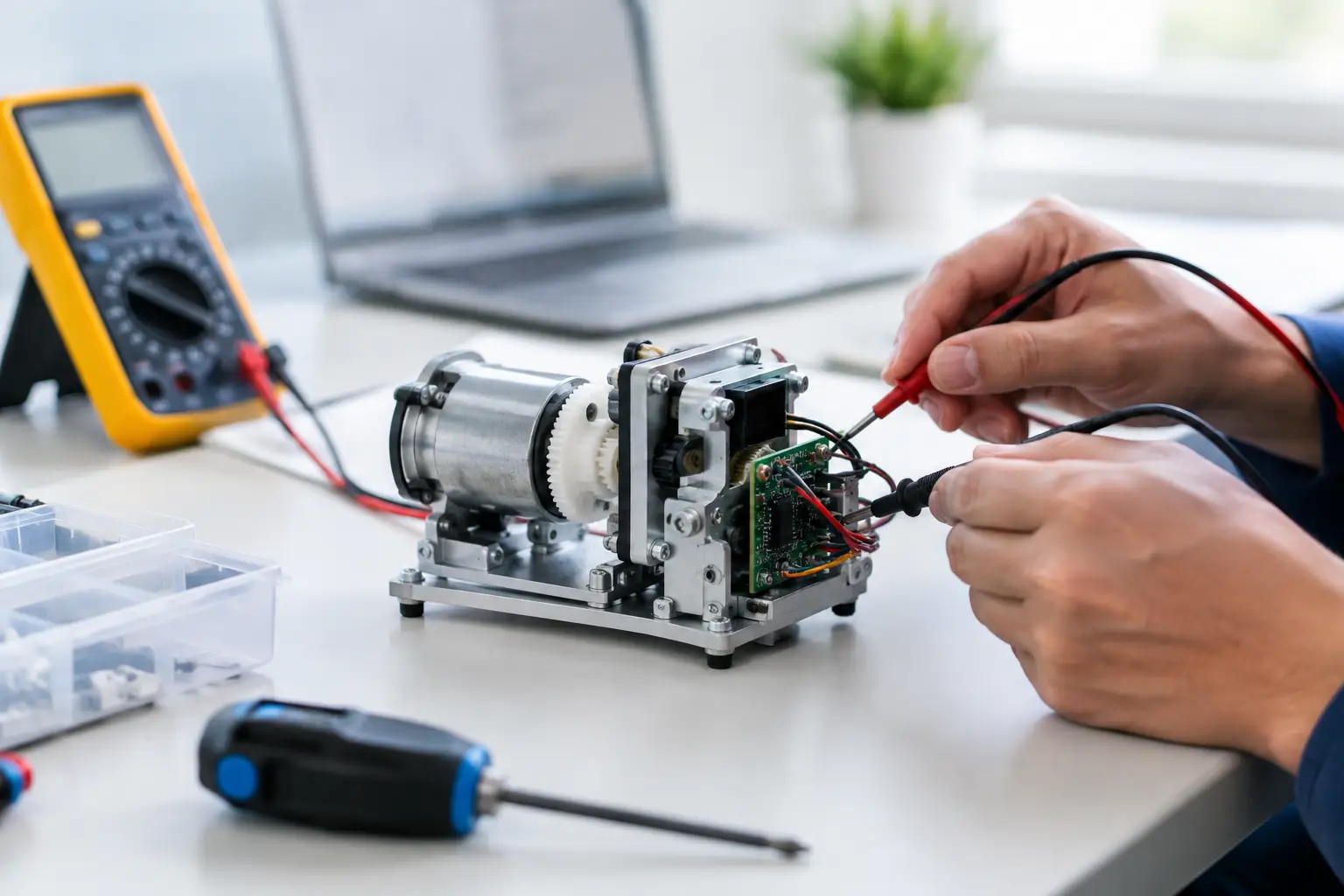
A prototype is a decision-making tool, not just something to display. Before building one, define what it must prove. Is the question about ergonomics, mechanism performance, size, material strength, user workflow, electronics, or appearance? A prototype built without a test objective often becomes an expensive model with no clear next step.
Early proof-of-concept prototypes can be rough. Their job is to test the core function quickly. A later appearance model can evaluate form, finish, and customer perception. An engineering prototype can test tolerances, moving parts, electrical performance, heat, load, or durability. Each stage should eliminate a meaningful risk before you invest in the next one.
For many inventions, the most valuable moment is when a user handles a functional prototype and reveals a problem no drawing could show. They may grip it incorrectly, struggle to understand a control, use it in an unexpected setting, or expose a failure point. That is not bad news. It is exactly the information that prevents expensive redesigns after manufacturing begins.
Test the product in conditions that resemble real use
Controlled demonstrations are useful, but products succeed or fail in the real world. Put the prototype in the hands of intended users and observe what they do. Ask them to complete a task rather than explain what they think. Record where they hesitate, what they misunderstand, and whether the product actually saves time, effort, money, or frustration.
Testing should also address the risks specific to the category. A consumer item may need drop, cycle, moisture, cleaning, or heat tests. An electro-mechanical product may require power, battery, wiring, enclosure, and failure-mode evaluation. A product for children, food contact, healthcare, or industrial work may face additional safety and compliance considerations.
You do not need to run every final certification test at the concept stage. You do need to identify requirements early enough that they influence the design. A feature that looks simple in a concept rendering can become difficult or costly once safety, material, and regulatory constraints are applied.
Validate the economics and manufacturability
A concept can attract customers and still fail as a business if the unit economics do not work. Estimate the target retail or selling price based on the market, then work backward. Account for manufacturing, assembly, packaging, shipping, retailer margins if applicable, warranty exposure, marketing, and your desired margin.
Early cost estimates are not final quotes, but they are essential direction. If your projected product cost consumes most of the selling price, redesign may be necessary. Sometimes the answer is a different material, fewer components, a revised mechanism, or a more focused first version. Sometimes it means the idea is better suited to a premium niche than a mass-market launch.
Manufacturing input should arrive well before tooling. Engineers can evaluate how parts will be made, assembled, fastened, inspected, and serviced. A design that functions beautifully as a one-off prototype may be difficult to mold, machine, assemble, or maintain at scale. Design for manufacturability protects both your budget and your schedule.
Protect intellectual property while you learn
Validation and intellectual property planning should move together. Before publicly sharing technical details, understand what may be patentable and what should remain confidential. Keep dated records of concept changes, prototype iterations, test results, and development decisions. These records can support a stronger filing strategy and make the invention easier to explain to patent counsel.
A patent search and patent-oriented technical review can reveal prior art that affects your design direction. This does not mean every idea requires a patent, and a patent does not guarantee commercial success. Still, understanding the competitive landscape early can prevent you from investing in a concept that is too close to existing protected solutions.
At Industry of Concepts LLC, prototype development can be approached with both functionality and patent support in mind, helping inventors create evidence for the product itself while preparing for the next commercial step.
Set a clear decision point
Validation is not endless research. Set criteria that tell you whether to proceed, revise, pause, or stop. Your criteria may include repeated customer interest, successful functional tests, a viable target cost, a feasible manufacturing path, and an acceptable intellectual property position.
If the evidence is mixed, do not force a yes. Revise the concept around what you learned and test again. A smaller first version may validate the central value faster than a feature-heavy product. The right next step depends on where the greatest uncertainty remains.
Your idea deserves more than a guess and more than a beautiful rendering. Give it the evidence, engineering attention, and disciplined testing required to become a product people can use, buy, and trust.