A sketch on a napkin, a voice memo, or a rough CAD file can now become a clearer product concept faster than ever. AI product development gives inventors and product teams new ways to research markets, organize requirements, generate early concepts, and test assumptions. But speed only creates value when it leads to a product that can be built, protected, used safely, and sold.
For entrepreneurs, the real opportunity is not asking an AI tool to invent a product for you. It is using AI to reduce uncertainty while experienced designers and engineers turn your idea into a functional, defensible prototype. That distinction matters when your money, reputation, and intellectual property are on the line.
What AI Product Development Can Actually Do
AI can be useful across the product development process, particularly in the early stages where questions outnumber answers. It can help organize customer feedback, identify common complaints in a product category, compare feature sets, create preliminary user profiles, and turn a loosely defined idea into a more structured product brief.
For example, an inventor developing a portable medical accessory may use AI to summarize non-confidential research, list possible user scenarios, and identify questions to validate with real users. A startup developing a consumer device may use it to draft product requirements, compare materials at a high level, or explore several housing concepts before investing in detailed industrial design.
AI image generation can also help communicate a visual direction. A founder who struggles to explain the look of a product may arrive at a design review with reference images that clarify preferred proportions, finishes, colors, or target users. That can make early conversations more productive.
However, an AI-generated image is not an engineering drawing. It does not establish dimensions, tolerances, wall thicknesses, parting lines, fastening methods, electronics packaging, or manufacturing cost. A compelling rendering can hide major practical problems. The work begins when a concept must survive contact with physics, suppliers, regulations, and the customer’s hand.
Where Human Engineering Still Decides the Outcome
A product must perform consistently outside a screen. That requires judgment based on materials, loads, heat, battery life, manufacturability, assembly, reliability, and user behavior. AI can propose options, but it cannot inspect a prototype, feel whether a latch is difficult to operate, or take responsibility for a device that fails in the field.
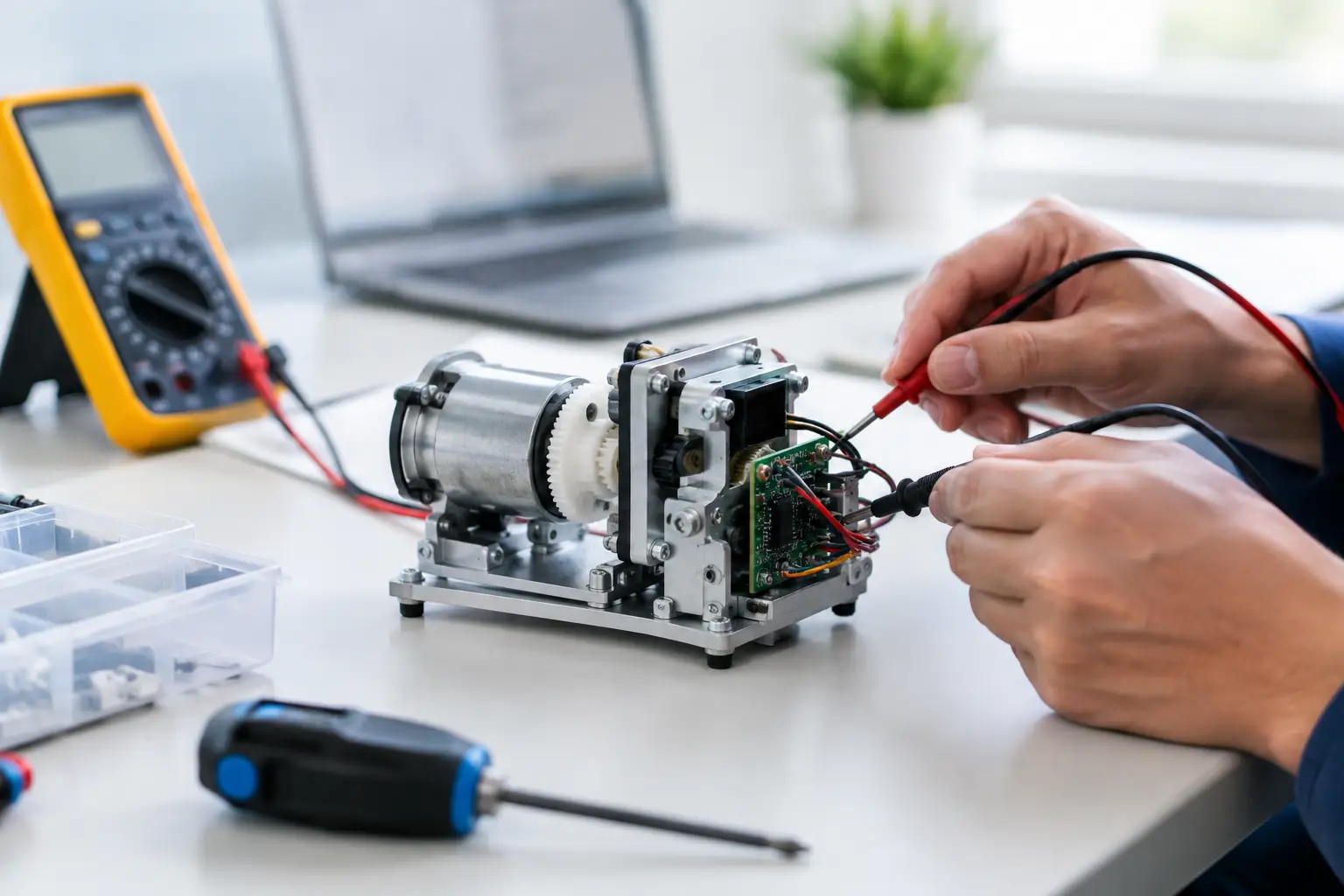
This is especially true for electromechanical products. A smart device may need a compact enclosure, circuit board placement, charging access, thermal management, waterproofing, antenna clearance, and user-friendly controls. Each decision affects the others. Changing the battery may force changes to the housing, internal supports, charging system, and tooling strategy.
Experienced product development teams manage these trade-offs early. A less expensive material might make a first prototype easier to produce but fail under heat or repeated impact. A sleek form may appeal to customers but leave insufficient room for wiring or fasteners. A feature that sounds valuable in a prompt may create a manufacturing step that makes the product too expensive to sell.
The goal is not to reject ambitious ideas. It is to make smart decisions before expensive mistakes become locked into a prototype or tooling order.
AI Is Fast, but Inputs Still Matter
AI outputs are only as useful as the information behind them. If the original product description is vague, the resulting concepts will usually be vague too. If market assumptions are wrong, polished documents can reinforce the wrong direction.
That is why a strong development process starts with focused questions: Who is the customer? What problem are they already trying to solve? What must the product do every time? What conditions will it face? What price point makes business sense? What alternatives are customers using now?
These answers create a product requirement foundation. AI can help organize that foundation, but it should not replace direct customer conversations, competitive investigation, technical analysis, or prototype testing.
A Practical Process for AI-Assisted Product Development
The best use of AI is disciplined, not random. Rather than generating hundreds of disconnected ideas, use it at defined points in a product development process.
First, clarify the problem and document the invention. Describe the user, the use case, the pain point, and the intended result. Record what makes your idea different from existing solutions. This gives designers, engineers, and patent professionals a clearer starting point.
Next, research the market without treating AI output as final proof. Use it to develop research questions, sort information, and spot possible competitors or adjacent categories. Then verify critical claims through reliable sources, customer interviews, product reviews, and hands-on examination of competing products.
After that, develop multiple concepts. AI may assist with visual inspiration and feature combinations, while industrial design and engineering determine which concepts can become practical products. At this stage, a team should consider ergonomics, materials, product architecture, basic cost targets, safety concerns, and likely manufacturing methods.
Then build a proof-of-concept prototype. This is where assumptions become visible. A prototype can reveal whether the mechanism works, whether the product feels intuitive, whether components fit, and whether the concept needs a fundamental redesign. It also creates something real that can support investor discussions, customer feedback, and patent-related strategy.
Finally, refine the design for production. Manufacturing engineering turns a working prototype into a product that can be made repeatedly at a reasonable cost. Depending on the product, this may involve selecting suppliers, preparing CAD models and drawings, defining tolerances, planning assembly, identifying quality checks, and preparing for tooling.
Protect Intellectual Property Before You Share Too Much
AI creates a specific concern for inventors: confidentiality. Do not assume that every public AI platform is appropriate for sensitive invention details. Before entering technical descriptions, drawings, customer data, or novel mechanisms into any system, understand its data-use policies, retention practices, and privacy controls.
For valuable concepts, maintain dated records of your work and use appropriate confidentiality agreements when sharing information with outside parties. Patent strategy should also begin early. Waiting until a product is fully designed can create avoidable risk, especially if you have already discussed or displayed the invention publicly.
A prototype developed with patent considerations in mind can be more valuable than a generic model. It can demonstrate the inventive features, document functional relationships, and help clarify what should be protected. Industry of Concepts helps clients develop proof-of-concept prototypes while keeping commercialization and patent support in view from the start.
Know When AI Helps and When It Creates Risk
AI is helpful when it reduces repetitive work, expands early exploration, or makes information easier to organize. It becomes risky when it is treated as a substitute for validation.
Use extra caution when decisions involve safety, compliance, structural performance, electrical design, medical claims, consumer privacy, or patentability. These areas require qualified review. A confident answer generated in seconds can still be incomplete, outdated, or incorrect.
There is also a cost trade-off. AI can reduce time spent on early research and communication, but it cannot eliminate the cost of prototyping, testing, engineering revisions, or manufacturing preparation. In fact, moving too quickly from an AI-generated concept to production can increase costs if fundamental issues are discovered late.
The strongest approach combines fast exploration with deliberate technical checkpoints. Before advancing, confirm that the product solves a real problem, can be built within a target budget, performs as intended, and has a clear path to protection and commercialization.
Build Something Worth Bringing to Market
AI can help you move from an uncertain idea to a better-defined opportunity. It can make early work faster and give small teams access to useful creative and research support. But market-ready products are not produced by prompts alone. They are developed through design decisions, engineering discipline, prototypes, testing, and a willingness to improve the idea when reality provides better information.
If you have an invention worth pursuing, treat AI as one tool in a larger development effort. Bring the right questions, protect what makes your idea valuable, and put the concept in the hands of people who can help prove that it works.