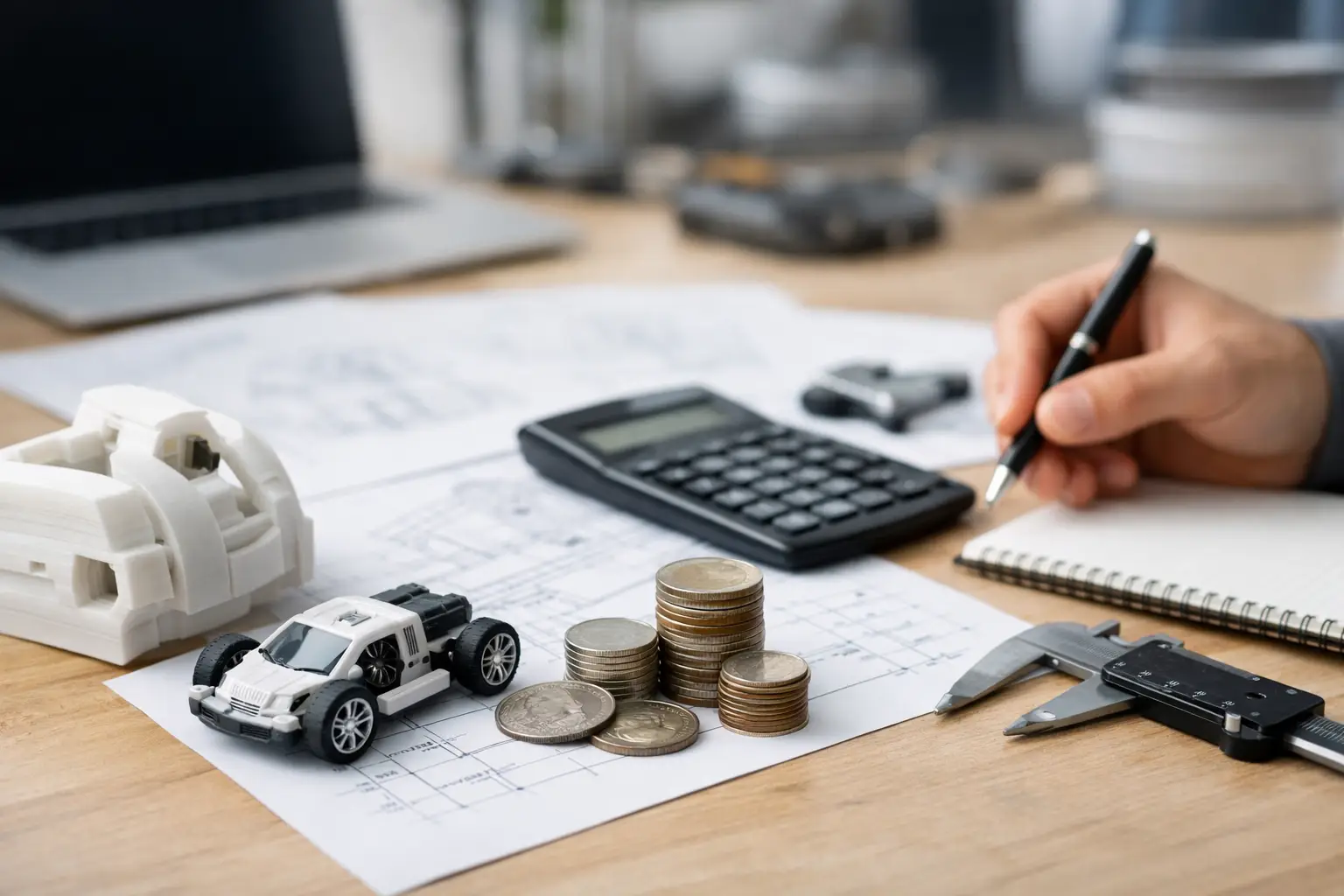
A prototype can be a $500 appearance model, a $15,000 working device, or a far more involved engineering project. That range is why asking what does a prototype cost is the right first question, but it cannot be answered responsibly with one number. The cost depends on what the prototype must prove, how close it needs to be to the final product, and what decisions you need to make before investing further.
For an inventor or startup founder, the goal is not to buy the most expensive prototype. It is to build the right prototype for the next milestone: validating a concept, showing investors, testing functionality, supporting a patent strategy, or preparing for manufacturing. A focused development plan keeps money directed toward progress instead of unnecessary features.
What Does a Prototype Cost at Each Stage?
Most professional prototypes fall into a few broad ranges. These are planning ranges, not fixed quotes. Materials, tolerances, electronics, testing requirements, and the complexity of the product can move a project significantly in either direction.
A simple proof-of-concept prototype may cost roughly $1,000 to $5,000. This stage is often appropriate when an idea needs to demonstrate a core mechanism, user interaction, or technical principle. It may use off-the-shelf components, basic 3D-printed parts, and simplified construction. It is not meant to look like a store-ready product. Its job is to answer one critical question: can the idea work?
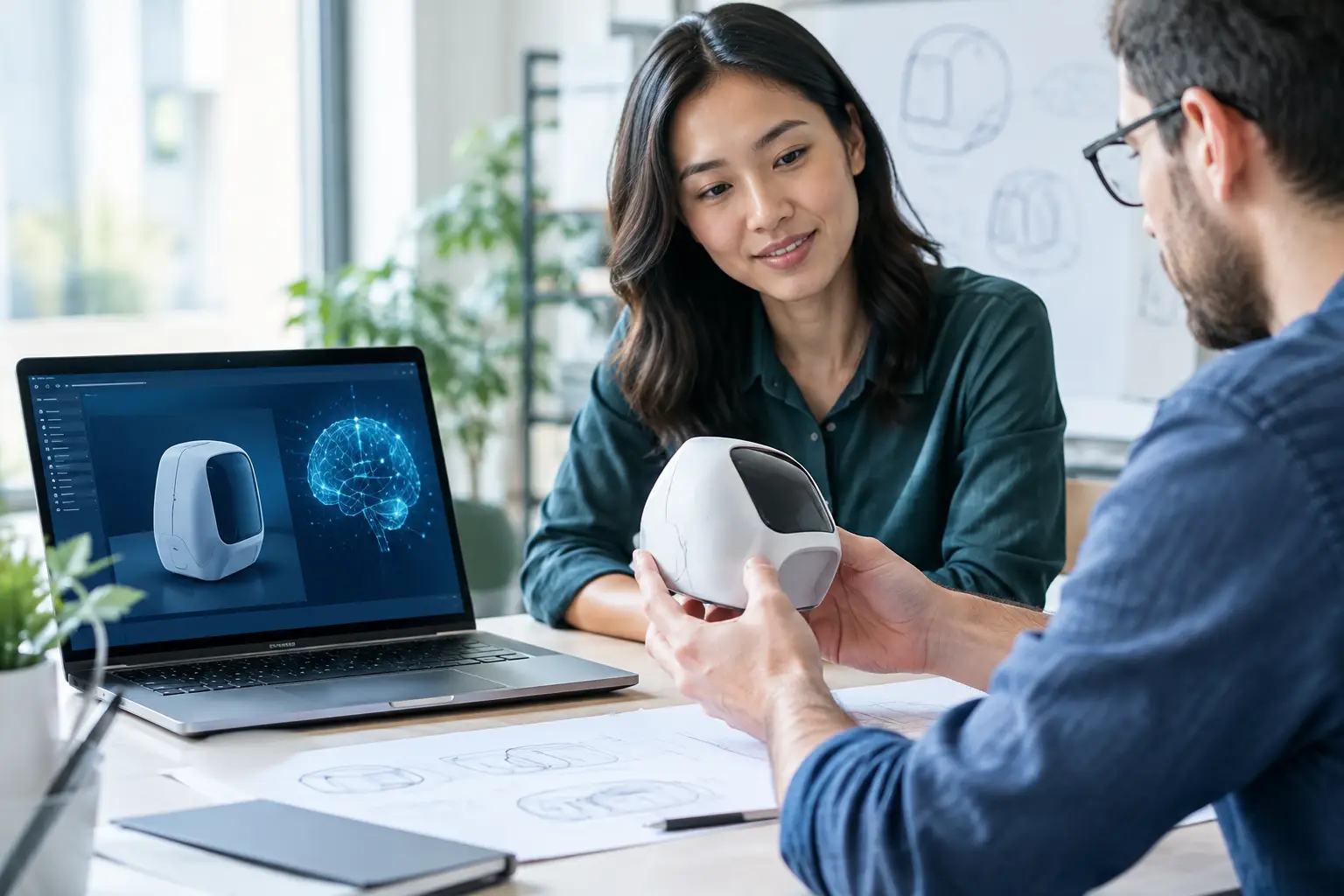
A presentation or appearance prototype often ranges from $3,000 to $12,000. This may include industrial design, computer-aided design, refined 3D prints, finishes, colors, labels, and a more polished form. It can be valuable for investor conversations, early customer feedback, licensing discussions, and marketing images. However, a beautiful model is not automatically a functional one. Appearance and engineering are different requirements, and treating them as the same can create costly surprises.
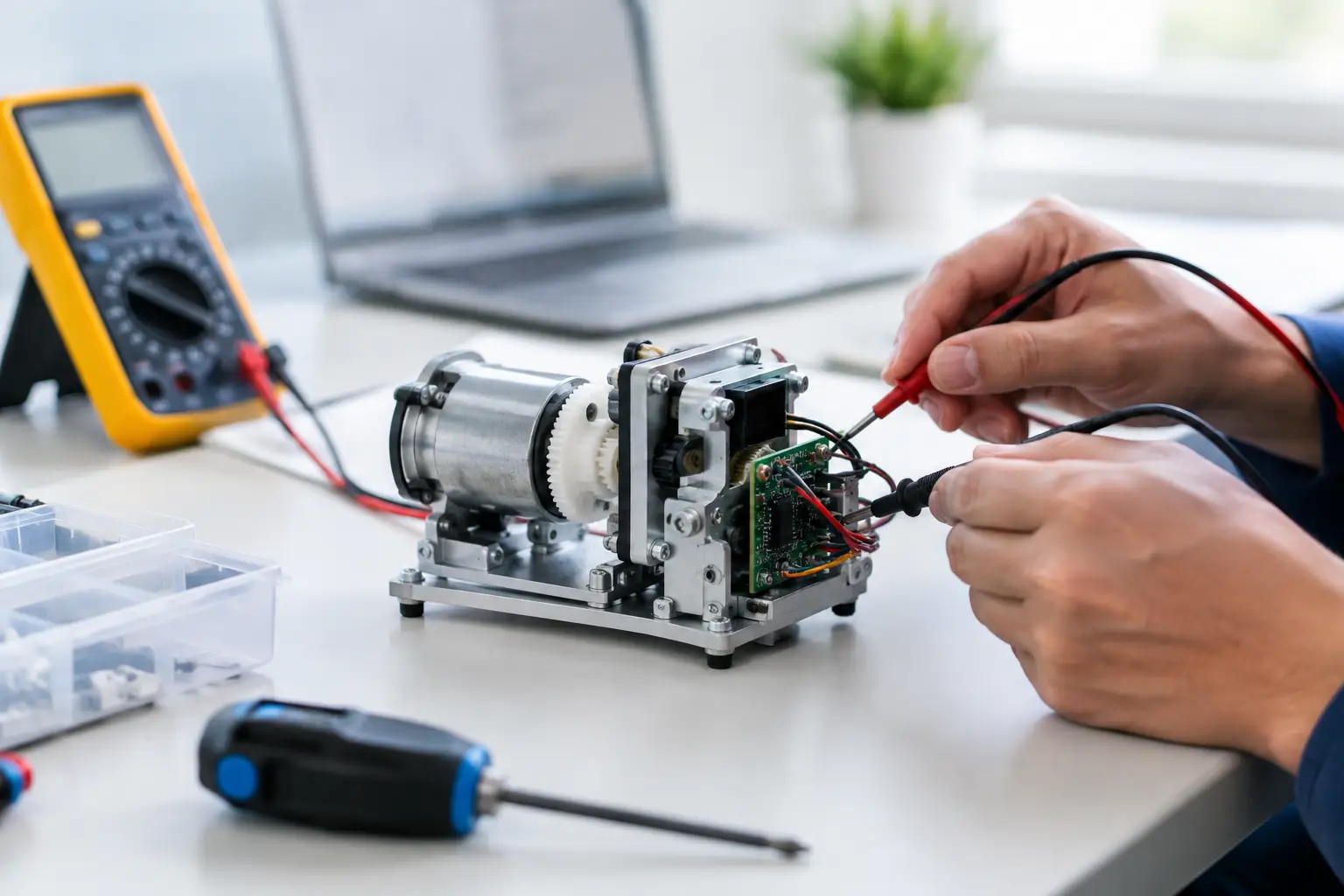
A functional engineering prototype commonly starts around $10,000 and may reach $50,000 or more. This type of build must perform a real function. It may require mechanical design, electronics, firmware, sensors, custom circuit boards, machined components, test fixtures, and repeated revisions. Products involving safety concerns, moving assemblies, batteries, wireless communication, medical applications, or demanding environments generally require more engineering time and testing.
A pre-production prototype can cost $25,000 to $100,000 or beyond, depending on the product. At this stage, the design is being refined for reliable manufacturing, part sourcing, assembly, quality control, and compliance. The work may include design-for-manufacturing analysis, tolerance review, supplier coordination, pilot builds, and tooling planning. This is where a product stops being just an invention and starts becoming a business asset.
The Prototype’s Purpose Drives the Price
Before requesting quotes, define what success looks like for this version. A prototype built for a patent filing has different priorities than one built to test usability with customers. A prototype intended for a crowdfunding campaign has different needs than one intended to validate a new mechanical system.
Proof of Concept
A proof-of-concept model shows that the main idea can function. It may be rough, oversized, unfinished, or assembled from available components. That is not a failure. It is disciplined product development. If the central feature does not work at this stage, it is far better to learn that before spending heavily on aesthetics, custom parts, or production tooling.
Functional Prototype
A functional prototype is designed to perform key actions under realistic conditions. It may open, close, move, measure, transmit data, dispense material, carry weight, or interact with an app. The more conditions it must handle reliably, the more development effort is involved. Functioning once on a workbench is very different from functioning repeatedly in the hands of a customer.
Appearance Model
An appearance model concentrates on form, size, ergonomics, and visual appeal. It helps people understand what they are looking at and how it might fit into their lives. This type of prototype can be an effective business tool, but it should not be used to make claims about performance unless it has been engineered to perform.
Manufacturing Prototype
A manufacturing prototype helps reduce risk before production. It considers the materials, processes, assembly steps, and quality standards a factory will need to meet. It can cost more upfront, yet it may prevent a much larger loss from an unbuildable design or an expensive tooling change later.
What Raises Prototype Development Costs?
The largest cost factor is usually engineering complexity, not the physical material. A small consumer device with custom electronics can require more development than a much larger plastic product with a straightforward mechanism.
Custom parts raise cost because they require design time and fabrication. A prototype made largely from readily available components can be developed faster than one requiring unique housings, gears, molds, circuits, or sensors. Machining, sheet metal work, urethane casting, injection-molded sample parts, and specialty finishes also affect the budget.
Iteration is another major factor. Product development rarely follows a straight line. A hinge may bind, a battery may not last long enough, a material may flex too much, or a user may find the controls confusing. Multiple rounds are often necessary, especially when the product is technically ambitious. The right partner identifies the highest-risk elements early so revisions are useful rather than random.
Documentation matters as well. Clear CAD files, technical drawings, bills of materials, specifications, and test results add value because they make it easier to protect, manufacture, improve, or transfer the product later. A low-cost prototype without usable documentation may save money today while creating dependency and rework tomorrow.
Budget Examples for New Product Ideas
Consider a simple household accessory with no electronics. A first model might use 3D printing and basic mechanical testing. If the design is relatively simple, the project may stay in the lower thousands. Once the form is validated, the next investment could be refining the design for a specific manufacturing process.
Now consider a connected consumer product with a mobile app, sensors, a rechargeable battery, and a custom enclosure. Even a first functional prototype may require industrial design, mechanical engineering, electrical engineering, firmware, software integration, and testing. That project belongs in a higher budget range because several disciplines must work together.
A third example is a new mechanism for an industrial or commercial application. The physical product may not need a polished consumer finish, but it may need to handle force, heat, repeated cycles, or strict dimensional tolerances. The expense will be driven by engineering validation and durable fabrication rather than cosmetic details.
The lesson is simple: price follows risk. The more unknowns a prototype must resolve, the more time and expertise it needs.
How to Control Prototype Costs Without Cutting Corners
Start by separating must-have functions from future features. A first prototype does not need every possible capability. It needs enough capability to prove the value of the product and expose the biggest technical questions. Adding features too soon is one of the fastest ways to increase cost and delay useful feedback.
Be specific about your intended use. Tell your development partner whether the prototype is for a patent discussion, investor meeting, customer demonstration, laboratory testing, or manufacturer review. That context helps the team recommend appropriate materials, fabrication methods, and engineering depth.
It is also wise to plan development in phases. A phased approach creates decision points between concept work, initial prototyping, functional testing, and manufacturing preparation. You retain more control over the budget because each phase produces information that guides the next investment.
Do not choose a prototype provider based on the lowest initial quote alone. Ask what is included: design work, CAD files, parts, assembly, testing, revisions, documentation, and ownership of the resulting work. A quote that leaves out engineering or revision time may appear affordable but fail to deliver a prototype that advances your business.
Build a Prototype That Moves Your Idea Forward
The right prototype is not just an object. It is evidence that your idea can work, a tool for communicating value, and a foundation for intellectual property and commercialization decisions. Industry of Concepts helps clients turn uncertain concepts into practical development plans that align technical progress with real business goals.
Bring a clear problem, a rough sketch, or a well-developed idea. The next step is defining what your prototype needs to prove, then building it with purpose.