A sketch, a pitch deck, and a promising idea are not yet a product. The hard work begins when you must prove that the idea can function, be built at a reasonable cost, and offer something worth protecting. This prototype development guide for startups lays out a practical path from early concept to a model that can support testing, investor conversations, manufacturing decisions, and patent-related planning.
For a startup, a prototype is not just something to show. It is a decision-making tool. It exposes weak assumptions before they become expensive engineering changes, helps you explain the product clearly, and gives potential customers something real to react to.
Start With the Problem, Not the Prototype
Founders often arrive with a feature list before they have defined the core problem. That creates a common failure: building a complicated first prototype that tries to do everything, proves very little, and consumes too much of the budget.
Begin by stating the product’s job in one plain sentence. Who will use it, what specific frustration or risk does it remove, and what result should the user get? If you cannot answer those questions without technical jargon, the concept may not be ready for detailed engineering.
Then identify the single assumption that could break the business. For a consumer device, it may be whether users will adopt a new behavior. For a mechanical invention, it may be whether a mechanism can deliver enough force within a small enclosure. For a connected product, it may be battery life, wireless reliability, or the cost of a critical component.
Your first prototype should test that highest-risk assumption. It does not need to prove every feature at once.
Define What the Prototype Must Prove
The word “prototype” covers several very different deliverables. Choosing the right one keeps your development plan focused and prevents paying for unnecessary refinements too early.
A proof-of-concept prototype answers whether the central idea works. It may look rough, use off-the-shelf parts, and require manual operation. Its purpose is technical validation.
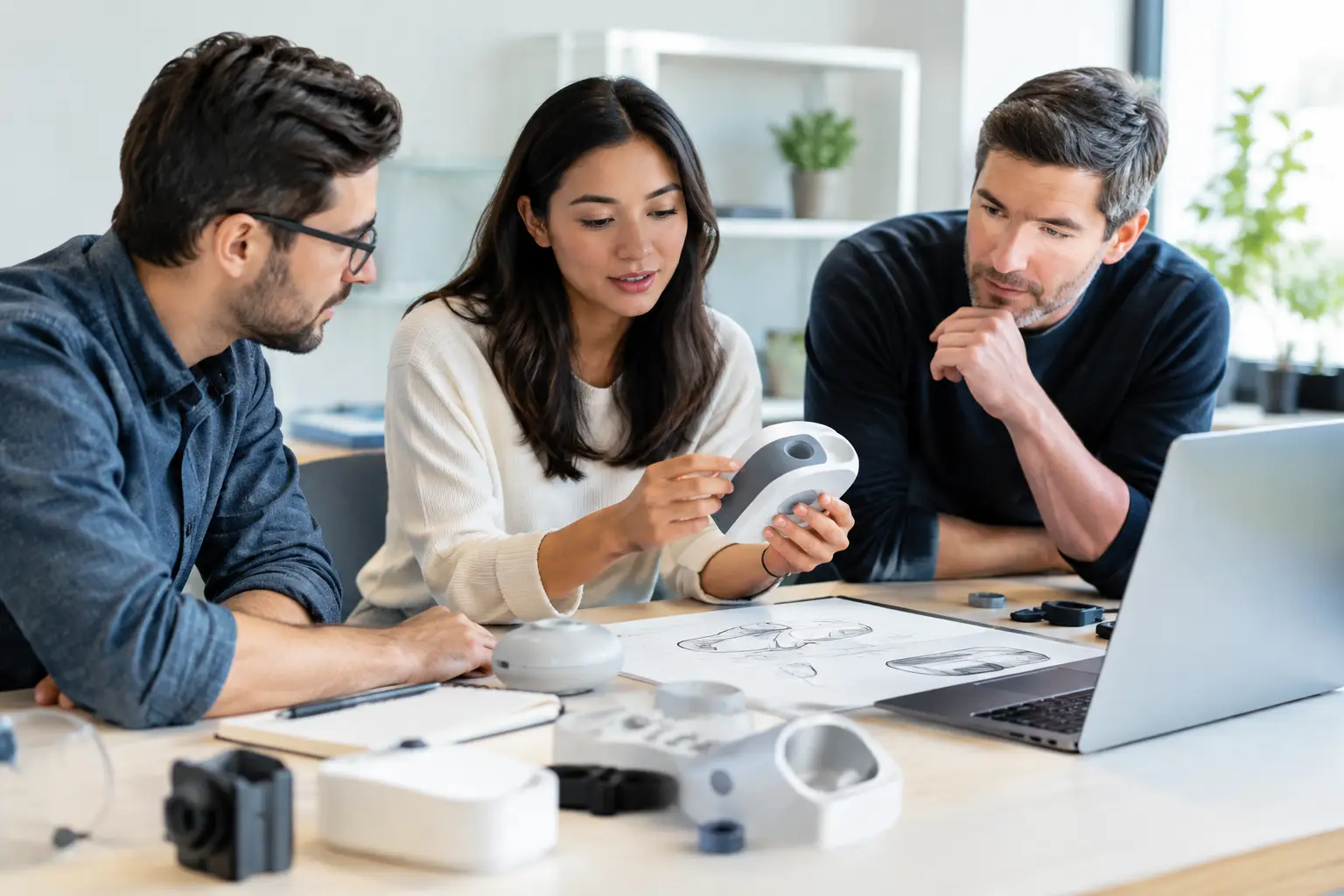
A looks-like model focuses on form, size, ergonomics, and visual appeal. This can be useful for customer feedback, presentations, and early industrial design review, but it may not function.
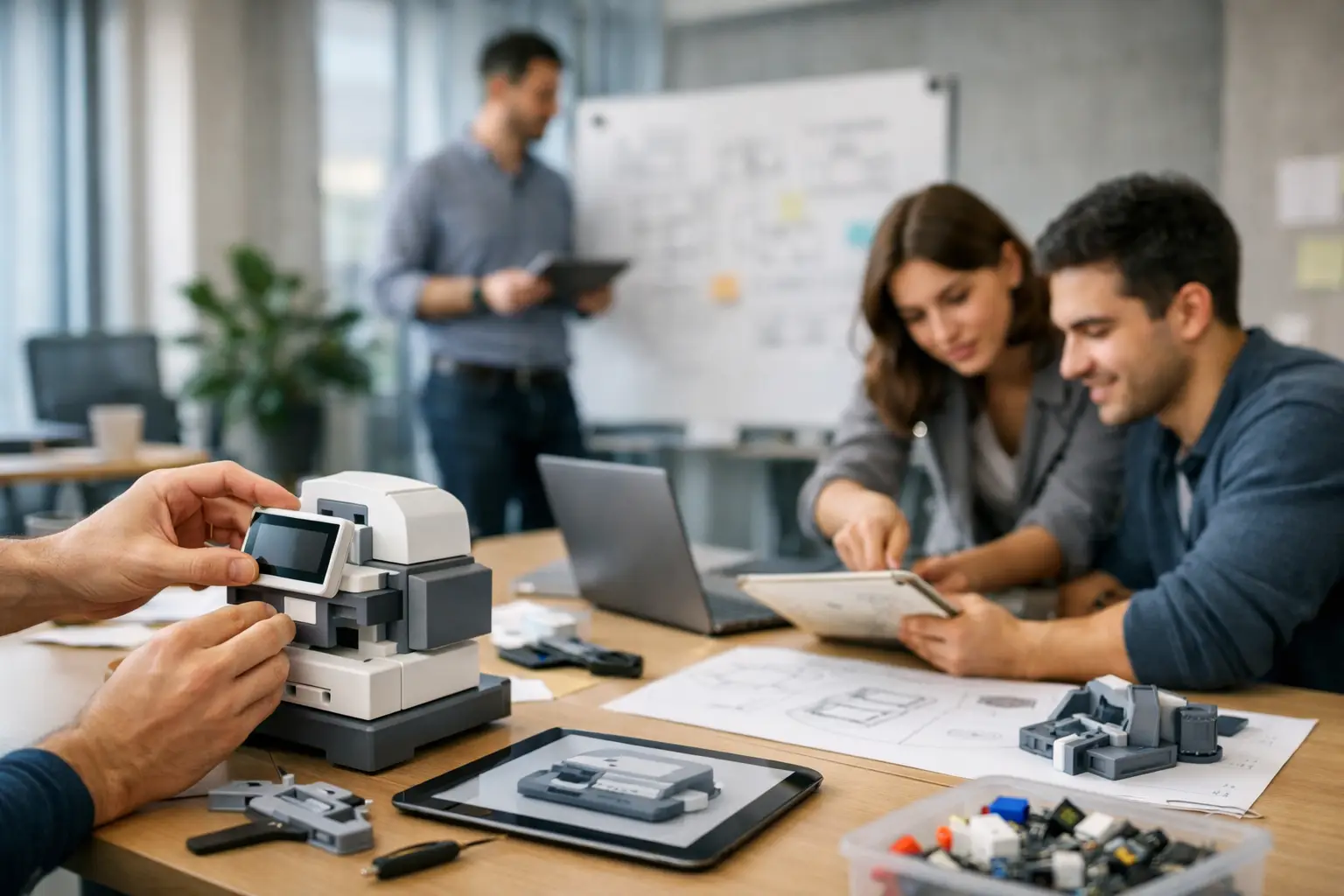
A works-like prototype demonstrates how the product performs. It may have exposed electronics, temporary housings, or hand-built components. This is often where mechanical, electrical, and software decisions begin to converge.
An engineering prototype is closer to the product you intend to manufacture. It is used to verify assemblies, test tolerances, evaluate materials, and reduce production risk. A pre-production prototype goes further, using processes and components that closely resemble the planned manufacturing method.
Do not assume you need the last version first. A polished housing is not valuable if the internal mechanism still fails. On the other hand, a medical, safety-related, or highly regulated product may need more disciplined documentation and testing from the earliest stages. The appropriate level depends on your market, timeline, funding, and risk.
Build a Prototype Development Plan Before You Build
A capable prototype starts with requirements. These are the measurable conditions the product must meet, not just preferences about what would be nice to have. A requirement might specify a load capacity, operating temperature, charging time, product weight, target size, or required number of use cycles.
Separate requirements into three groups: must-have functions, desirable features, and future enhancements. This gives the engineering team permission to protect the essential product experience when trade-offs appear. Trade-offs always appear. A smaller product may cost more to manufacture. A stronger material may be harder to machine. A lower component cost may introduce supply-chain risk.
Your plan should also establish a budget and decision gates. Instead of approving one large development effort with vague expectations, break the project into stages. At each stage, review what was learned, what remains uncertain, what the next prototype should prove, and whether the opportunity still justifies further investment.
This approach protects capital. It also gives founders a more credible story when speaking with investors or partners because progress is tied to evidence, not optimism.
Design for Testing, Not Just Presentation
A prototype earns its value when it is tested under conditions that resemble actual use. That means setting pass-fail criteria before the test begins. If a portable product must survive a drop, decide the drop height, surface type, and number of cycles. If it must fit different users, define the body sizes, hand positions, or installation environments that matter.
User feedback is equally important, but it must be structured. Showing someone a prototype and asking, “Do you like it?” usually produces polite answers. Instead, give users a realistic task and observe where they hesitate, misuse the product, or create their own workaround. Ask what they expected to happen and what would make them choose another solution.
Technical testing and user testing reveal different problems. Engineering may confirm that the product works perfectly, while customers show that the setup is confusing or the benefit is not obvious. Both findings are valuable, especially before you commit to expensive tooling.
Document each test with photos, measurements, results, and changes made. This record helps your team avoid repeating failed paths. It can also support conversations with manufacturers, investors, and patent counsel by showing how the concept has developed.
Protect Intellectual Property Without Stalling Progress
Many startup founders worry about sharing an idea before it is protected. That concern is reasonable, but fear should not prevent you from developing the evidence needed to make sound decisions.
Treat confidentiality and patent strategy as part of the development process. Use appropriate agreements when discussing proprietary details with outside parties, keep dated records of design work, and be deliberate about public disclosures. A product shown publicly, described in a crowdfunding campaign, or discussed carelessly can affect patent options. Patent rules are fact-specific, so founders should seek qualified legal guidance before publicizing an invention.
A functional prototype can strengthen the quality of those discussions because it clarifies what is genuinely new, how the product works, and which features are central to its commercial value. It may also reveal that the best patentable opportunity is not the broad original concept, but a specific mechanism, configuration, process, or user interaction developed during engineering.
At Industry of Concepts, prototype development can be coordinated with patent-oriented product planning, so technical decisions are not made in isolation from the protection strategy. The goal is not simply to create a model. It is to develop a product asset with a clear path toward ownership and commercialization.
Choose Materials and Methods That Match the Stage
Rapid prototyping gives startups many options, including 3D printing, CNC machining, laser-cut parts, cast urethanes, soft goods fabrication, and off-the-shelf electronic modules. Each has strengths and limitations.
A 3D-printed part can be fast and economical for fit checks, enclosure studies, and early functional trials. It may not accurately represent the strength, finish, or heat resistance of an injection-molded production part. CNC-machined components often offer better precision and material performance, but they can be more costly and slower for complex changes. Hand-built assemblies can validate an idea quickly, though they may conceal issues that appear when the design must be repeated thousands of times.
The right question is not, “What is the best prototyping method?” It is, “What method produces reliable answers for this stage?” Select the process based on what you need to learn next.
Prepare Early for Manufacturing Reality
A functional prototype is a milestone, not proof that a product is ready for production. Manufacturing introduces constraints around part count, assembly time, draft angles, tolerances, quality inspection, packaging, supplier availability, and unit economics.
Bring manufacturing thinking into the project before the final design is frozen. Ask how many parts are truly necessary, whether fasteners can be simplified, whether components can be sourced consistently, and whether technicians can assemble the product without special adjustments. Small changes at this point can reduce cost and improve reliability substantially.
Founders should also resist quoting a production price based only on a one-off prototype. A custom-built model and a manufactured product follow different economics. Tooling may raise upfront costs while lowering the price per unit. Electronics may be inexpensive at low volume but difficult to source at scale. A realistic plan accounts for both development expense and the cost of delivering a competitive finished product.
Keep Moving With Evidence
The strongest startups do not wait for a perfect prototype before they talk to users, refine the concept, or plan the next step. They build a focused version, learn from it, and make the next investment with better information.
Your idea deserves more than a sketch that stays in a notebook or a prototype built without a purpose. Define the problem, test the critical risk, protect what matters, and let each version bring you closer to a product people can use, value, and buy.