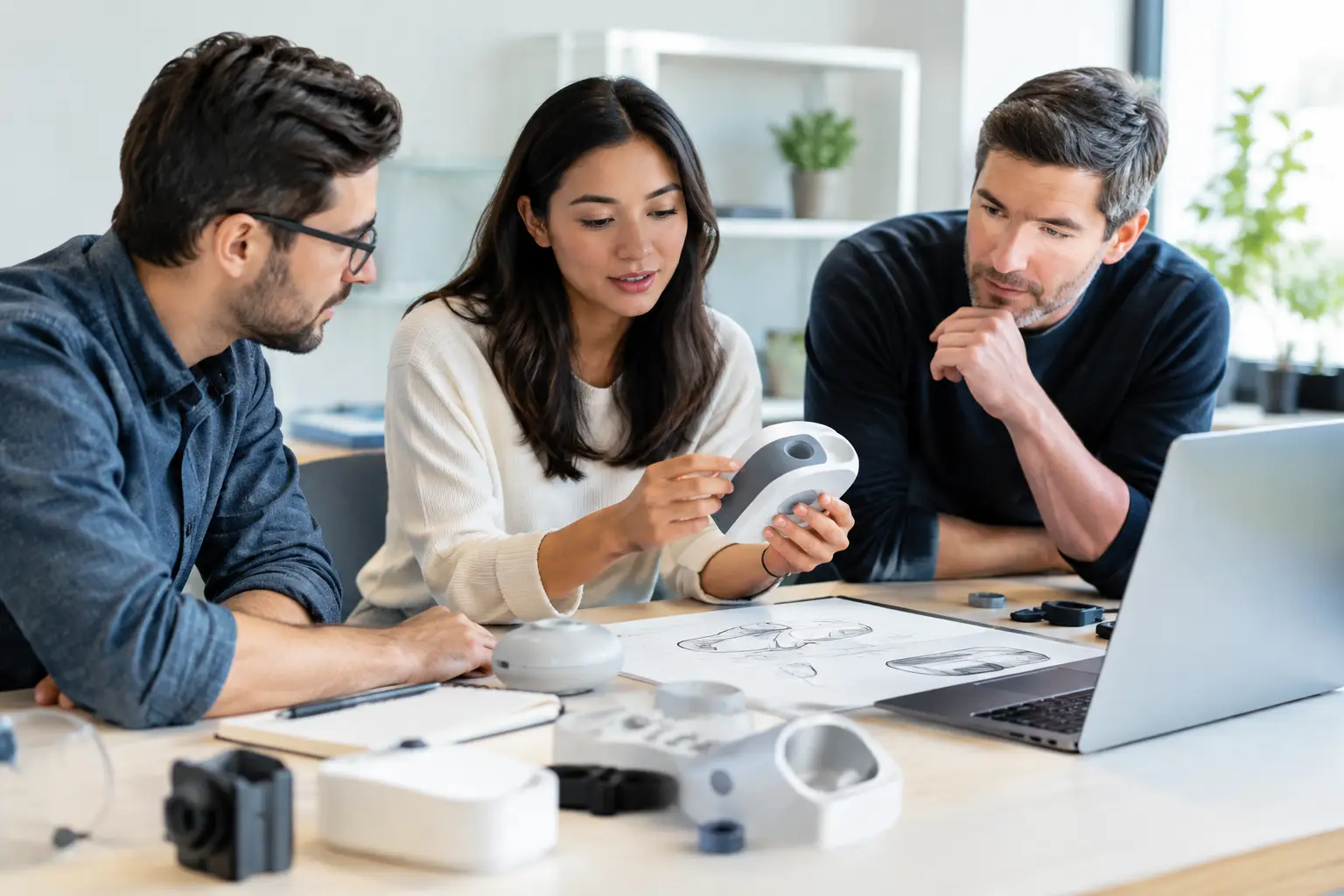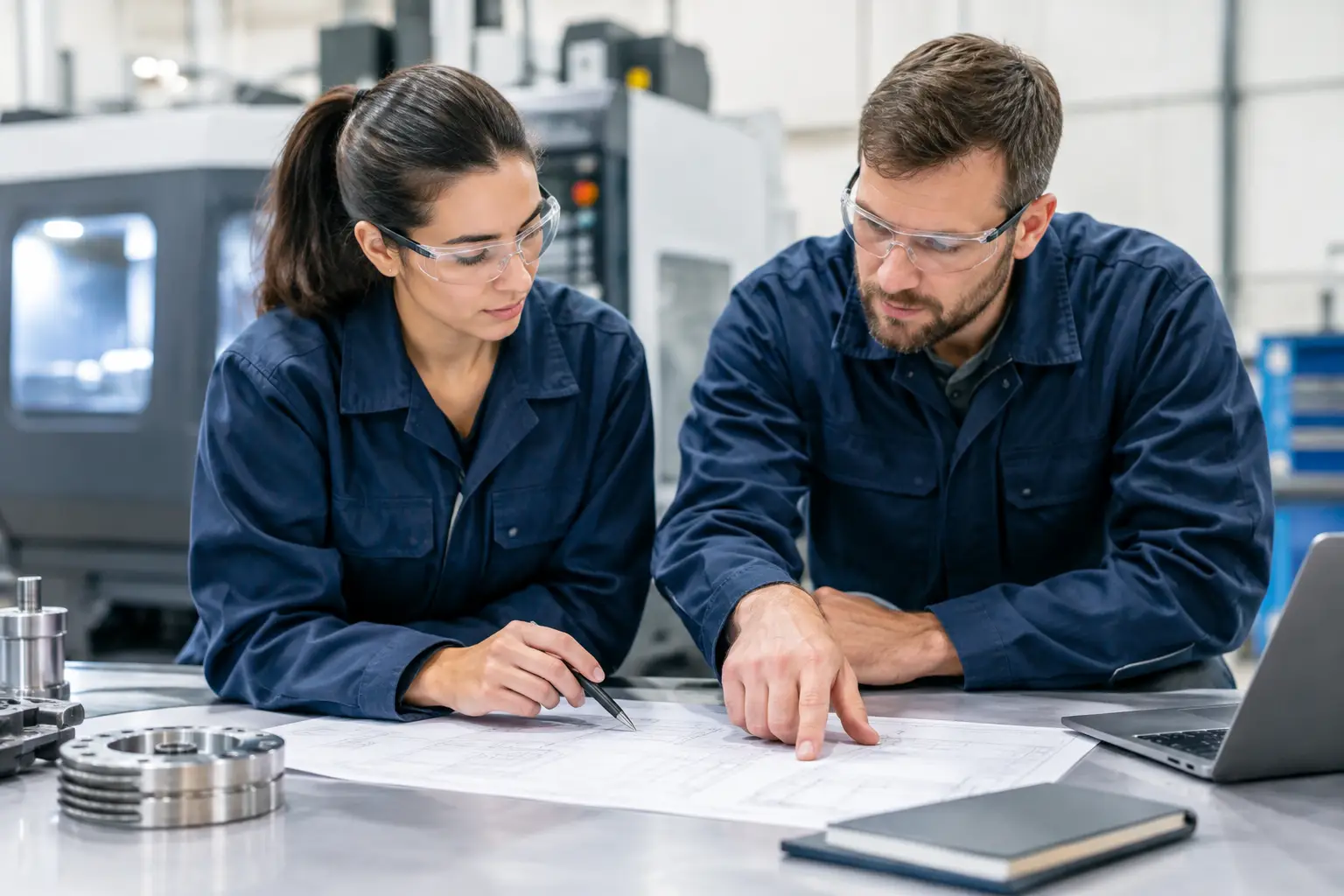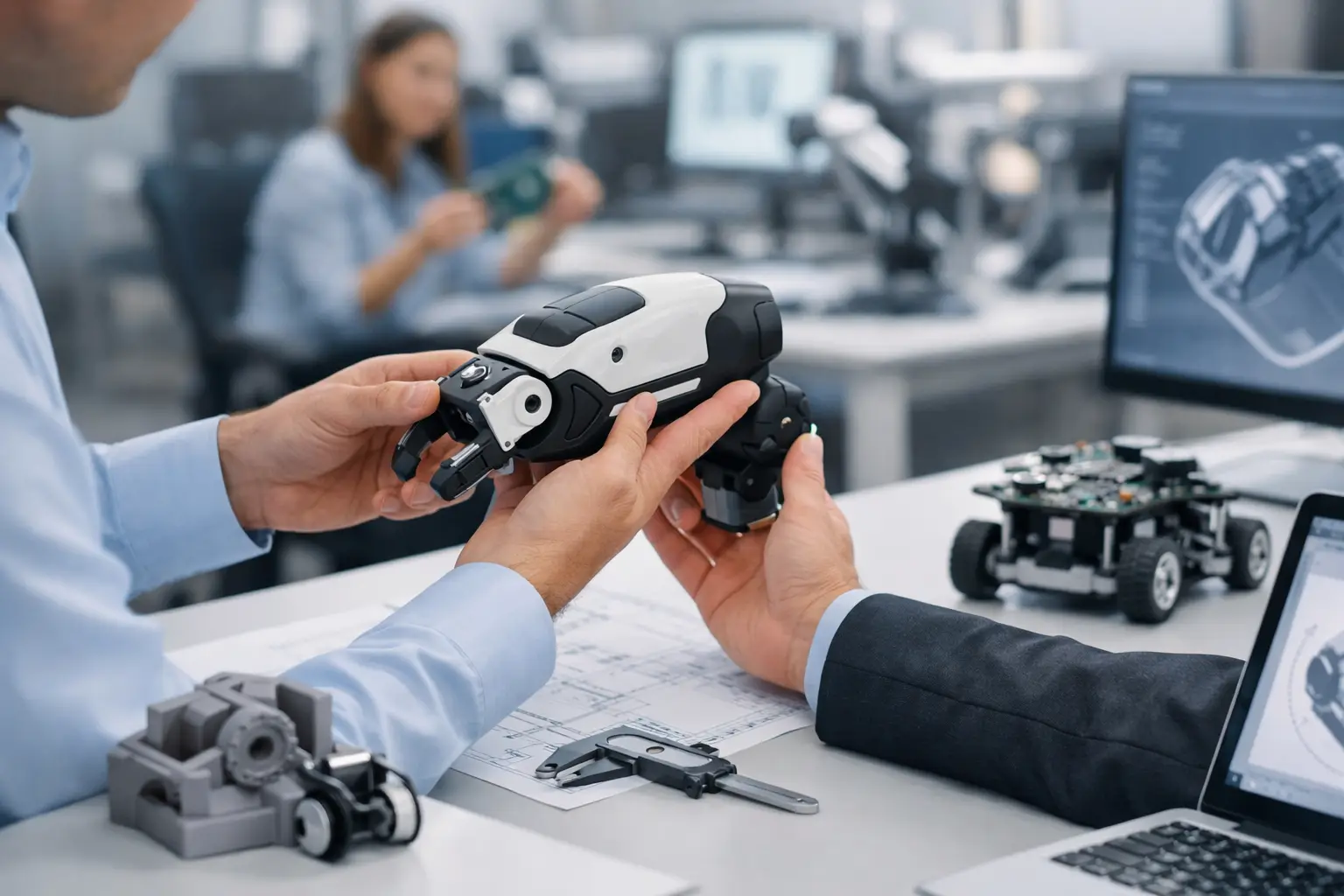
A sketch can explain an idea. A functional prototype has to survive real questions: Does it work as intended? Can a user operate it without confusion? Will the mechanism fit, move, connect, or withstand the forces involved? A capable functional prototype development company turns those questions into a practical development plan, then builds evidence you can use to improve the product, support a patent strategy, and make smarter decisions before spending heavily on manufacturing.
For inventors and founders, that distinction matters. Many promising products stall because the early version looks convincing but cannot demonstrate the feature that makes the invention valuable. Others are built too quickly, with no clear testing goal, and create more uncertainty than they remove. The right development partner helps you move from an idea you can describe to a product you can demonstrate.
What a functional prototype development company should deliver
Functional prototyping is not simply 3D printing a physical object. Depending on the product, it can involve industrial design, CAD modeling, mechanical engineering, electronics, sensors, firmware, materials selection, and assembly. The work should be based on what the prototype needs to prove.
For a consumer product, that may mean confirming ergonomics, button placement, assembly, or durability. For an electro-mechanical device, the key question may be whether a motor, circuit, battery, switch, and moving components work together within a realistic enclosure. A medical, industrial, or safety-related concept may require closer attention to materials, tolerances, performance limits, and the path toward compliance.
A professional team should help define the prototype’s job before choosing its materials or manufacturing method. That may sound basic, but it prevents a common mistake: paying for production-level detail when the immediate need is only to test a core mechanism. The reverse is also true. A low-fidelity model is not enough when you need to prove that a system can operate under real conditions.
The best result is not always the most polished prototype. It is the one that gives you reliable answers about your product’s commercial and technical potential.
Start with the questions that matter most
A product idea often includes many possible features. Early development becomes more efficient when the team identifies the few assumptions that could make or break the concept. If the invention depends on a unique locking mechanism, fluid path, folding action, charging system, or user interaction, that feature deserves attention before cosmetic details.
Build around a testable claim
A useful prototype begins with a clear statement: the product must perform a specific task under defined conditions. For example, a portable device may need to support a certain load, fit in a limited space, operate for a set amount of time, or be usable with one hand. Those conditions guide engineering decisions and create an objective way to evaluate the result.
This approach also protects your budget. It is easy to keep adding features to an early prototype because every idea feels essential. In reality, each added part introduces cost, lead time, integration risk, and additional ways for the model to fail. A focused first build allows you to learn faster, then invest in the next version with better information.
Separate the product vision from the first prototype
Your long-term product may include custom finishes, mobile connectivity, retail packaging, advanced automation, and several use modes. The first functional version may need only enough of that vision to prove the central value proposition. This is not cutting corners. It is disciplined product development.
A strong partner will explain what can be deferred and what cannot. If a component’s size affects whether the product can physically work, it belongs in the prototype. If a color finish has no effect on function or buyer testing, it may wait. The priorities depend on your market, funding stage, patent goals, and the risk within the invention.
Engineering choices determine what the prototype proves
Prototype materials and processes should match the test. 3D-printed plastics can be excellent for form studies, fit checks, enclosures, and many early functional parts. Machined metal may be necessary when strength, heat, precision, or wear is central to the concept. Off-the-shelf components can accelerate an electronic proof of concept, while custom circuit boards may be justified once the product architecture is more stable.
There are trade-offs in every choice. A rapid build can provide early feedback but may not represent final manufacturing quality. A highly refined prototype can impress investors and potential buyers, but it may take longer and cost more. Neither option is automatically right. The decision should follow the question you need answered next.
This is why engineering experience matters. Components do not operate independently once they are assembled. A small change in wall thickness can affect fastening. Battery placement can affect balance and heat. A motor can introduce noise, vibration, and power requirements that change the entire enclosure. Practical prototype development accounts for these interactions before they become expensive redesigns.
Patent-aware development should begin early
Inventors are right to be concerned about ownership. A functional prototype can strengthen your understanding of an invention, but it should also be developed with care around intellectual property. The features that are technically distinctive may need to be documented clearly through drawings, descriptions, iterations, and testing.
Patent strategy and engineering are related, but they are not the same service. An engineer determines how a product can work. A registered patent attorney or patent agent provides legal advice on patentability and filing. Still, a product development firm that understands patent-oriented prototype work can help you organize technical information in a way that supports informed conversations with your legal counsel.
Before publicly showing, selling, or disclosing your invention, seek appropriate legal guidance. Timing can affect your options, especially if you plan to pursue protection beyond the United States. The practical goal is to develop your product without casually giving away the advantage you are trying to build.
A functional prototype development company needs a clear process
You should not have to guess what happens after the first conversation. While every invention requires its own plan, a well-managed project usually moves through four connected stages:
- Concept definition: The team reviews the idea, intended user, technical challenge, competitive need, and target outcome for the first prototype.
- Design and engineering: Industrial design, CAD, mechanisms, electronics, and component decisions are developed into a buildable package.
- Prototype fabrication and testing: Parts are produced, assembled, and evaluated against the questions defined at the start.
- Iteration and next-step planning: Findings are used to improve the design, prepare for patent support, investor discussions, user feedback, pilot production, or manufacturing engineering.
Communication is as valuable as the process itself. Ask how often you will review designs, what deliverables you will receive, who owns the resulting work, and how changes are approved. You want a partner that can explain technical decisions in plain language without hiding behind jargon.
At Industry of Concepts LLC, the goal is to give inventors and product businesses access to the same coordinated thinking that an internal R&D team would provide: concept development, design, engineering, prototyping, and practical preparation for the next stage.
How to choose the right development partner
Look beyond a gallery of attractive prototypes. Ask whether the company has experience with the kind of problem your product presents. A firm that produces attractive housings may not be the best fit for a mechanism-heavy device. A team experienced in electronics may need additional capability for soft goods, fluid systems, or high-load mechanical assemblies.
Ask what the proposed prototype will prove, what it will not prove, and what risks remain after the build. Direct answers are a good sign. Product development includes uncertainty, and no credible partner should promise that an early prototype guarantees manufacturing success. What they should provide is a thoughtful plan for reducing uncertainty in the right order.
Cost also deserves an honest discussion. The lowest quote may omit engineering, testing, revision cycles, documentation, or the coordination needed to make parts work together. A more detailed proposal can be the better value when it identifies assumptions, scope boundaries, and the purpose behind each phase. Affordability is not about paying the least for a model. It is about investing in work that prevents avoidable mistakes later.
Build proof before you build volume
A functional prototype is a decision-making tool. It can show you whether to revise, file, fund, license, test with users, or prepare for production. It can also reveal that a promising concept needs a different approach before you commit more resources. That discovery is progress, not failure.
Your idea deserves more than a presentation model and more than vague assurances. Start by defining the one thing your product must prove, then work with an engineering partner prepared to turn that proof into a real, testable object.