A working prototype can prove that an idea deserves to exist. A production model proves that the idea can be made repeatedly, safely, and profitably. Understanding the prototype vs production model decision helps inventors avoid a costly mistake: treating an early proof of concept as if it were ready for the factory floor.
For a first-time inventor, the difference can feel frustrating. You may have a prototype that looks great, performs its main function, and earns positive feedback. That is real progress. But manufacturing introduces a different set of demands, including material consistency, assembly time, supplier capability, quality control, packaging, and unit cost.
The goal is not to rush past prototyping. It is to use each development stage for the job it is designed to do.
Prototype vs Production Model: The Core Difference
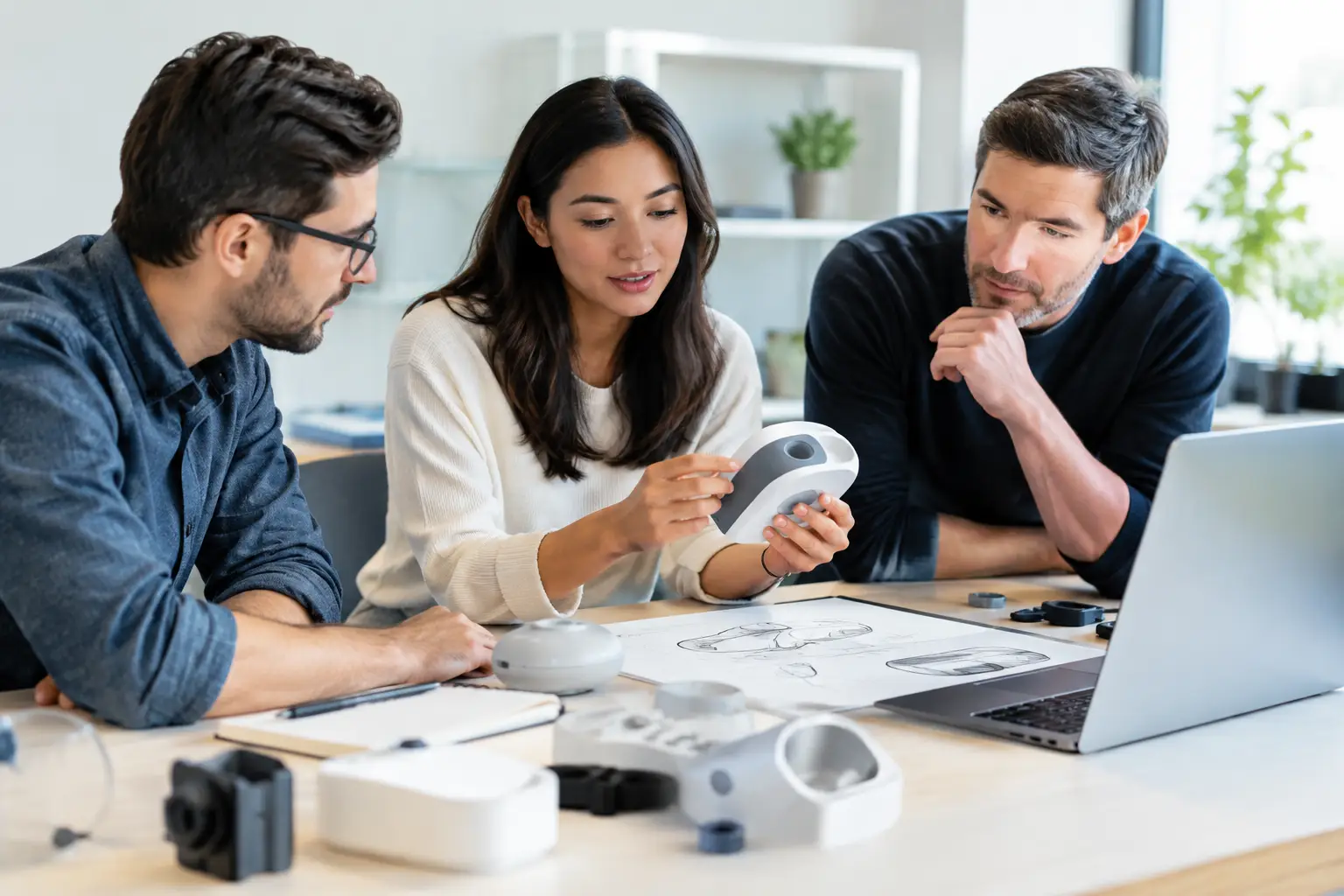
A prototype is a model built to answer questions. Depending on its stage, it may test appearance, ergonomics, mechanical movement, electronics, usability, or a core technical claim. It can be rough or polished. It can be made through 3D printing, machining, hand fabrication, off-the-shelf components, or a combination of methods.
A production model is the version of the product engineered for repeatable manufacturing. It must work within the realities of a specific production process. Rather than proving that one unit can be built, it demonstrates that hundreds or thousands of consistent units can be built at a target cost and quality level.
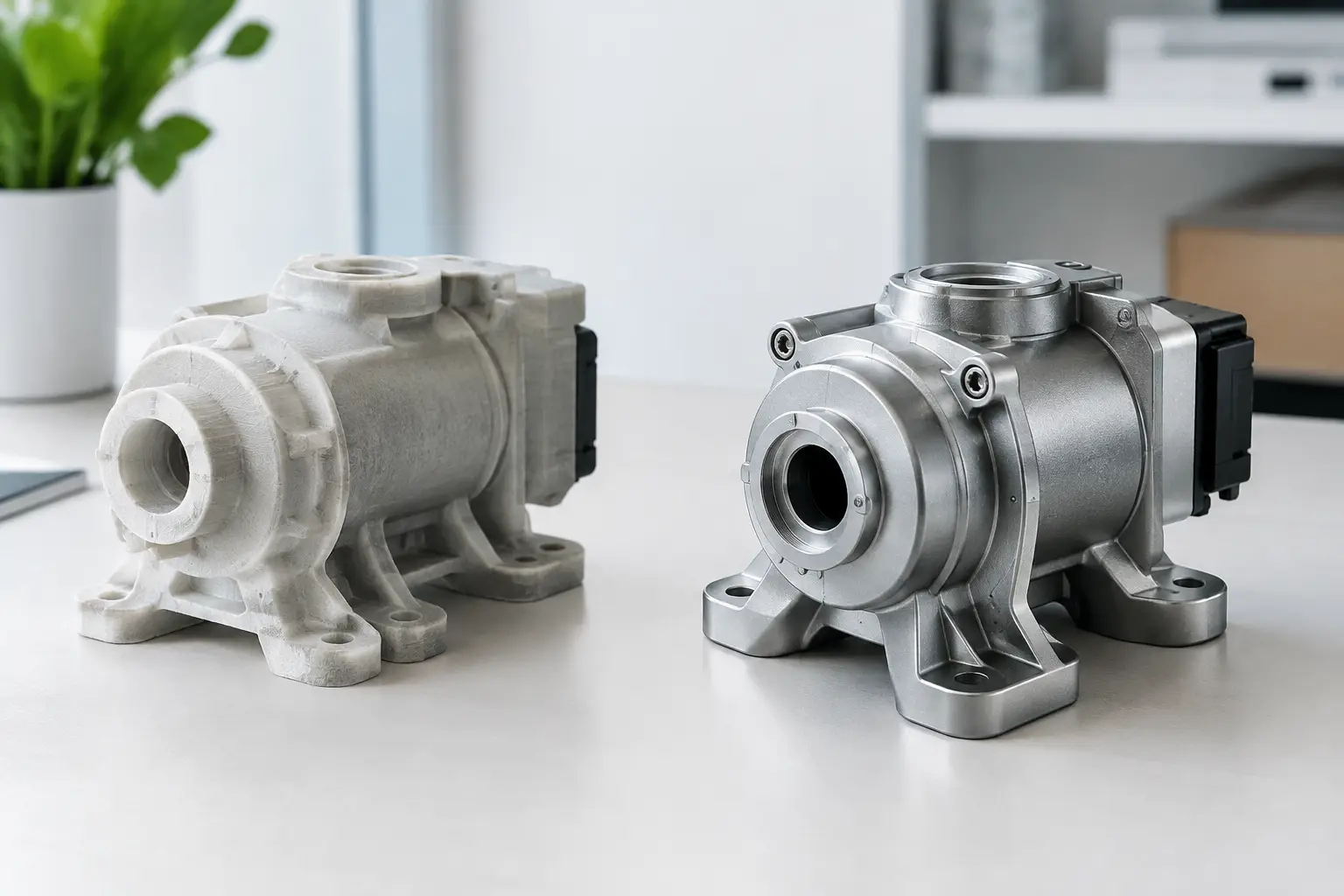
That distinction matters because the methods used to create a prototype are often too slow, expensive, or variable for production. A 3D-printed housing may be perfect for testing hand feel and internal component fit, for example, but injection molding may be the right choice for a consumer product that requires durable parts at volume.
A prototype asks, “Does this concept work?” A production model asks, “Can we make this product well, every time?”
What a Prototype Should Accomplish
Not every prototype needs to do everything. Building the wrong type of prototype too early wastes time and budget. A smart product development process matches the prototype to the decision that needs to be made next.
An appearance prototype focuses on form, dimensions, color, finish, and how the product is perceived. This can be valuable when presenting an idea to potential partners, investors, retailers, or customers. It may not include functioning electronics or moving mechanisms.
A proof-of-concept prototype focuses on the invention’s central function. If a product relies on a new mechanism, sensing method, or electro-mechanical interaction, this stage tests whether the underlying idea performs as intended. It may look nothing like a finished consumer product, and that is acceptable. Function comes first.
A functional prototype brings form and function closer together. It allows more realistic user testing and exposes problems that are difficult to identify in computer models alone. Users may reveal that a handle is uncomfortable, a control is confusing, a latch takes too much force, or a charging port is poorly positioned.
For inventors considering intellectual property protection, a well-documented functional prototype can also support a stronger patent development strategy. The prototype should reflect what the invention actually does, not merely what it is imagined to do. Patent protection and product engineering are separate disciplines, but they should inform one another from the beginning.
Why a Functional Prototype Is Not Automatically Production-Ready
A prototype can be highly functional and still be unsuitable for manufacturing. This is one of the most common sources of surprise for new product entrepreneurs.
Prototype parts are often made one at a time. An engineer may adjust dimensions by hand, source a specialty fastener, use an adhesive during assembly, or modify a component after it has been printed. Those choices are normal in development. They help the team learn quickly.
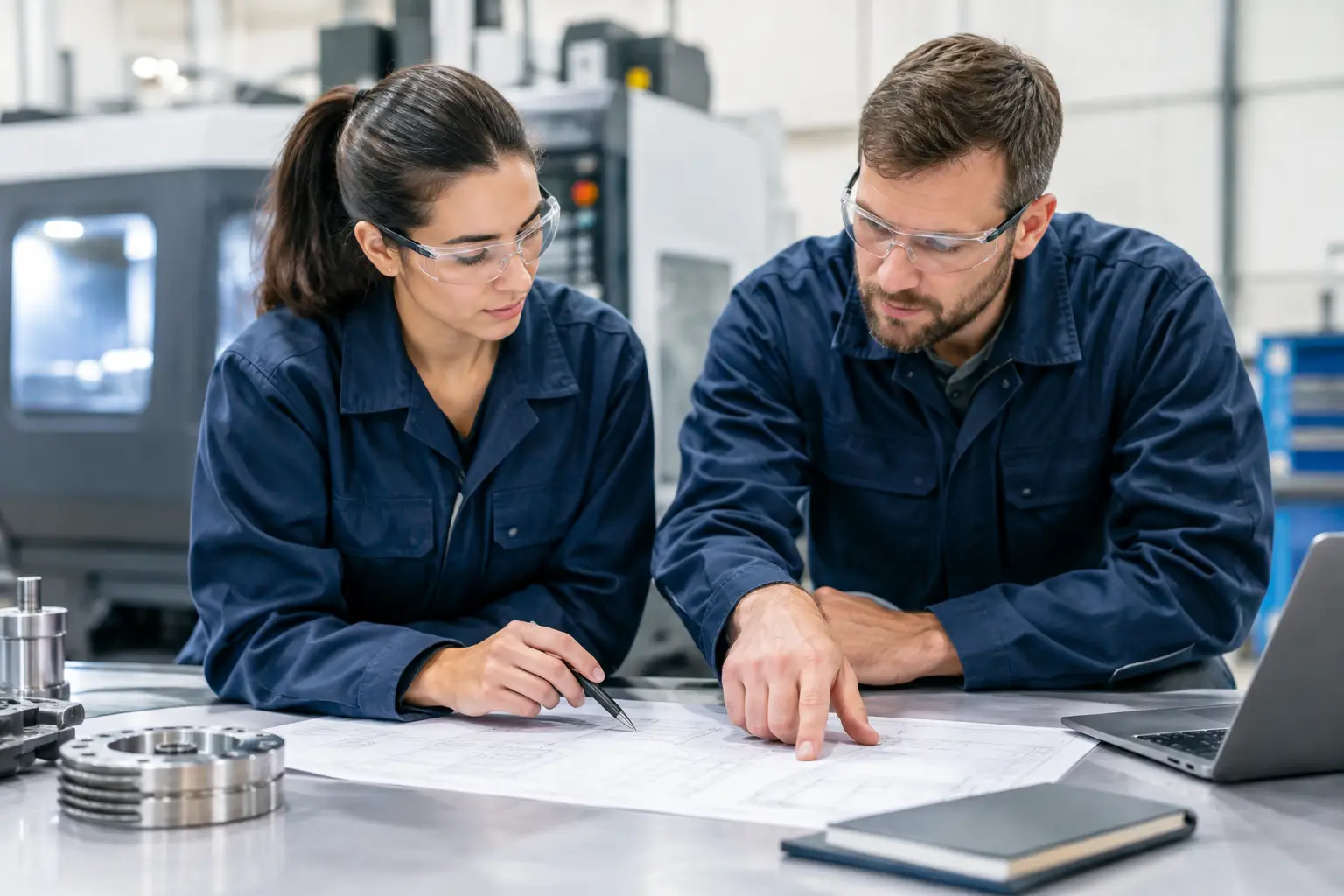
Production requires tighter control. Every part needs defined tolerances. Every material needs a reliable source and specification. Every assembly step needs to be practical for trained workers or automated equipment. Components must fit together despite normal variations in manufactured parts.
Consider a handheld electronic device. The prototype may contain a development board, loose wiring, a 3D-printed enclosure, and a battery selected because it was readily available. The production model may require a custom circuit board, protected battery design, molded housing, fastening strategy, heat management, labeling, compliance testing, and packaging designed to prevent shipping damage.
The product idea did not change. The engineering requirements did.
The Production Model Is Built Around Repeatability
A production model begins with Design for Manufacturing, often called DFM. This process adapts the design to the capabilities and limitations of the chosen manufacturing method.
If a part will be injection molded, wall thickness, draft angles, undercuts, ribs, and gate locations must be considered. If it will be machined, the geometry must account for tool access and cycle time. If it will be assembled from sheet metal, bends, fasteners, and finishing processes must be specified. Electronics require attention to component availability, circuit board manufacturing, assembly, and testing.
This is where engineering decisions begin to affect business decisions directly. A beautiful feature that adds a few seconds to assembly may be reasonable for a premium, low-volume product. At high volume, that same feature can add substantial labor cost and create more opportunities for defects.
A production-ready design also accounts for the supply chain. Can the selected material be sourced reliably? Is the component available from more than one supplier? Are lead times manageable? Is there a substitute if a part becomes unavailable? These questions rarely appear in an early prototype, but they can determine whether a launch succeeds.
Cost Changes at Every Stage
Many inventors assume a production model should simply be a more polished prototype. In reality, the cost structure changes completely.
Prototyping usually has higher per-unit costs because parts are custom-made, quantities are low, and changes are frequent. That is acceptable because the purpose is learning. Spending money to uncover a major design flaw before tooling or inventory is ordered can save far more than it costs.
Production may require significant upfront investment in engineering refinement, tooling, fixtures, testing equipment, packaging development, and initial material purchases. In return, the per-unit cost should decline as production volume increases.
The right path depends on the product and market. A specialized industrial device may be best produced in small batches using machining and low-volume assembly. A mass-market consumer product may justify injection mold tooling if demand is validated. There is no universal manufacturing method, only the method that fits the expected volume, performance requirements, target price, and launch strategy.
When Should You Move From Prototype to Production?
The move should happen when the most important uncertainties have been reduced. You should have evidence that the product’s core function works, that users understand its value, and that the design can be manufactured within a realistic cost range.
It is also wise to address patent strategy before publicly disclosing the invention or committing to a final design direction. Changes made for production can alter how a product is constructed, so the development team should keep clear records of the invention, design evolution, and technical features that may matter for protection.
Before authorizing tooling or a major production run, review the design through several lenses: performance, usability, manufacturability, material selection, assembly, quality testing, cost, packaging, and compliance requirements. A product that works on a workbench still needs to survive real customer use, shipping, storage, and service conditions.
A pilot run can provide an essential bridge between prototype and full production. It exposes assembly issues, confirms cycle times, tests inspection procedures, and provides real units for final evaluation. It is much easier to improve a pilot process than to correct a problem after a large production order is underway.
Build the Right Model for the Decision Ahead
The best prototype is not always the one that looks most finished. It is the one that gives you reliable answers about your product’s next critical decision. The best production model is not simply an attractive version of that prototype. It is a carefully engineered system for delivering the same customer experience at scale.
Industry of Concepts helps inventors and product businesses move through both stages with practical engineering support, from concept development and functional prototyping to manufacturing-minded design and patent-oriented documentation. Bring the uncertainty to the surface early, solve it before production, and give your idea the disciplined development it needs to become a product people can buy with confidence.