A prototype can make an invention easier to explain, test, improve, and protect. But when you choose patent prototype features, the goal is not to build every feature you may eventually sell. The goal is to build enough of the right features to prove what makes your idea different, show that it can work, and give your patent and product-development decisions a stronger foundation.
For inventors and startup founders, this distinction can prevent costly detours. A highly polished prototype with the wrong functionality may look impressive but fail to support the technical story behind the invention. A simple proof-of-concept model, built around the invention’s core mechanism, may provide far more value at an earlier stage.
Choose Patent Prototype Features Around the Core Invention
Start with a direct question: What is the new, useful, and non-obvious part of this product?
It may be a mechanical connection, a sequence of operations, a specialized material arrangement, a sensor-driven response, or a new combination of familiar components. Whatever the answer is, your prototype should make that point visible and credible. If the invention is a locking mechanism, the prototype must show the mechanism locking. If the invention is an app-controlled device, it should demonstrate the connection between software commands and the physical result.
Do not let secondary ideas distract from the core. Product color, packaging, decorative surfaces, and extra user settings can matter later, but they rarely belong in an early patent-oriented prototype unless they affect the invention’s function or a planned design patent strategy.
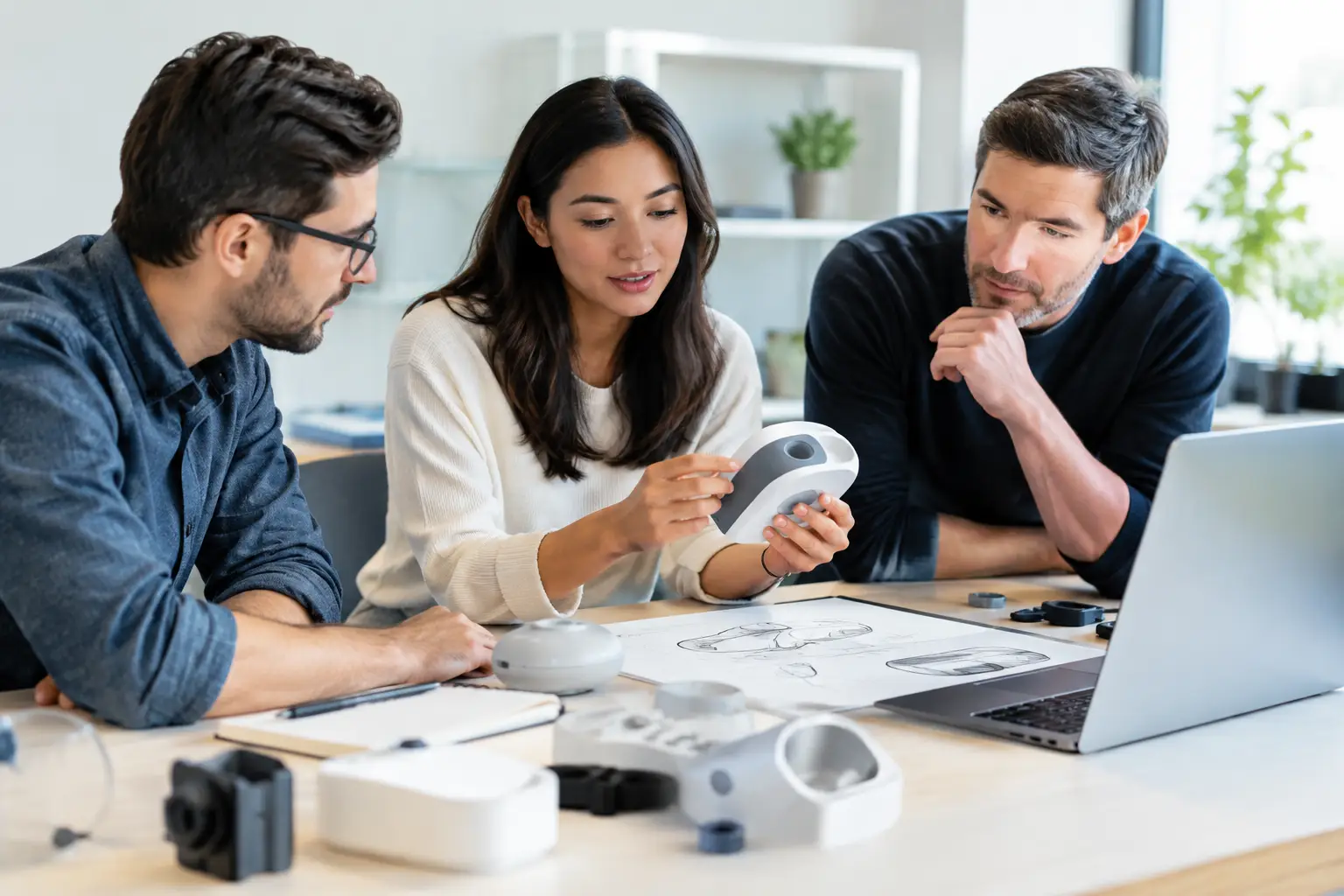
A focused prototype also makes communication easier. When you present the concept to an engineer, patent professional, potential manufacturing partner, or investor, they should quickly understand what the invention does and why it is different.
Separate Filing Features From Market Features
Most successful products need more features for the market than they need for an initial prototype. That is normal. The mistake is trying to solve every commercial requirement before validating the patent-critical function.
Patent-oriented features answer questions such as: Does the invention operate as described? Can its parts be identified and explained? Are there useful alternatives or variations worth protecting? Does the product solve the problem in a distinct way?
Market-oriented features answer a different set of questions: Is the product comfortable to use? Does it have the right appearance for its retail category? Can it be made at a target cost? Will buyers understand it without instructions?
Both groups matter, but they do not always require the same prototype. A functional proof-of-concept can validate the invention first. A later appearance model or engineering prototype can refine usability, materials, dimensions, manufacturability, and brand presentation. This staged approach protects your budget and keeps progress moving.
Build Features That Demonstrate Function
A patent application does not always require a physical prototype. However, creating one can reveal gaps that sketches and descriptions miss. It can also help an inventor describe the invention more accurately and identify valuable improvements before filing.
The most useful prototype features generally fall into four practical categories:
- Core operating components that perform the invention’s essential task, such as moving parts, electronic controls, valves, sensors, or structural elements.
- Interfaces between components that show how the parts connect, communicate, align, engage, or transfer force.
- User interactions that demonstrate how someone activates, adjusts, installs, carries, or maintains the product.
- Failure-prevention features that address a real problem, such as a safety lock, sealing method, alignment guide, overload protection, or error alert.
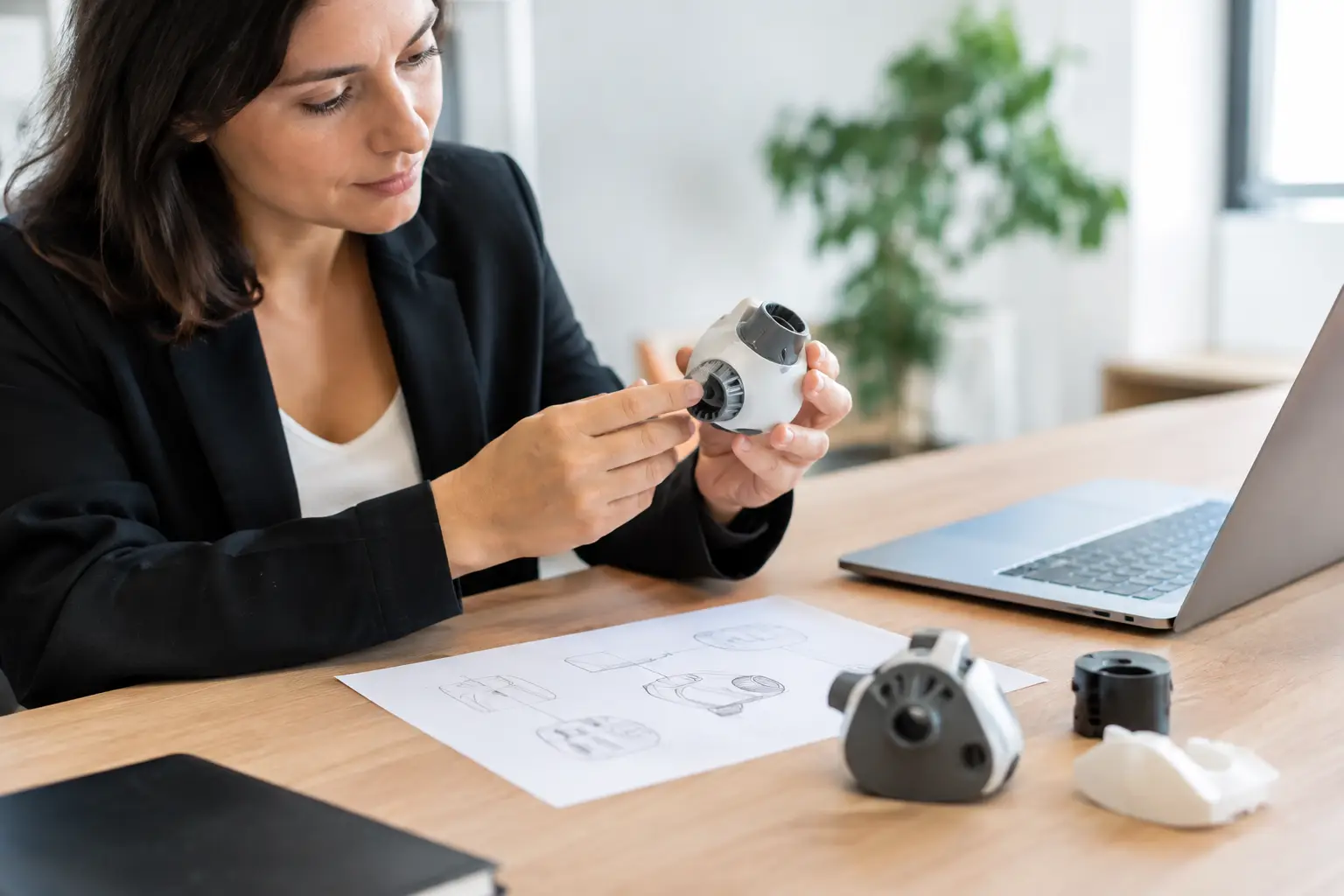
You may not need production-grade versions of every component. A 3D-printed housing, off-the-shelf motor, temporary wiring, or simplified control board can be appropriate if it proves the functional relationship that matters. The question is whether the prototype communicates the invention honestly and clearly, not whether it is ready for a retail shelf.
Use the Prototype to Find What Needs Protection
A working model often produces a valuable surprise: the first version may expose a better version of the invention.
For example, testing may reveal that a mechanism needs a specific angle to engage reliably, that a housing shape prevents a jam, or that a particular sequence of user steps delivers the strongest result. Those discoveries may become part of the patent strategy if they contribute to the invention’s usefulness or distinction.
This is why prototype development and patent preparation should inform each other. Your technical drawings, component choices, testing results, and design revisions can help create a fuller record of how the invention works. They can also help identify alternative embodiments – different ways the invention can be built or used without changing its central concept.
An experienced development team can help translate these findings into clear technical documentation for patent counsel. Industry of Concepts LLC supports this process by combining engineering development with patent-oriented prototype planning, so inventors can move from an idea to tangible evidence of function.
Avoid Features That Create Cost Without Clarity
Early prototypes should be deliberate investments, not overloaded wish lists. Before adding a feature, ask whether it does one of three things: proves the invention works, makes the invention easier to explain, or tests a meaningful commercial risk.
If it does none of those things, defer it.
Custom electronics are a common example. They may be necessary when the invention depends on a unique circuit, control logic, or power-management method. But if a basic development board can prove that a sensor triggers the desired mechanical action, a custom circuit may be premature. The same principle applies to expensive tooling, specialized finishes, and large production runs.
There are exceptions. A medical, safety-related, or regulated product may require a more rigorous prototype sooner because performance, materials, or risk controls are central to the concept. Products with demanding size constraints may also need closer-to-final packaging earlier in the process. The right level of prototype fidelity depends on what must be validated next.
Plan for More Than One Prototype Version
Inventors often ask for “the prototype” as if one model must do everything. In most cases, a series of prototypes is more efficient.
The first model may test a mechanism or basic user interaction. The next may integrate electronics, refine dimensions, and improve reliability. A later engineering prototype may use materials and processes closer to manufacturing reality. Each version should have a specific decision behind it: verify motion, confirm performance, reduce part count, test user handling, or prepare for production.
This progression also helps prevent a major problem: locking into a design too early. If you build a costly, fully finished model before testing the essential function, changes become harder and more expensive. By contrast, modular prototype components allow engineers to change dimensions, attachment methods, electronics, and materials as the invention develops.
Document What the Prototype Teaches You
A prototype is more valuable when its lessons are captured. Keep records of design files, dated sketches, photographs, test conditions, failures, revisions, and the reasons for technical decisions. These materials can help your development team communicate clearly and help patent counsel understand the invention’s evolution.
Documentation is especially useful when you discover alternatives. Perhaps the product works with a spring, magnet, latch, or software-controlled actuator. Perhaps the device can be handheld, wall-mounted, or integrated into another system. Not every variation deserves equal attention, but identifying them early can improve the scope of your filing strategy and reduce the chance of protecting only one narrow version.
Be thoughtful about public disclosure as well. Showing an invention publicly before filing can create risks, particularly if international patent protection may be important. Before posting prototype videos, launching crowdfunding, displaying the product at a trade show, or sharing detailed technical materials broadly, speak with qualified patent counsel about timing and confidentiality.
Make the Next Prototype Decision With Purpose
The best patent prototype is not necessarily the most expensive, polished, or complex model. It is the model that answers the most important question standing between your idea and the next smart decision.
If you can clearly identify the invention’s core function, build only what is needed to demonstrate it, document what you learn, and refine the design in stages, you will spend development dollars where they create real progress. Bring the problem your product solves, your rough concept, and your questions to the table – then let purposeful engineering turn uncertainty into something you can test, explain, and protect.