A prototype that looks good in a meeting but fails during testing can cost you months. That is why choosing among the best rapid prototyping companies is not just about who can print a part fastest. It is about finding a development partner that can turn an early idea into something functional, manufacturable, and worth protecting.
For inventors, startup founders, and growing product companies, that distinction matters. A prototype is often the first real proof that your concept works. It may support investor conversations, user testing, engineering decisions, manufacturing planning, or even a patent strategy. If the company building it does not understand the full product development process, you can end up paying twice – once for the prototype and again to fix what was missed.
What the best rapid prototyping companies actually do
The market uses the term loosely. Some firms are essentially fabrication shops. You send a file, they print or machine it, and they ship it back. That can be useful if your design is already complete and you only need a part made.
But many clients are not at that stage. They may have a sketch, a rough concept, or a partially developed CAD model that still needs engineering input. In that case, the best rapid prototyping companies do more than produce a physical object. They help refine the design, choose the right process, identify weak points, and make sure the prototype serves a business purpose.
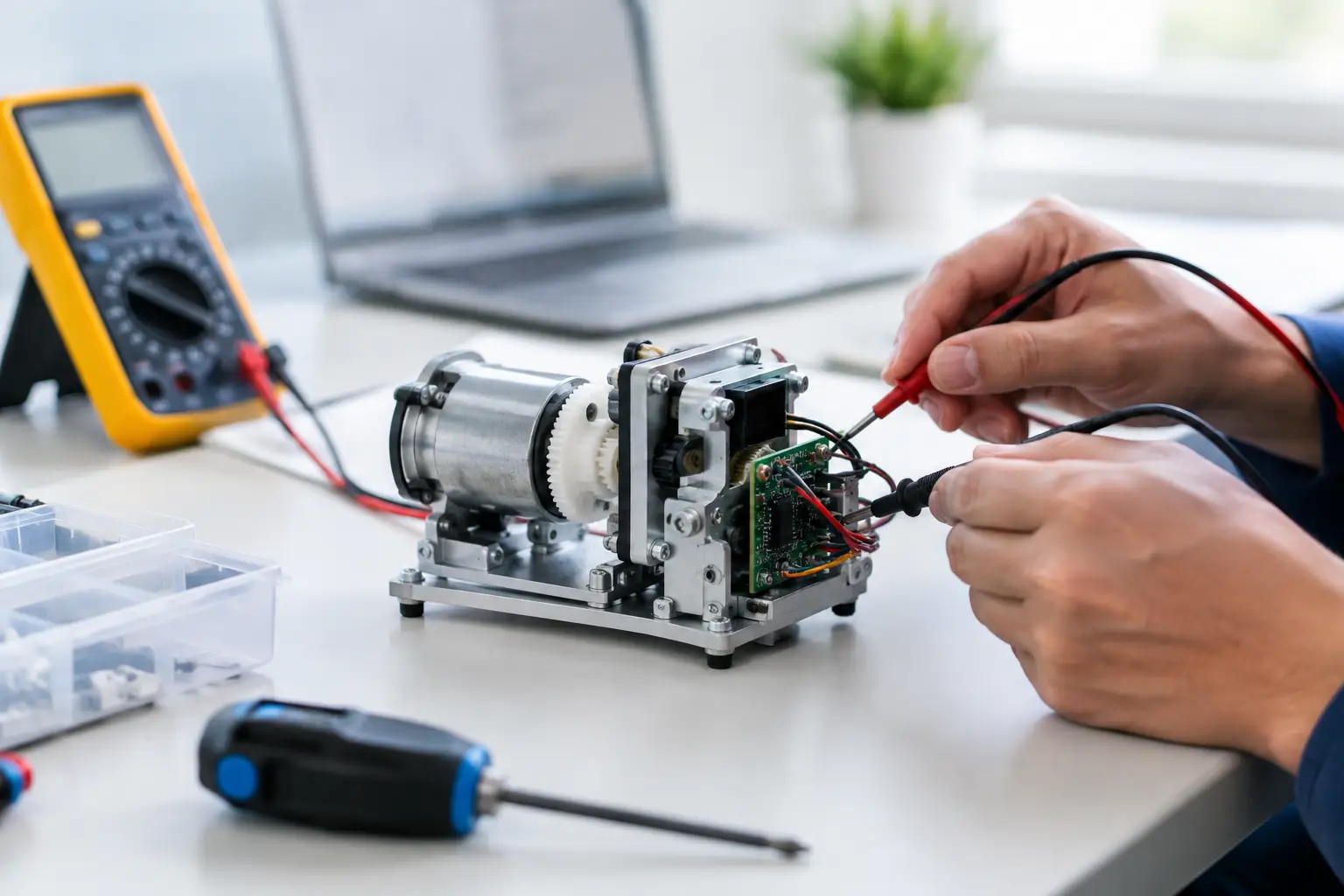
That purpose changes from project to project. A proof-of-concept prototype is different from a visual model. A prototype intended for patent support is different from one built for a trade show. A functional electro-mechanical prototype requires a different skill set than a simple plastic enclosure. The right company should be able to explain those differences clearly and guide you toward the version you actually need.
How to evaluate the best rapid prototyping companies
The first question is not price. It is capability.
A strong prototyping partner should be comfortable working across design, engineering, and fabrication. That includes CAD development, material selection, tolerance considerations, testing needs, and the realities of scaling toward production. If a company only talks about printers and lead times, that is a sign you may be dealing with a vendor, not a product development resource.
Experience with your type of product also matters. Consumer products, medical concepts, industrial devices, wearable products, and electro-mechanical assemblies all bring different constraints. Some require cosmetic precision. Others require repeated functional testing. Others depend on internal component integration. The best fit is usually a company that understands the category, not just the machine.
Communication is another major factor that gets overlooked. Early-stage product development is full of decisions, revisions, and trade-offs. You need a team that can explain what they are doing, where the risks are, and what can be improved before more money is spent. Fast turnaround means less if you are unclear about what you are getting.
And then there is intellectual property. For many inventors and founders, this is where the stakes get real. If your prototype is tied to a patent filing or a proprietary concept, you want a company that respects confidentiality and understands how development choices can affect documentation, claims support, and overall filing strategy. Not every prototype shop is built for that.
Speed matters, but context matters more
Rapid prototyping is often sold on speed alone. Speed is valuable, especially when you are racing toward a pitch, a customer demo, or a product milestone. But speed without direction can send you the wrong way faster.
A good prototyping company should help you answer practical questions before building anything. What are you trying to prove? Does the prototype need to function, or just show form and fit? Are you testing usability, mechanics, electronics, or assembly? Will this version inform tooling and manufacturing later?
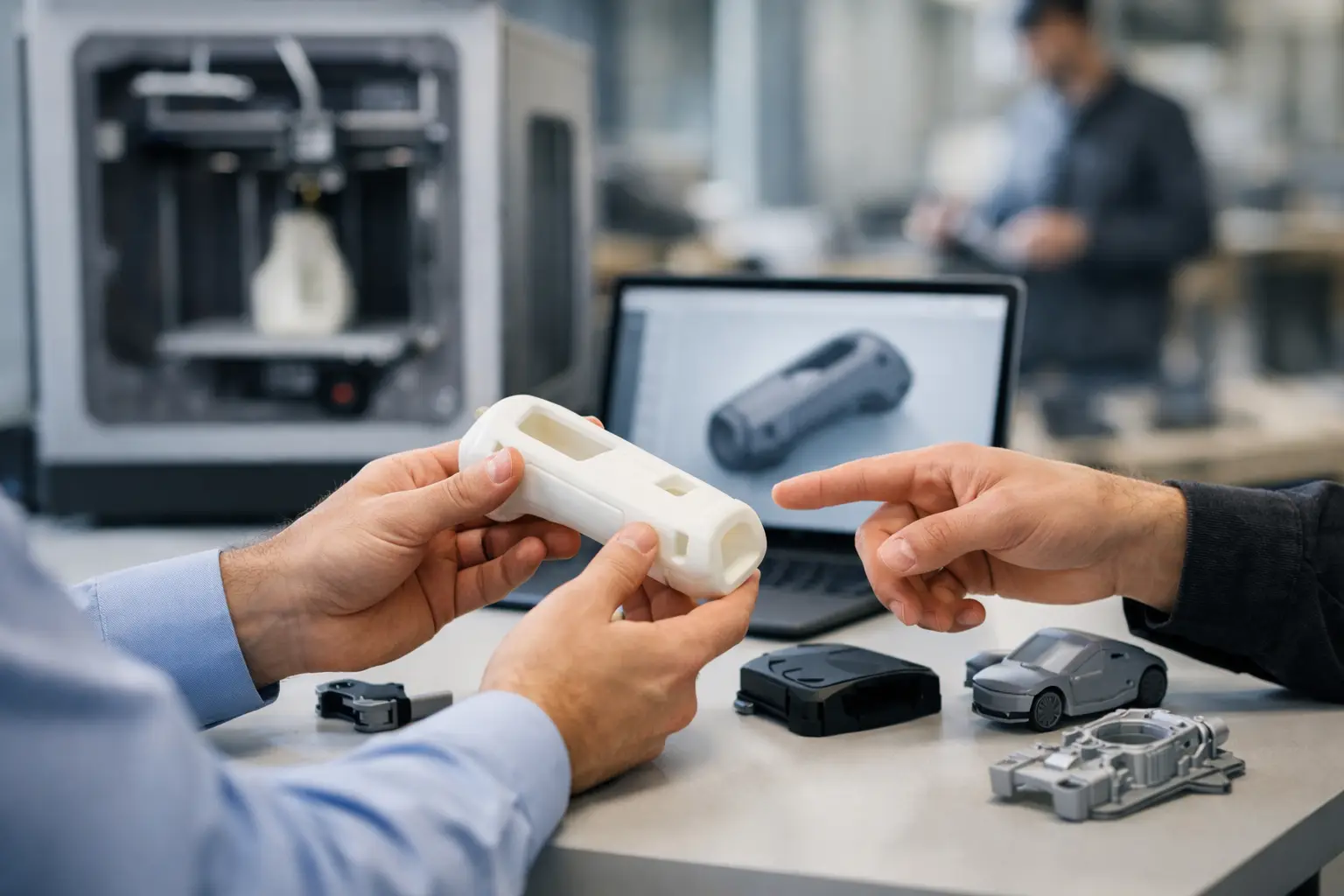
Those questions shape everything from material selection to fabrication method. For example, a 3D printed part may be perfect for early form studies, but not for load-bearing functional validation. CNC machining may produce a stronger and more production-like component, but it may cost more and take longer. Urethane casting can make sense for short-run testing, while sheet metal fabrication may be essential for a product housing that needs realistic structure.
The best firms are honest about those trade-offs. They do not push one method for every job. They match the prototype to the stage of development.
Red flags to watch for
If a company promises a prototype with little discussion of your goals, be careful. That often means they are focused on output, not outcome.
Another red flag is weak engineering involvement. A prototype can look impressive and still hide major issues related to part geometry, assembly, durability, heat, power, or manufacturability. If you are developing a real product rather than a visual mockup, engineering should be part of the conversation early.
Be cautious with vague pricing as well. Some variation is normal because prototype work depends on complexity, revisions, and materials. But a serious company should still be able to explain what drives cost and what level of development is included. If everything sounds cheap at the start, the change orders may tell a different story later.
You should also pay attention to whether the firm thinks beyond the prototype itself. If there is no discussion of testing, refinement, production readiness, or IP protection, you may be working with a narrow service provider when you actually need a broader product development partner.
Why full-service support often wins
For many early-stage products, prototyping is not an isolated task. It sits in the middle of a larger process that includes concept development, industrial design, engineering, revisions, manufacturing planning, and often patent-related documentation.
That is why full-service firms often create better outcomes than standalone prototype vendors. They can connect each step instead of treating the prototype as a disconnected deliverable. The prototype becomes part of a development path, not a dead end.
This is especially valuable for entrepreneurs and inventors who do not have an internal engineering team. You may need help defining the product architecture, selecting components, identifying risks, and preparing for the next stage after the first model is built. A partner with broader capabilities can keep the project moving without forcing you to coordinate multiple vendors.
In practice, that usually saves time, reduces confusion, and limits rework. It can also improve your ability to present the product to investors, manufacturers, licensing prospects, or patent counsel with greater confidence.
Best rapid prototyping companies for inventors and startups
If you are an inventor or startup founder, the best rapid prototyping companies are usually not the biggest names with the most automated ordering systems. They are the firms that can meet you where you are.
That means they can start with an idea that is still taking shape. They can help turn rough thinking into CAD, evaluate technical feasibility, build an appropriate prototype, and advise on what comes next. They are comfortable with uncertainty, but disciplined in execution.
This is also where service model matters. A transactional vendor may be efficient if you already know exactly what you need. A consultative engineering firm is often the better choice if you need guidance, iteration, and strategic development support. One is selling parts. The other is helping build a product business.
For clients who care about commercialization, that difference is substantial. The strongest partners think about cost, manufacturability, performance, user experience, and protection of the idea from the start. They understand that a prototype is not just a model. It is leverage.
Industry of Concepts works in that lane – helping clients move from uncertain early ideas to functional prototypes with engineering depth and patent-minded support. For the right project, that kind of integrated approach can make a significant difference.
The right question to ask before you hire anyone
Instead of asking who can make a prototype fastest, ask who can help you make the right prototype first.
That shift changes the search entirely. You begin looking for technical judgment, development experience, communication, confidentiality, and a clear process. You start comparing companies based on whether they can support your next decision, not just your current order.
If your goal is to bring a real product to market, that is the standard that matters. A good prototype should reduce uncertainty, not create more of it.
Choose a company that treats your concept like a serious business asset. When the prototype is built with the right purpose, the next step becomes a lot clearer.