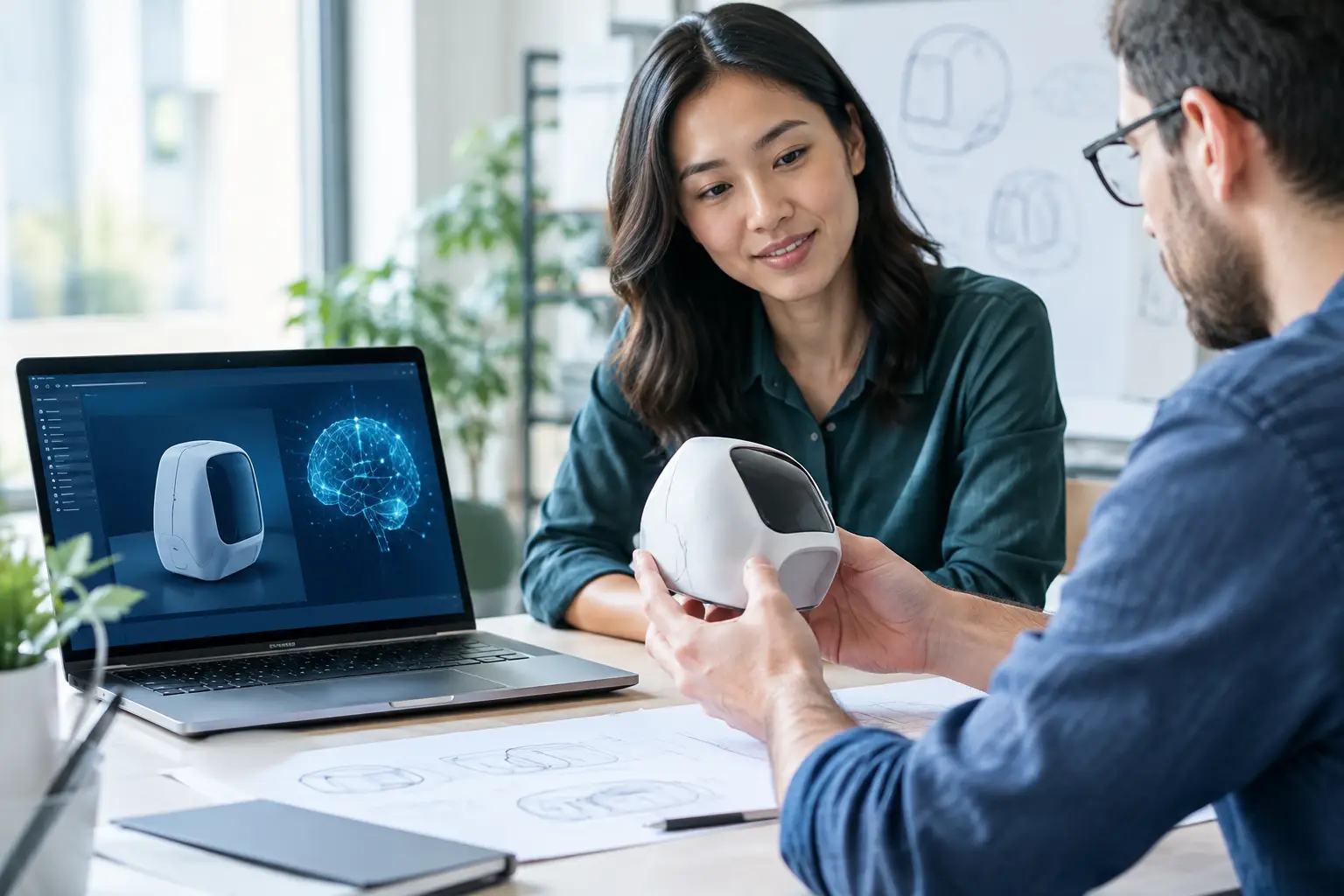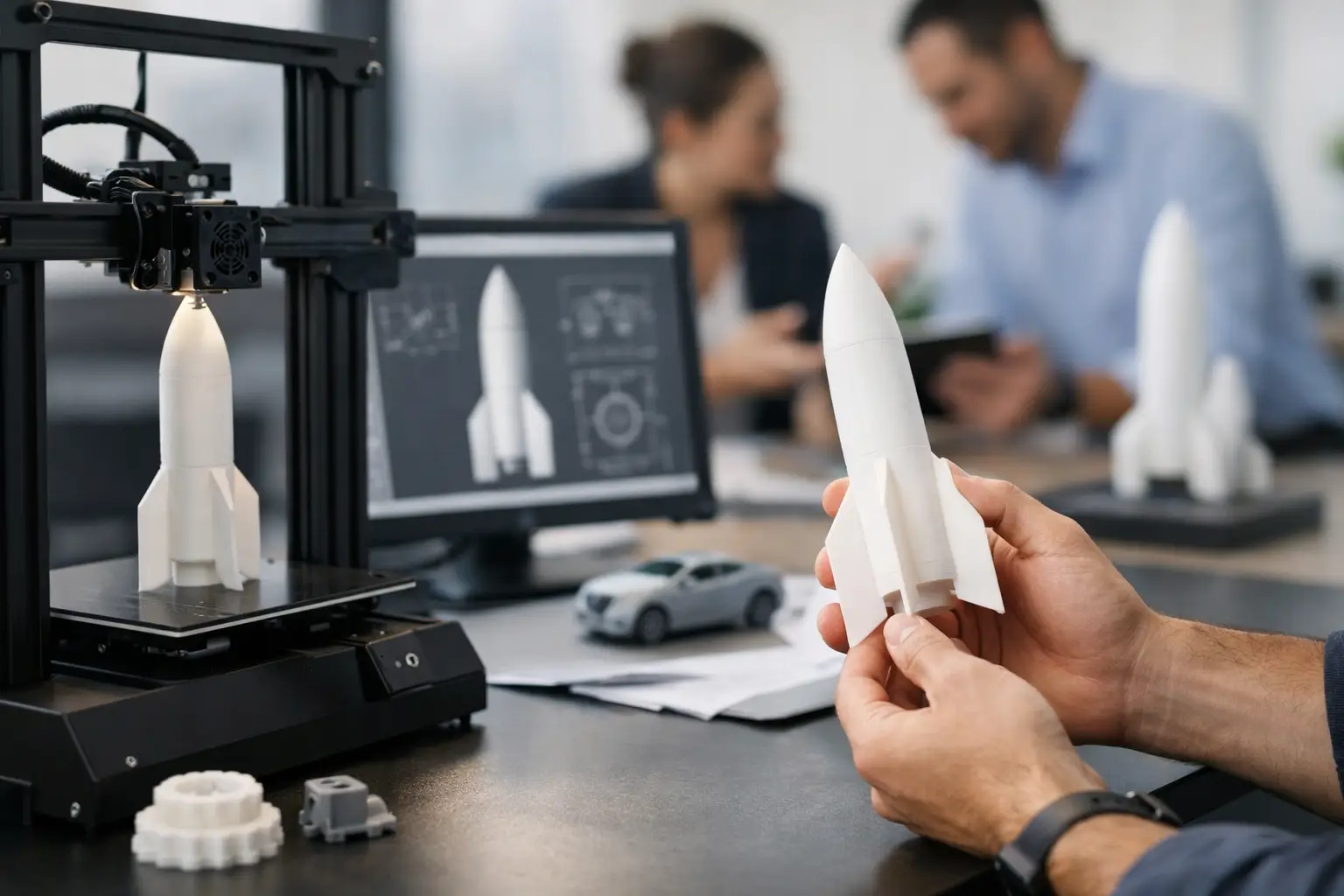
A sketch on a notepad feels promising until you have to prove it works. That is where rapid prototyping 3D printing changes the conversation. Instead of debating an idea in the abstract, you can hold it, test it, revise it, and move forward with real data. For inventors, startups, and growing companies, that shift saves time, reduces risk, and turns guesswork into a practical development process.
The biggest mistake early-stage product teams make is assuming a prototype is only for presentation. In reality, a prototype is a decision-making tool. It helps you evaluate size, usability, fit, internal components, assembly, and manufacturing direction long before you commit major capital. When speed matters and budgets are tight, 3D printing gives you a faster path to those answers.
Why rapid prototyping 3D printing matters early
At the start of product development, most ideas are still full of unknowns. The concept may look good in a sketch or CAD model, but physical reality has a way of exposing weak points. Buttons may be too small. Wall thickness may be off. A hinge may bind. A housing may not leave enough space for electronics.
Rapid prototyping 3D printing lets you catch those problems while changes are still manageable. That is a major advantage for entrepreneurs who cannot afford long development cycles or repeated tooling costs. A printed prototype can reveal whether the product feels intuitive, whether it can be assembled efficiently, and whether the design is moving toward a commercially realistic solution.
This also matters from an IP and patent support standpoint. If you are serious about protecting a product idea, a well-developed prototype can help clarify the invention, support documentation, and strengthen conversations around filing strategy. It does not replace legal guidance, but it often makes the invention more concrete and easier to define.
What 3D printing does well in the prototyping process
The strength of 3D printing is not that it does everything. The strength is that it answers early and mid-stage product questions quickly.
If you need to compare two handle shapes, validate enclosure size, test how components fit together, or review a mechanism before investing in more expensive fabrication, 3D printing is often the right move. You can go from CAD to physical model in a short timeframe and make revisions without restarting the entire process.
That speed creates momentum. Instead of waiting weeks to find out whether a concept is viable, you can make informed decisions in days. For startups trying to impress investors, inventors preparing for licensing discussions, or businesses evaluating a new product line, that kind of responsiveness is valuable.
It is also one of the most cost-effective ways to iterate. Traditional fabrication methods can be excellent, but they are not always ideal when the design is still changing. Printing early prototypes allows you to test more ideas without absorbing the cost of premature tooling.
What rapid prototyping 3D printing does not solve on its own
This is where experience matters. A printed part can look impressive and still lead you in the wrong direction if the prototype is not built with the right purpose in mind.
A visual model is not the same as a functional prototype. A prototype that checks exterior form may not accurately represent final material strength, heat resistance, surface finish, or manufacturing tolerances. That does not make 3D printing less useful. It just means the process has to be aligned with the question you are trying to answer.
For example, if your main goal is ergonomic review, a printed form model may be enough. If your goal is mechanical testing, the material and print method matter much more. If your goal is manufacturing preparation, you may need to adjust the CAD model so it reflects how the part will eventually be produced at scale.
This is why serious product development should not stop at printing a part. It should include engineering judgment, design refinement, and a clear understanding of what comes next.
How a good prototype program really works
The best results come from treating prototyping as a sequence, not a one-time event. In most projects, there is an evolution.
Concept models
These are early prints used to evaluate size, shape, and overall product direction. They are useful when the product is still taking form and you need a quick way to compare options.
Functional prototypes
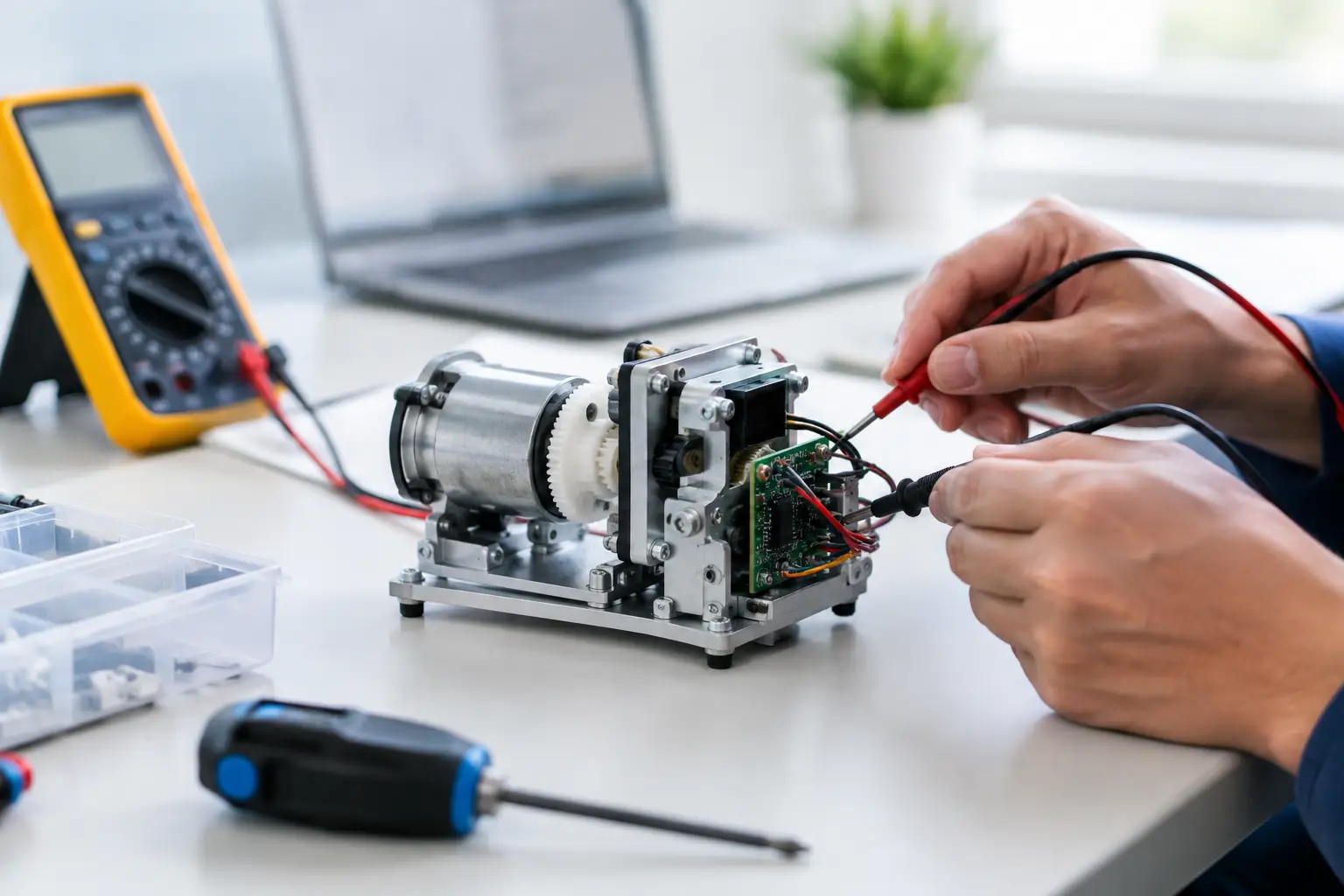
At this stage, the focus shifts to fit, movement, assembly, and use. These prototypes help determine whether the design performs as intended and whether important components interact correctly.
Pre-production refinement
This phase is about preparing the design for manufacturing reality. It may involve tighter tolerances, better material decisions, improved part geometry, and updates that support assembly, durability, or cost control.
Each stage serves a different purpose. When inventors skip from idea straight to final manufacturing decisions, they usually pay for it in redesign time, delays, or expensive corrections.
Choosing the right print approach
Not every 3D print process is right for every prototype. The decision depends on what you need to learn from the part.
If speed and affordability are the priority, one method may be best for rough concept validation. If surface finish and detail are more important, another may make more sense. If strength and functional testing are critical, material choice becomes central.
This is where many first-time inventors get stuck. They assume the machine is the strategy. It is not. The strategy is identifying the design risk, then selecting the print process that gives the clearest answer at the right cost.
That practical mindset is what keeps projects moving. You do not need the most expensive prototype at every stage. You need the right prototype for the next decision.
Why engineering guidance changes the outcome
A prototype by itself is just an object. What drives progress is interpretation.
An experienced product development team looks at a printed prototype and asks better questions. Is the wall thickness realistic for production? Can the geometry be simplified? Will this assembly be reliable over repeated use? Is this design ready for patent-supporting documentation, or are the core features still too undefined?
Those questions are what separate a quick print from meaningful development. For entrepreneurs who want to protect their idea and bring it to market, that difference matters. The goal is not just to produce a part quickly. The goal is to build a smarter path from concept to commercialization.
That is especially true for products involving moving parts, electronics, or multiple materials. These projects often require design coordination across industrial design, mechanical engineering, and prototype testing. A hands-on development partner can help avoid wasted cycles and keep the prototype aligned with both performance and business goals.
Rapid prototyping 3D printing and manufacturing readiness
One of the most common misunderstandings is assuming that a product can be printed once, approved, and sent directly into mass production. Sometimes that happens with simple products, but more often there is another step.
Designs created for rapid prototyping 3D printing may need revision before they are suitable for injection molding, machining, or other production methods. Features that print well may not mold well. Part splits, draft angles, wall thickness, and assembly details often need adjustment.
That is not a problem. It is part of smart development. The prototype gives you a low-risk way to prove the product before committing to production engineering. If the development process is managed correctly, the lessons from the printed prototype make the production version stronger.
For businesses planning to scale, this bridge between prototype and manufacturing is critical. It protects budgets, shortens the learning curve, and reduces unpleasant surprises later.
What inventors and startups should look for in a partner
If you are investing in a prototype, you want more than a vendor who simply prints a file. You want a team that can look at your idea from the perspective of design, engineering, manufacturability, and protection.
That means asking whether the prototype supports real testing, whether the CAD work is being prepared with future production in mind, and whether the development process accounts for intellectual property strategy. A capable partner should be able to explain trade-offs clearly and recommend the most practical next step, not just the fastest one.
For many clients, that is the real value of working with a firm like Industry of Concepts. You are not just ordering a model. You are building a product development path with technical guidance behind it.
The smartest move is not printing as fast as possible. It is printing with purpose, learning quickly, and improving the product before expensive mistakes get locked in. When a prototype helps you make a better decision, it is already doing its job.
If your idea is still stuck in sketches, that is the right place to start changing the outcome – with a prototype you can test, refine, and build on.