A lot of inventors lose time at the same point – they know they need patent guidance, but they are not sure whether to call the USPTO, hire a patent professional, or keep refining the product first. The USPTO patent help desk can be useful, but only if you understand what kind of help it actually provides.
For entrepreneurs and product developers, that distinction matters. A government help desk can answer process questions. It cannot build your prototype, shape your filing strategy, or decide whether your invention is commercially worth pursuing. If you treat it as one part of a bigger product and IP plan, it becomes far more valuable.
What the USPTO patent help desk actually does
The USPTO patent help desk exists to help applicants and inventors with procedural questions about patents, filing systems, application status, forms, and general requirements. If you are trying to figure out where to submit something, how to access a USPTO system, what a notice means, or what step comes next in the administrative process, this is often the right place to start.
That kind of support is practical. It can save you hours of guesswork, especially if you are filing for the first time. Many inventors get stuck on issues that are not really legal or technical problems – they are process problems. A help desk can often clear those up quickly.
What it does not do is just as important. The USPTO patent help desk does not give legal advice. It does not tell you whether your invention is patentable, how broad your claims should be, whether a provisional application is your best move, or how to describe your product in a way that supports future protection. Those questions move beyond procedure and into strategy.
When the USPTO patent help desk is the right first step
If you already have a fairly clear invention and are actively dealing with filing logistics, the help desk may be exactly what you need. This is especially true if you are handling parts of the process yourself and need clarification on official systems or notices.
It can help when you are trying to understand filing receipts, application numbers, deadlines, account access, document submission issues, or other administrative points. It can also help when you are unsure which USPTO resource applies to your situation. For a first-time inventor, that alone can reduce a lot of confusion.
There is a trade-off, though. Getting an answer to a procedural question does not mean your overall patent approach is sound. You might successfully submit an application that is poorly positioned, too narrow, too vague, or disconnected from the actual product you hope to sell. Filing is not the same as protecting.
Where inventors often expect too much from a help desk
Many people reach out to the USPTO because they want certainty. They want someone to tell them whether the idea is good, whether it is new, whether they are safe to show it to investors, or whether they should spend money on development. That is understandable, but it is not what a government support desk is built to do.
Patent success depends on more than forms. It depends on how the invention is defined, how the prototype supports the concept, how the features are documented, and how the patent plan fits the business plan. A help desk cannot evaluate those moving parts for you.
This is where early-stage inventors often make costly mistakes. They either wait too long because they are overwhelmed, or they file too fast without enough technical development behind the application. Both problems can weaken the value of the patent effort.
Patent process questions versus product strategy questions
A simple way to think about it is this: if your question is about the USPTO system, deadlines, status updates, or general filing procedure, the help desk may be helpful. If your question is about your invention itself, your design choices, your commercial path, or the strength of your protection, you likely need a more hands-on partner.
For example, if you are asking how to respond to a USPTO notice, that is a process issue. If you are asking whether your current prototype includes the right features to support a stronger patent application, that is a development and strategy issue.
That difference matters because patents do not exist in a vacuum. The strongest filings are usually tied to thoughtful engineering, realistic use cases, and clear product definitions. If the underlying concept is still fuzzy, the patent work can become fuzzy too.
Why prototypes matter before and during patent support
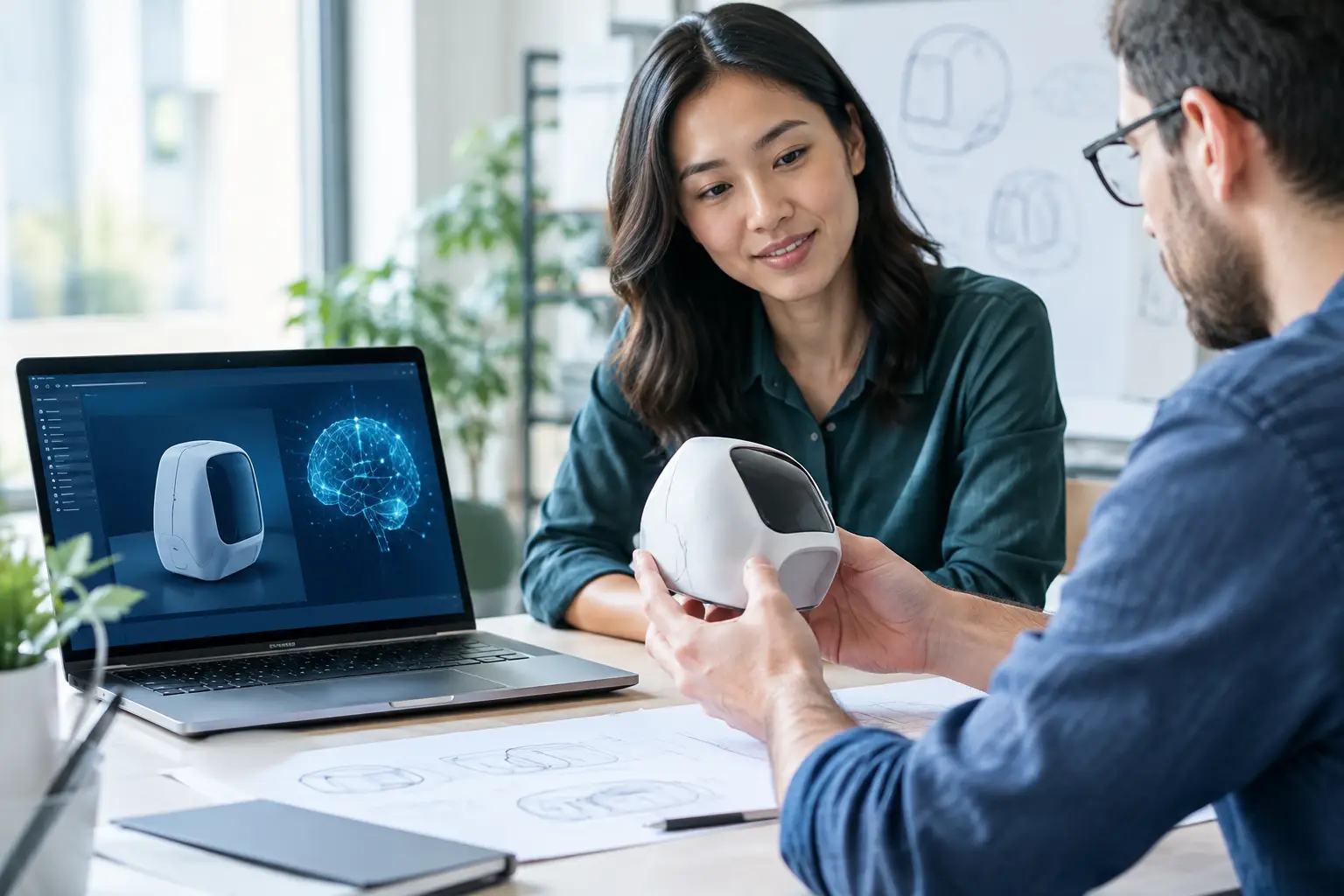
For many inventors, the real challenge is not finding the right form. It is translating an idea into something specific enough to protect. A rough sketch might communicate the vision, but it may not define the mechanics, variations, user interaction, or manufacturable structure well enough to support smart patent planning.
That is why prototype development often plays a bigger role in patent support than new inventors expect. A well-developed proof of concept can reveal functional details, expose design gaps, and clarify what is truly novel. It can also help separate the core invention from secondary features that may change later.
This does not mean you always need a final production-ready model before pursuing patent support. It depends on the product, the complexity, and the filing timeline. But in many cases, stronger technical development leads to stronger patent positioning because the invention is better understood.
The best approach for serious inventors
If you are building a product with real commercial goals, treat the USPTO patent help desk as an administrative resource, not your only source of guidance. Use it to solve process questions efficiently. Then make sure your broader plan includes invention development, documentation, and patent-oriented thinking.
That approach is faster in the long run. It reduces the risk of filing around an underdeveloped concept. It also helps you make better decisions about where to invest first – in design, prototyping, engineering validation, patent preparation, or some combination of all four.
For some inventions, the next move is filing quickly to establish an early date while development continues. For others, it makes more sense to refine the concept first so the application covers what actually matters. There is no one-size-fits-all answer. The right timing depends on how complete the invention is, how fast the market is moving, and how much technical uncertainty still exists.
Getting more value from patent support
Inventors usually get the best results when they arrive at the patent stage with organized information. That means clear sketches or CAD files, notes on how the product works, known alternatives, key differentiators, and an understanding of the problem the product solves. Even if the invention is still evolving, that level of structure helps everyone involved.
It also makes help desk conversations more productive. When you understand your own project clearly, you can separate administrative questions from bigger strategic ones. You stop asking the wrong source for the wrong kind of answer.
This is one reason many founders choose a product development partner before they get too deep into filing. They need help turning an idea into a defined product, not just submitting documents. A team that understands concept development, engineering, prototyping, and patent support can help align those pieces so your filing effort supports a real business asset rather than a vague idea on paper.
Industry of Concepts works in that space because inventors rarely need just one isolated service. They need a practical path from idea to prototype to protection, with fewer false starts along the way.
What to do before you pick up the phone
Before contacting the USPTO patent help desk, get specific about what you need. If your problem is account access, status clarification, or filing procedure, prepare your application details and ask direct questions. If your problem is uncertainty about the invention, the claims, the prototype, or your next commercial step, pause and get strategic help first.
That small shift can save a lot of time. It can also keep you from relying on administrative answers to solve product-development problems they were never meant to solve.
Good inventions move forward when the technical, commercial, and patent pieces are working together. The help desk has its place, but your idea deserves a plan bigger than a phone call.