A product can carry the words “patent pending” long before a patent is granted, but that label is not a finish line. For inventors deciding when to show a prototype, approach manufacturers, or begin testing the market, the question of how long is patent pending has real business consequences. The answer depends on what was filed, the type of invention, the USPTO examination process, and the decisions you make after filing.
A patent-pending period can be as short as a few months or extend for several years. Used well, that time gives you room to refine your product, establish a commercial plan, and build evidence that your invention can work in the real world. Used poorly, it can become a delay that leaves an idea underdeveloped while competitors move ahead.
What “Patent Pending” Actually Means
“Patent pending” means a patent application has been filed with the United States Patent and Trademark Office, or USPTO, and has not yet been granted, abandoned, or finally resolved. You may use the phrase after filing a provisional application, a nonprovisional utility application, a design patent application, or certain international applications.
The label can be valuable. It tells potential competitors, buyers, and partners that you have taken formal steps to protect the invention. It may also help discourage direct copying. But patent pending does not mean you own an issued patent, and it does not guarantee that the application will be approved.
That distinction matters when you are discussing your product with investors, retail buyers, licensing prospects, or manufacturers. Be confident about the application you have filed, but do not make claims that go beyond it. A strong product strategy is built on both sound intellectual property planning and clear technical proof that the product can be made and used.
How Long Is Patent Pending in the United States?
For many utility inventions, patent pending commonly lasts two to four years from the filing of a nonprovisional application. Some applications move faster, while others take longer because of the technology category, the USPTO examiner’s workload, the complexity of the claims, and the number of office actions required.
There is no universal clock. A straightforward mechanical product with focused claims may progress differently than a software-enabled device, medical product, or complex electro-mechanical system. The application is also not simply waiting in line. Once examination begins, the applicant and patent examiner may exchange written responses about novelty, clarity, prior art, and the precise boundaries of the invention.
Provisional applications: up to 12 months
A provisional patent application gives an inventor an earlier filing date and the right to use “patent pending” for up to 12 months. It is not examined on its own and cannot become an issued patent by itself.
Before the 12-month deadline, you generally need to file a corresponding nonprovisional application that properly claims the benefit of the provisional filing date. If you do not, the provisional application expires. You may still file later in some situations, but you can lose the earlier priority date, which can be a serious disadvantage if similar products enter the market.
A provisional filing is most useful when it captures a real, sufficiently developed invention, not just a broad idea. The quality of the drawings, descriptions, and technical detail can affect what support you have later. This is one reason a functional prototype and organized design documentation can be so valuable before filing.
Nonprovisional utility applications: often two to four years
A nonprovisional utility patent application is the application examined by the USPTO for a potentially issued utility patent. After filing, it may take well over a year before you receive a first office action, although timing varies substantially.
The first office action often raises objections or rejects some or all claims based on prior art or formal requirements. That is a normal part of the process, not necessarily a sign that the invention lacks value. Your patent professional may amend the claims, explain how the invention differs from cited references, or pursue a different claim strategy.
Each response, amendment, interview, and additional office action can extend the pending period. A patent may issue after an early response, but many applications require more than one round of examination. If an application is abandoned, patent-pending status ends unless there is another active related application supporting the product.
Design patents and international filings follow different paths
Design patent applications protect the ornamental appearance of a product, rather than its functional operation. Their examination timelines are often shorter than utility applications, but timing still depends on the subject matter and the USPTO’s workload. For a consumer product, a design filing can be worth considering when the product’s visual identity is commercially important.
International protection creates another layer of timing. A Patent Cooperation Treaty, or PCT, application can preserve options for seeking patent protection in multiple countries, but it does not create one worldwide patent. Later national-stage filings must be pursued in the countries that matter to your business, and each patent office has its own procedures and timeline.
What Affects the Patent-Pending Timeline?
The biggest factor is usually the application itself. Clear drawings, complete technical descriptions, and carefully structured claims give the examiner a better foundation for review. A thin filing that does not fully describe the invention may create problems later, especially if the product changes as it is engineered.
The technology area matters too. Certain USPTO art units face heavier application volumes than others. Complex inventions may involve more prior art, more technical questions, and more claim negotiation. The examiner’s specific workload and the availability of expedited examination options can also affect timing.
Your own decisions influence the schedule. Missing response deadlines can cause abandonment. Adding new features after filing may require a new application if those features were not adequately supported in the original disclosure. Choosing to appeal a final rejection, file a continuation application, or pursue broader claims can preserve strategic options, but it may extend the overall process.
What to Do While Your Patent Is Pending
Do not treat patent pending as a reason to stop developing the product. The period between filing and issuance is often where the strongest commercial groundwork is built. You can use it to test usability, improve manufacturability, estimate production costs, validate materials, and identify the features customers actually value.
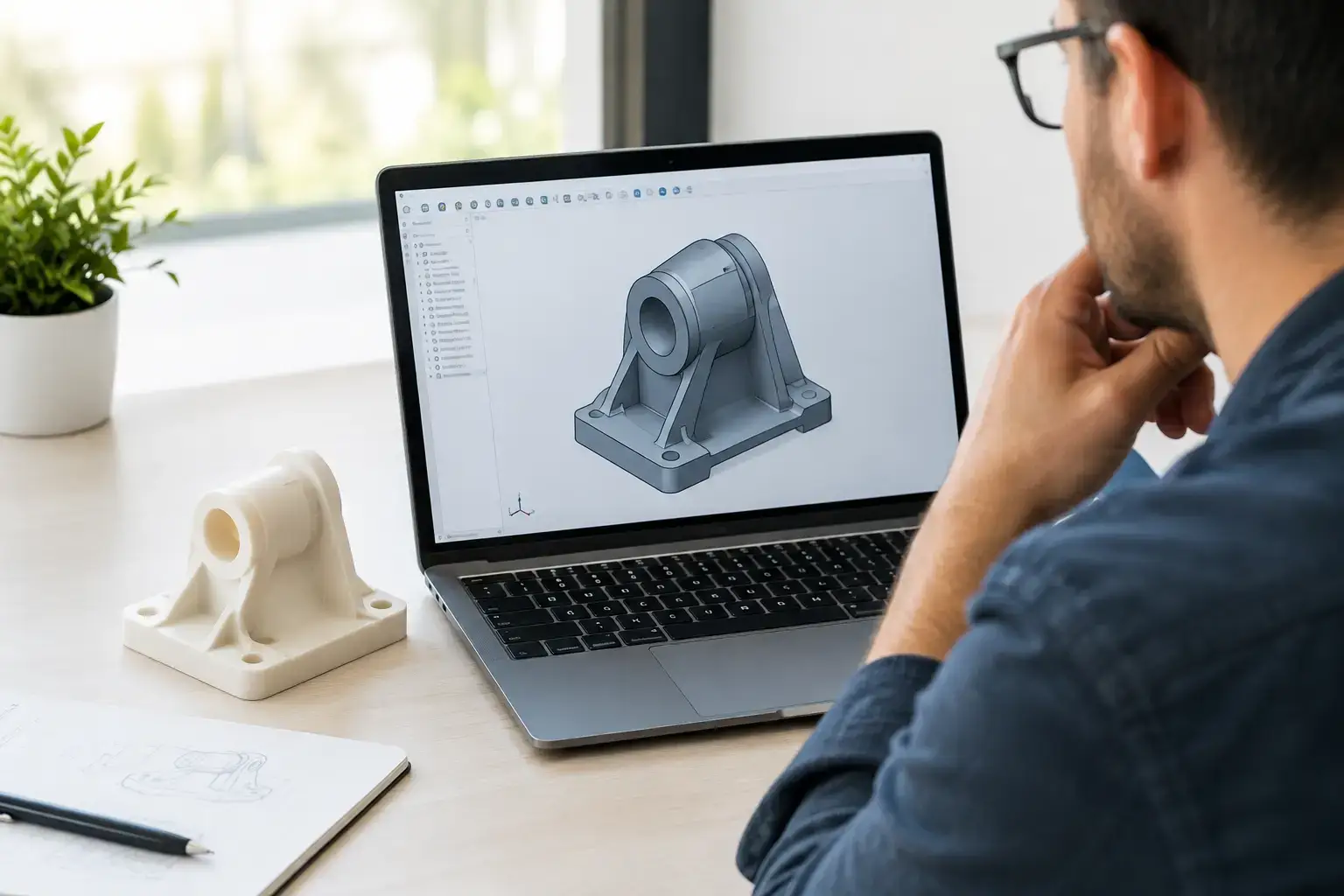
For physical products, a proof-of-concept model is a practical starting point, but it is rarely the last prototype you need. A prototype that demonstrates function may need further engineering before it is ready for tooling, compliance testing, or reliable production. Every refinement should be documented so you can track what changed and assess whether those changes need additional patent attention.
You can also begin carefully approaching potential partners. Manufacturers may help identify cost and process constraints. Buyers and users can reveal whether the product solves a problem worth paying for. Investors often want to see more than an application number. They want evidence of a credible product, a realistic path to manufacturing, and a plan for market entry.
Confidentiality agreements can be useful in selected discussions, but they are not a substitute for a filing strategy. Once an application is filed, you have more flexibility to discuss the disclosed invention. Still, be thoughtful about sharing improvements or undisclosed technical details that may deserve separate protection.
Do Not Let Filing Become a Pause Button
A common mistake is filing early, then waiting passively for the USPTO to respond. The better approach is to view the pending period as a working window. Build the product, identify the cost drivers, test assumptions, and prepare for the next stage of protection or commercialization.
At Industry of Concepts, product development is approached as more than creating a model that looks good. Engineering, prototype development, and patent-oriented documentation should support the same goal: turning an idea into a product that can perform, be produced, and compete. When the product evolves, the intellectual property strategy should be reviewed alongside it.
If your invention is still an early concept, start by defining its essential function and the features that make it different. If you already have a filing, use the pending time to create the technical and market proof that gives your idea its best chance to move forward.