A great idea is not yet a product business. It becomes one when it can be built reliably, protected intelligently, priced profitably, and sold to a real customer. This product commercialization roadmap guide helps inventors and founders turn an early concept into a practical sequence of decisions, rather than an expensive guessing game.
The order matters. Spending heavily on tooling before validating demand can drain a budget. Filing too early with an incomplete technical description can create gaps. Building a beautiful prototype that cannot be manufactured at the target price creates a different kind of problem. A commercialization roadmap keeps the product, intellectual property, production, and market strategy moving together.
Start With the Problem, Not the Feature
Commercialization begins with a clear answer to one question: whose problem does this product solve, and why will they pay to solve it?
Many inventors can describe what their product does. Fewer can define the customer, the buying situation, the alternatives already available, and the reason a buyer would switch. Those answers shape everything that follows, including design requirements, materials, distribution channels, and price.
Start by writing a simple product brief. Define the intended user, the problem they experience, the setting where the product will be used, and the outcome it must deliver. Then identify competing products, workarounds, and customer complaints. This is not about proving that no one has ever had a similar idea. It is about finding a meaningful advantage that customers can understand.
Early market validation does not always require a finished product. Conversations with potential users, retailer feedback, industry research, landing-page interest, and a presentation-quality concept can reveal whether the problem is urgent enough to pursue. The goal is not applause. The goal is evidence that supports a business decision.
Build a Product Commercialization Roadmap Guide Around Gates
A strong roadmap is not simply a timeline of tasks. It is a series of decision gates. At each gate, you decide whether to proceed, revise the concept, reduce scope, or stop before committing more capital.
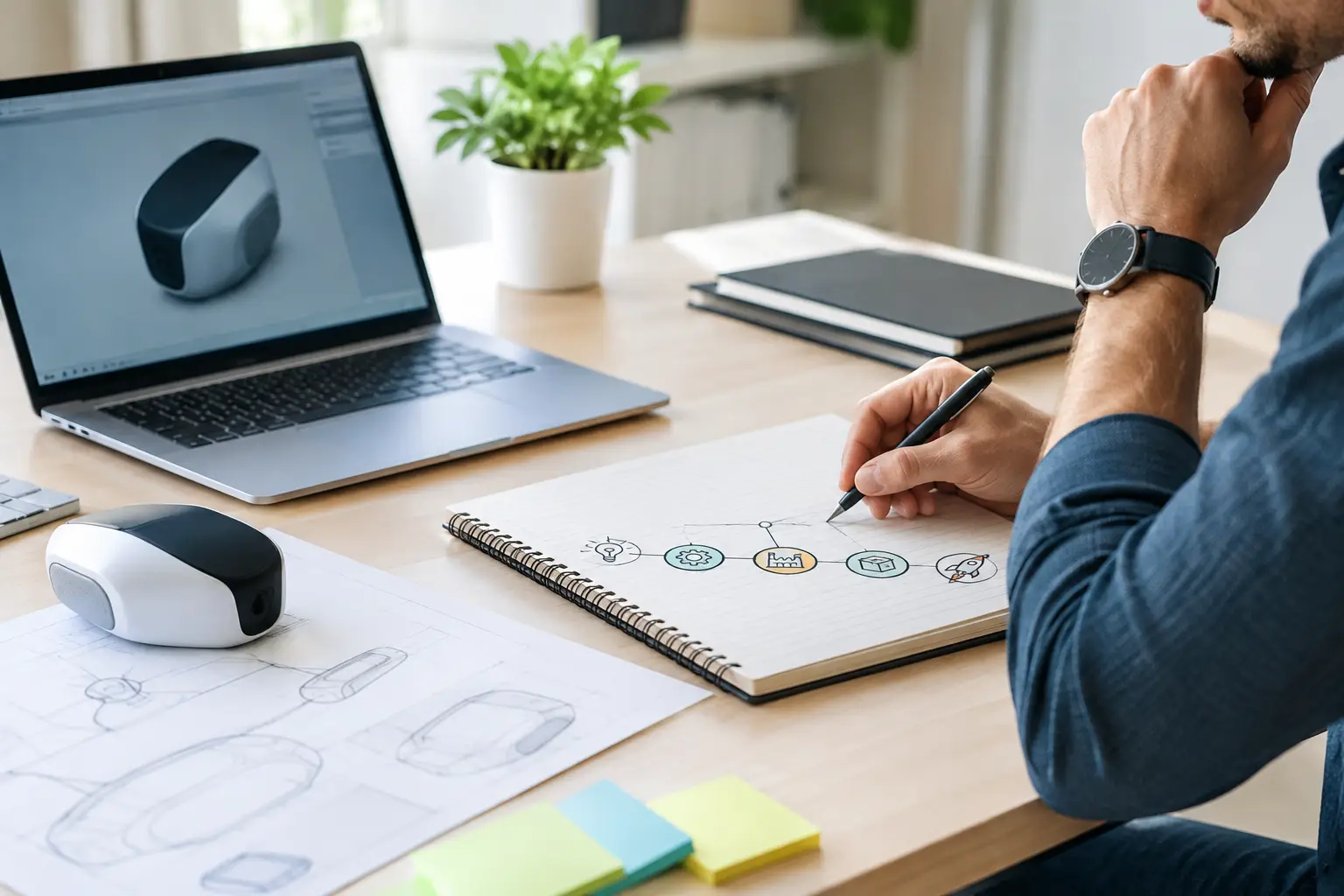
For most physical products, the roadmap should address six connected stages: concept definition, intellectual property planning, design and engineering, prototype testing, manufacturing preparation, and market launch. Each stage should have a specific deliverable and a budget range before work begins.
1. Define the commercial requirements
Turn the idea into requirements that an engineer, designer, manufacturer, and investor can act on. Document the core function, target customer, desired retail price, estimated product cost, size constraints, safety considerations, expected usage conditions, and must-have features.
Price deserves attention early. A product that retails for $30 has a very different cost structure from one that sells for $300. If distributors or retailers will be involved, their margins affect the allowable manufacturing cost. Direct-to-consumer products may offer more pricing control but require stronger marketing and fulfillment capabilities.
At this stage, keep the first version focused. A product with too many features can become harder to test, protect, manufacture, and explain. The best first commercial version solves the primary problem well.
2. Protect the valuable parts of the idea
Intellectual property strategy should develop alongside the product, not after it is complete. A patent-oriented review can help identify which mechanisms, functional relationships, or design elements may deserve protection. It can also reveal prior art that influences the product direction.
Patent support is not a substitute for legal advice from a registered patent attorney or agent. However, a carefully developed proof-of-concept prototype, technical drawings, and documented design decisions can provide valuable support for a filing strategy.
Confidentiality also matters. Use appropriate agreements when sharing sensitive information with vendors, contractors, or potential partners. More importantly, disclose only what is necessary at each stage. Protection is not just paperwork. It is disciplined information management.
3. Convert the concept into an engineered design
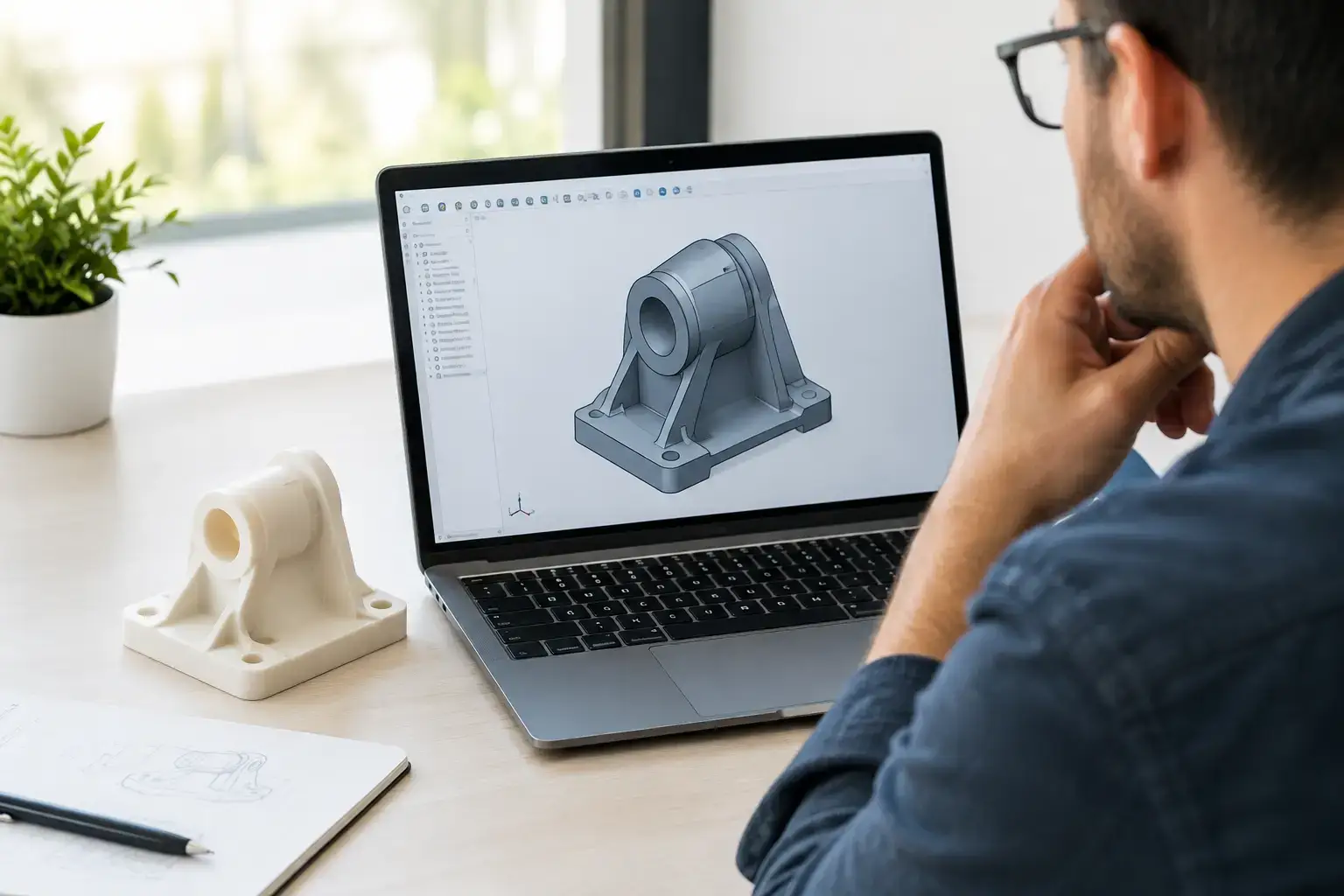
This is where promising ideas meet real-world constraints. Industrial design determines usability, appearance, ergonomics, and customer appeal. Mechanical and electrical engineering determine whether the product functions safely and consistently. Computer modeling helps the team evaluate dimensions, fit, assemblies, and manufacturing feasibility before materials are ordered.
A professional design process also forces difficult but necessary questions. Can the product withstand repeated use? Can a customer assemble it correctly? Will a battery, motor, sensor, latch, or housing work under heat, moisture, vibration, or impact? What happens when a user makes a predictable mistake?
Do not treat engineering as a final polish step. Changes made in digital models are generally far less expensive than changes made after tooling, inventory, or a failed production run.
4. Prototype for answers, not just appearances
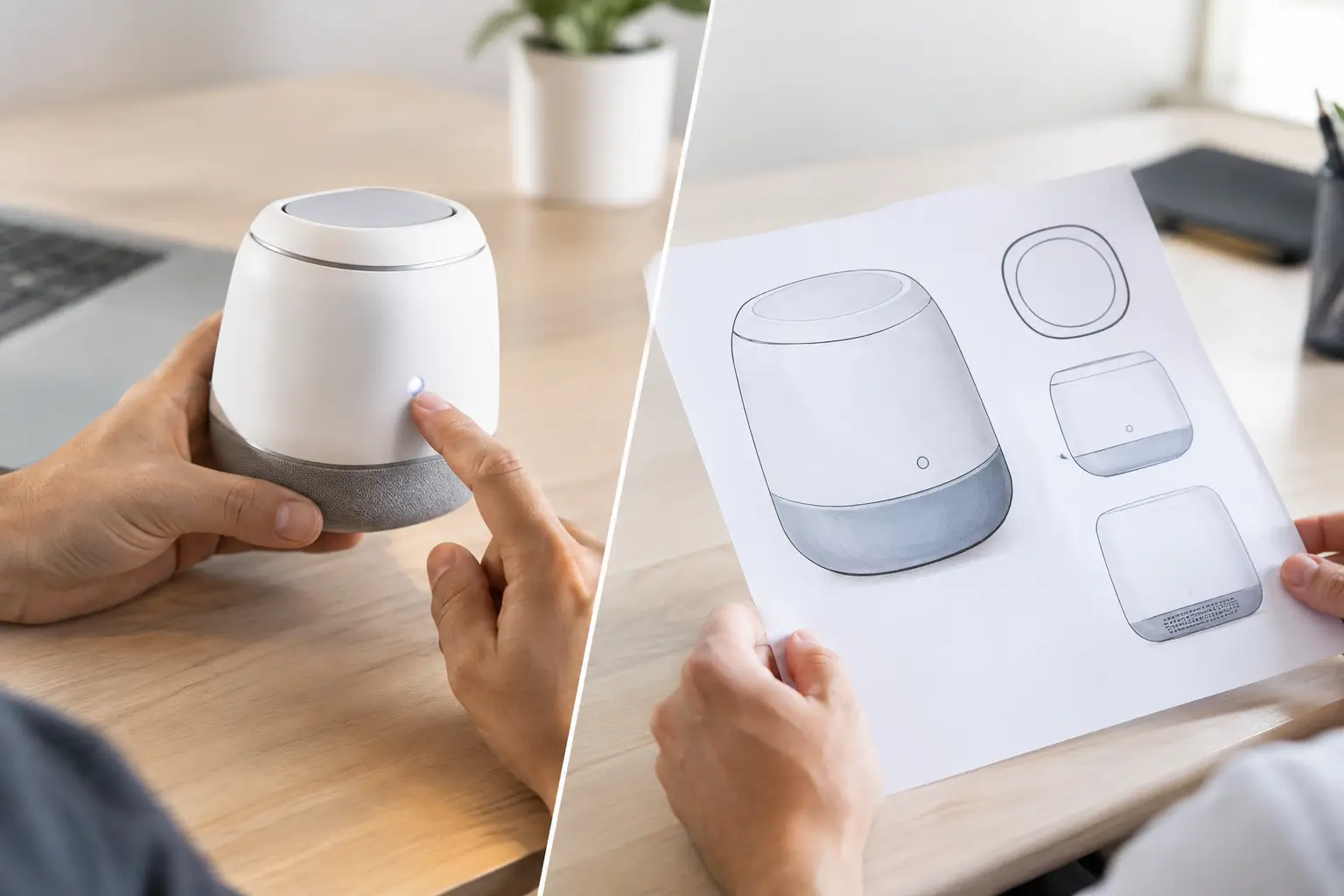
A prototype should answer a defined question. An early model may test size and ergonomics. A functional prototype may test a mechanism, electronics, load capacity, or user interaction. A later prototype may test materials, assembly, durability, and manufacturing methods.
The right prototype depends on the risk you need to reduce. A 3D-printed model can be excellent for form and fit but may not represent the strength or finish of a production part. A hand-built electronic prototype can demonstrate function while remaining far from a production-ready circuit. That is normal, as long as everyone understands what the prototype proves and what it does not.
Test with real users whenever possible. Watch how they handle the product. Where do they hesitate? What do they misunderstand? Do they use it differently than expected? Their behavior often reveals more than their verbal feedback.
Keep records of test conditions, failures, revisions, and decisions. This documentation strengthens development discipline and can support patent-related work, quality planning, and manufacturer communication.
5. Prepare for manufacturing before committing to tooling
Manufacturing preparation is where many first-time product founders underestimate complexity. A working prototype is not automatically ready for production. The design must be refined for the chosen process, whether that involves injection molding, machining, sheet metal, casting, electronics assembly, textiles, or another method.
A manufacturer needs more than a product sample. They need clear drawings, material specifications, tolerances, bills of materials, assembly instructions, quality standards, and packaging requirements. Without this information, quotes may be inaccurate and production quality may vary from one batch to the next.
Requesting quotes from multiple qualified manufacturers is useful, but the lowest quote is not always the best choice. Evaluate communication, quality systems, production capacity, lead times, minimum order quantities, tooling ownership, payment terms, and experience with similar products. A factory that identifies design risks early may save far more than a low initial unit price.
Before full production, consider a pilot run. It exposes assembly issues, packaging damage, supplier delays, and quality problems while the financial stakes are still manageable.
Plan the Launch as a Test, Not a Finish Line
Commercialization does not end when the first units arrive. The launch is another learning stage. Your product needs a clear market position, compelling product messaging, reliable packaging, customer support processes, and a practical fulfillment plan.
The launch channel should fit the product and buyer. A specialized business-to-business product may require direct sales, demonstrations, and industry relationships. A consumer product may begin with direct online sales to gather feedback before approaching retail buyers. Some products are better suited to licensing, especially when an established company already has distribution, manufacturing capacity, and category expertise.
Set measurable launch goals. These may include conversion rate, customer acquisition cost, return rate, defect rate, reorder rate, review themes, and margin per unit. Sales alone can be misleading if returns, ad costs, or production defects erase profit.
Be prepared to revise. Early customers may reveal that the strongest use case is different from the one you originally imagined. A packaging update may reduce damage. A small design change may eliminate most support calls. Commercially successful products are rarely the result of one perfect first attempt.
Know When to Bring in Product Development Support
You do not need to build every capability in-house to move forward with confidence. What you need is the right level of support at the right moment. A product development partner can help translate an idea into engineering requirements, functional prototypes, manufacturing documentation, and patent-supporting materials without forcing a founder to manage disconnected freelancers and vendors.
Industry of Concepts works with inventors, startups, and businesses that need a practical path from idea to market-ready product. The most productive engagements begin with a candid discussion of the product’s technical unknowns, commercial goals, budget, and timeline.
Your idea deserves more than a sketch, a patent application, or a one-off prototype. Give it a disciplined path forward, test the assumptions that matter, and build each stage around evidence. That is how an invention earns the chance to become a product customers trust and choose.