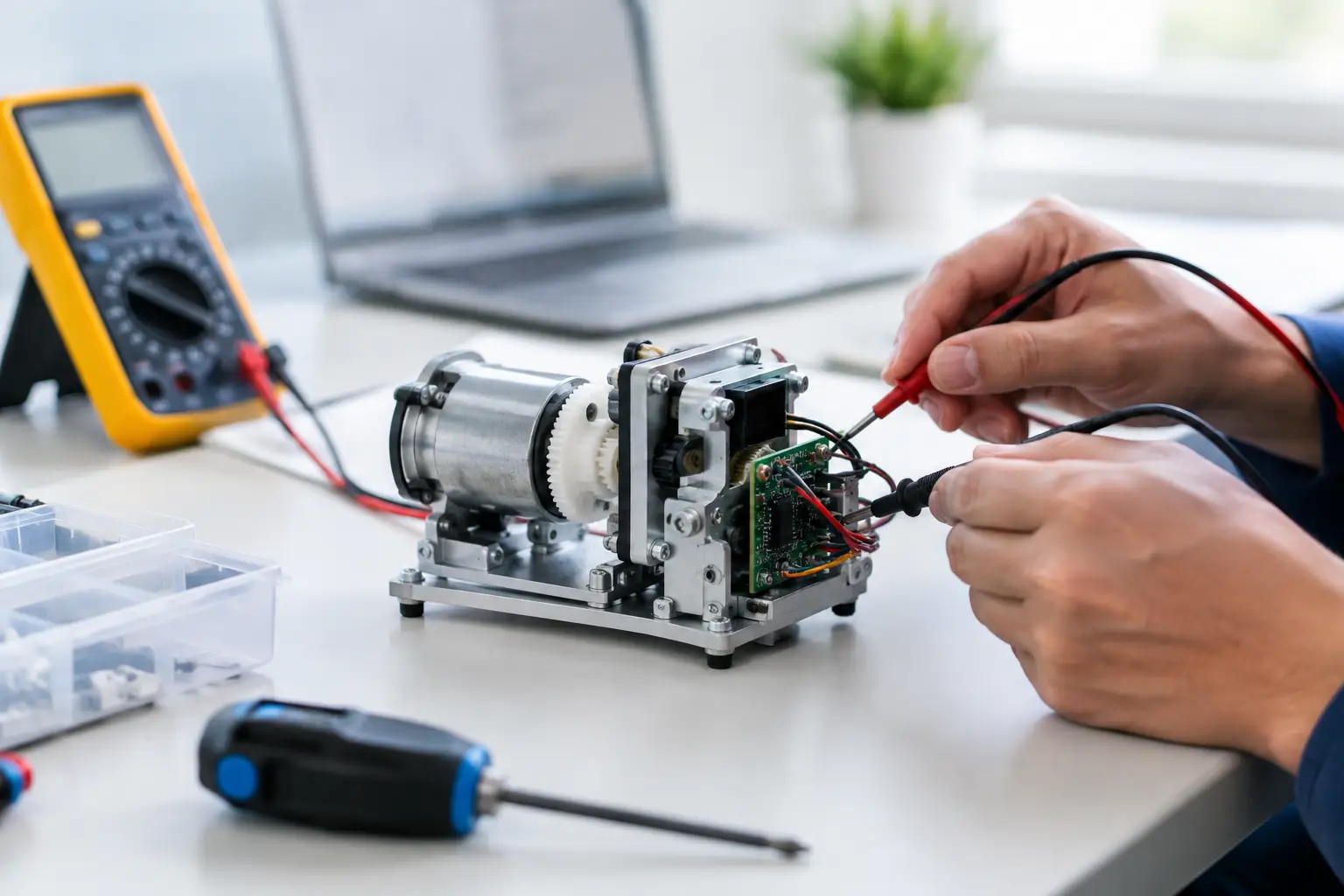
A promising product idea can feel urgent the moment it clicks. But turning that idea into a functional, protectable, manufacturable product requires more than a sketch and a deadline. How long product engineering takes depends on what must be invented, proven, tested, and prepared before money is committed to production.
For a straightforward consumer product, the path to a working prototype may take a few months. For an electro-mechanical device, a regulated product, or a new mechanism with multiple custom parts, the process can take six months to a year or longer. The goal is not to stretch the schedule. It is to invest time where it prevents expensive mistakes later.
How Long Product Engineering Takes From Idea to Prototype
Most product engineering projects move through a series of decisions, not a single straight line. A practical early-stage project often reaches a proof-of-concept prototype in roughly 8 to 16 weeks. A more refined prototype, designed around manufacturability and real-world use, commonly takes 4 to 8 months.
Those ranges assume the product scope is reasonably defined, decisions are made promptly, and the engineering team has access to the information it needs. They do not mean every product should be rushed into the same timetable. A simple molded plastic accessory and a connected medical-adjacent device do not carry the same technical risk.
Concept development: 1 to 3 weeks
The first stage is about defining the problem before designing the object. What does the product need to do? Who will use it? What makes it different from existing options? What features are essential for the first version, and which ones can wait?
This phase may begin with an inventor’s drawing, a written description, a competitor review, or a rough mockup. The output should be a clear product brief that gives designers and engineers a target. If the core function is still changing every few days, engineering work will be slower and more costly because the team is solving a moving problem.
Industrial design and CAD modeling: 2 to 8 weeks
Once the concept is defined, industrial design converts the vision into usable form. CAD modeling then turns that form into dimensional parts, assemblies, and technical files. A basic product with few components may move quickly. A product that must fit the human hand, house electronics, survive repeated use, or include moving mechanisms requires more development.
At this stage, good engineering creates options. The team may compare a lower-cost version, a premium version, or different mechanisms that accomplish the same function. Choosing early can save weeks. Choosing without enough information can create redesign work later.
Engineering development: 4 to 12 weeks or more
Mechanical, electrical, and software requirements often determine the real schedule. A non-electronic product may need material selection, tolerance analysis, mechanism design, and stress testing. An electronic product can add circuit design, battery considerations, sensors, firmware, enclosures, charging systems, and safety requirements.
This is where assumptions get tested. Will the motor provide enough torque? Does the battery fit the intended enclosure? Can the moving part survive thousands of cycles? Can the device be assembled without special labor or fragile components? Engineering answers questions that a rendering cannot answer.
Prototype fabrication and testing: 2 to 6 weeks per round
Rapid prototypes are valuable because they expose weaknesses while changes are still affordable. Depending on the product, a prototype may be 3D printed, CNC machined, assembled from off-the-shelf components, or built through a combination of methods.
One prototype is rarely the finish line. The first model may prove the mechanism but look unfinished. The next may improve ergonomics, fit, strength, or electrical performance. A later prototype may be built specifically to support manufacturer quotations or investor demonstrations. Each iteration has a purpose, and each should answer a defined question.
What Changes How Long Product Engineering Takes
The largest schedule drivers are not always obvious at the beginning. Product complexity matters, but so do decisions, documentation, and the level of certainty required before manufacturing.
A product with custom electronics generally takes longer than one built around proven components. A product requiring injection molding needs more preparation than one intended for low-volume 3D printing. If a part must be waterproof, child-safe, food-contact safe, or able to withstand high heat, validation becomes more demanding.
Patent strategy can also affect the sequence of work. Inventors often need enough technical detail to explain and support a patent filing, but they do not necessarily need to complete full production engineering before speaking with patent counsel. A well-planned proof-of-concept prototype and supporting drawings can help clarify what is novel, how it works, and where protection may be valuable.
The client’s response time is another factor. Product development is collaborative. When approvals, feedback, samples, and key decisions arrive quickly, momentum stays high. When the scope expands after design has started, the timeline should be adjusted openly rather than hidden behind unrealistic promises.
A Realistic Timeline for Different Product Types
A simple consumer accessory with limited parts may progress from concept to prototype in 6 to 12 weeks. That could include design sketches, CAD files, a 3D-printed model, and basic fit or function testing. If the product is intended for small-batch sales, that prototype may be close to the next step.
A mechanical product with moving parts often needs 3 to 6 months. The additional time supports mechanism refinement, material choices, tolerance adjustments, prototype rounds, and assembly planning. Products that must fold, lock, dispense, attach, or endure repeated loading typically belong in this category.
Electro-mechanical products often require 6 to 12 months to reach a well-developed prototype and manufacturing-ready direction. Hardware and firmware have to work together, and changes in one system can affect the other. Custom circuit boards, wireless functions, batteries, sensors, and mobile-app integration can extend the schedule further.
Products subject to formal testing, industry standards, or regulatory review should be planned on a longer timeline. Engineering can move efficiently, but certification testing, documentation, supplier lead times, and corrective changes cannot be treated as afterthoughts.
Speed Matters, but the Right Milestones Matter More
Fast development is valuable when it means reducing wasted effort. It is not valuable when it means skipping the work that protects your investment. A prototype that looks impressive but cannot function reliably, be produced at a reasonable cost, or support your intellectual property position is not enough.
A strong development plan uses milestones to control risk. First, confirm that the product solves the intended problem. Next, prove that the critical function works. Then refine the design for user experience, manufacturability, and cost. Finally, prepare the technical package needed for the next business decision, whether that is patent support, investor outreach, pilot production, or a manufacturing quote.
This approach gives inventors and founders clearer choices. You may decide to stop after proof of concept and test market interest. You may choose to invest in a more polished prototype for licensing conversations. Or you may move forward into engineering for production because the opportunity is ready. Each path has a different timeline and budget, which is why defining the destination matters early.
How to Keep Your Project Moving
The best way to shorten product engineering time is to start with useful information. Bring sketches, notes, reference products, photos, dimensions, customer feedback, or a simple explanation of the problem. You do not need to arrive with a finished design. You do need to be clear about the result you want to achieve.
Keep the first version focused. Features can always be added after the core product is proven, but adding every possible feature at once increases cost, engineering risk, and testing time. Ask which requirement makes the product viable and which requirement merely makes it more interesting.
It also helps to choose a development partner that can connect concept development, industrial design, engineering, prototyping, and manufacturing preparation. Working through one coordinated process reduces handoff confusion and makes design decisions more practical. At Industry of Concepts, the focus is on helping clients turn uncertain ideas into working prototypes with a clear route toward protection and commercialization.
A realistic schedule is not a reason to delay your idea. It is a way to move with purpose. Start by defining the product’s critical function, the prototype you need next, and the decision that prototype must help you make. That is how an idea begins to earn its place in the market.