A product idea becomes valuable when it can be explained, tested, protected, and built. That is the real purpose of a new product development guide: to replace guesswork with a practical path from an early concept to a product that is ready for market decisions.
For inventors and founders, the biggest risk is rarely a lack of creativity. It is spending money in the wrong order. A polished prototype that does not solve a real problem, a patent filing based on an incomplete design, or a product that cannot be manufactured at a workable cost can slow down an otherwise promising idea. The right development process helps you answer the hard questions early, when changes are less expensive.
Start With the Problem, Not the Product
Before selecting materials, sketching a housing, or contacting a manufacturer, define the problem your product will solve. Be specific. Who experiences this problem? What are they doing now? Why is that current solution frustrating, costly, slow, or unsafe?
A clear problem statement gives engineering and design work a target. Instead of saying, “I want to create a better kitchen tool,” describe the job it must perform: “I need a tool that lets people with limited grip strength safely open sealed containers with one hand.” That statement begins to reveal functional requirements, safety needs, user expectations, and likely market segments.
Research should also include competing products, substitute solutions, and price expectations. You do not need a large market research department to begin. Read customer reviews, observe how people use existing products, speak with potential buyers, and identify where present options fail. The goal is not to prove that no competitor exists. Competition can validate demand. Your goal is to identify a meaningful advantage that customers will notice and pay for.
Turn the Idea Into Defined Requirements
An idea is a starting point. A product requirement is something an engineer, designer, and manufacturer can use to make decisions.
Write down what the product must do, who will use it, where it will be used, and what limitations apply. Consider size, weight, operating conditions, power source, expected life, user safety, cleaning requirements, materials, target retail price, and any applicable regulations. For electronic or electro-mechanical products, define expected inputs, outputs, battery life, connectivity, sensors, motors, and controls.
Requirements will change as you learn more, and that is normal. The important thing is to make assumptions visible. If your business case depends on a product selling at $49, the design team needs to know that early. A technically impressive device may not be commercially viable if its components and assembly costs leave no room for packaging, distribution, marketing, returns, and margin.
This is where many inventors benefit from professional product development support. An experienced team can translate a product vision into practical specifications without stripping away the core idea that makes it valuable.
Choose the Right Concept Before Building Everything
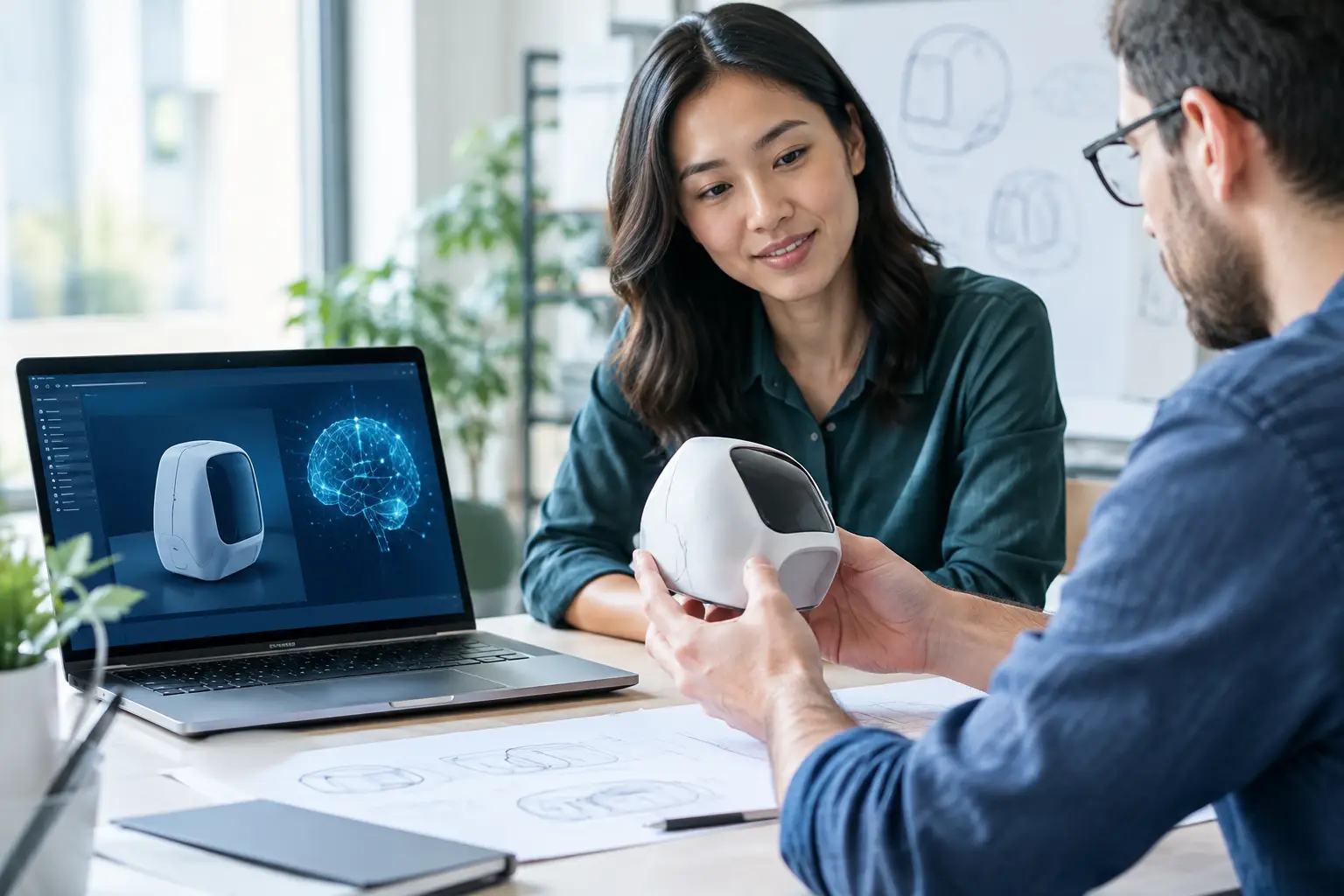
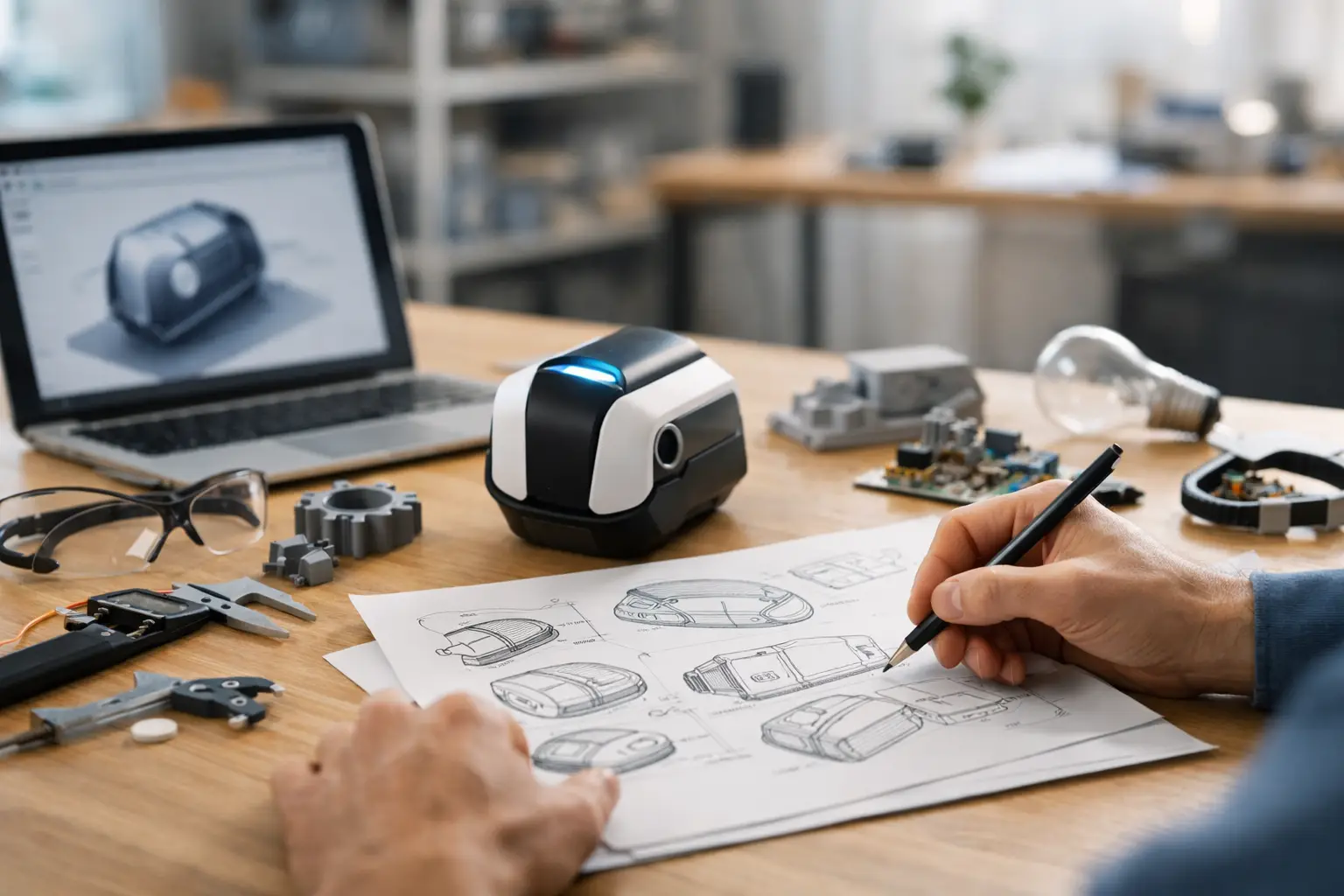
Early concepts should be explored before major engineering dollars are committed. This stage may include hand sketches, industrial design studies, computer-aided models, simple mockups, and basic functional experiments.
Do not judge a concept only by appearance. The best option balances user value, technical feasibility, manufacturability, cost, and intellectual property potential. A sleek design with hidden assembly problems may be less useful than a simpler form that can be built consistently at scale.
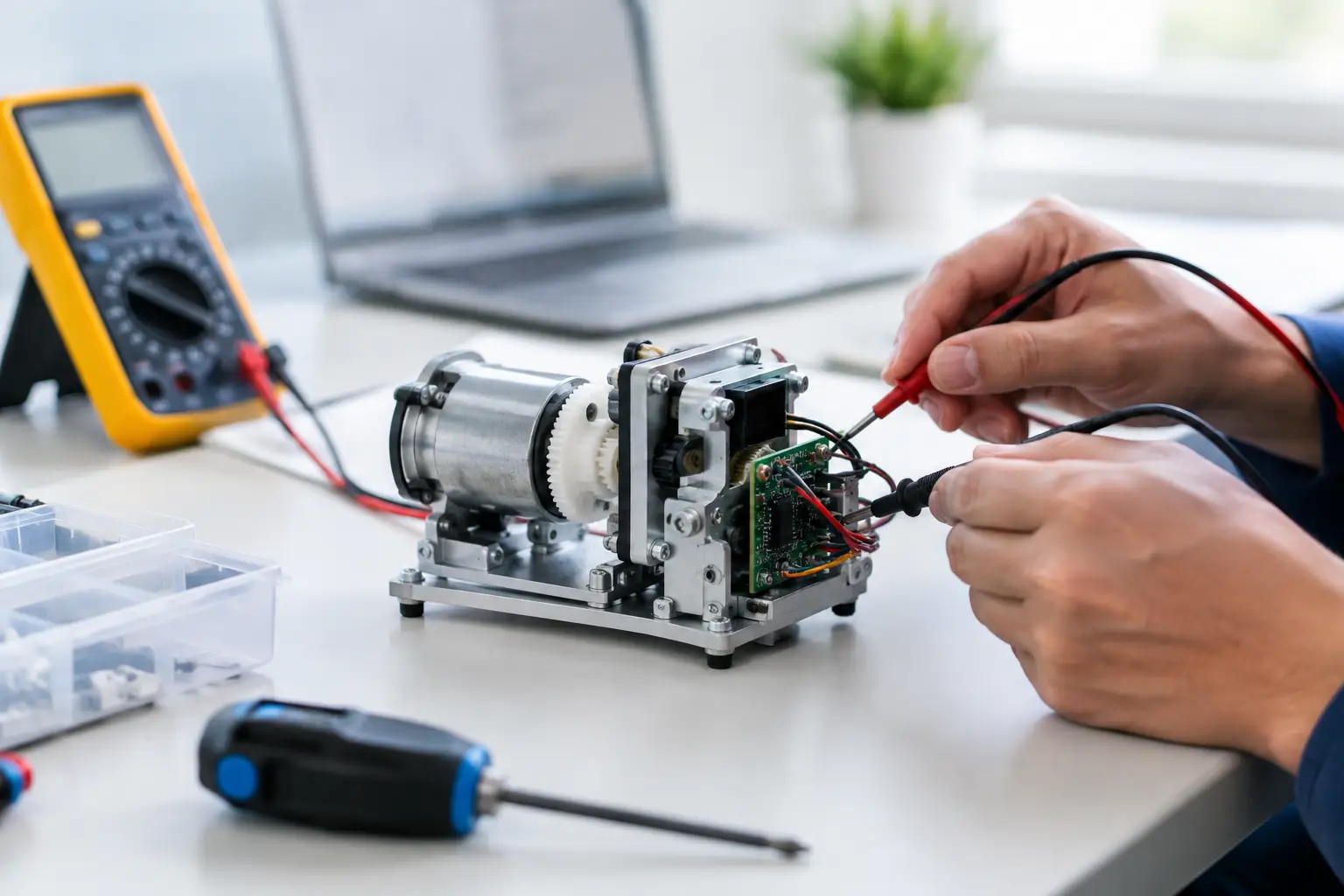
It also helps to separate appearance models from proof-of-concept models. An appearance model answers questions about size, shape, ergonomics, and visual appeal. A proof-of-concept model answers the more critical question: does the invention actually work? Some products need both. For a consumer electronics product, for example, a beautiful enclosure means little if the circuit, power system, heat management, or mechanical mechanism fails under real use.
Protect Intellectual Property at the Right Time
Intellectual property strategy should begin early, but it should be tied to the development plan. Inventors often feel pressure to file immediately, while others wait too long and disclose their idea without understanding the consequences. The right timing depends on the product, the novelty of its functional features, the business strategy, and how much of the invention has been defined.
Keep clear records of development work, including sketches, design iterations, test results, and dated decisions. Use confidentiality agreements where appropriate, particularly when sharing information with contractors, vendors, or potential partners. At the same time, understand that an agreement is not a substitute for a carefully considered patent strategy.
A functional prototype can strengthen patent-related discussions because it clarifies how the invention operates. It may reveal additional inventive features, alternative configurations, or weak points that should be addressed before filing. Patent-oriented prototype development is valuable because it connects the technical reality of the product with the protection strategy behind it.
For legal advice and filing decisions, work with a qualified patent professional. Engineering teams can provide the technical documentation, models, and explanations that help make those conversations more productive.
Build a Prototype That Answers Real Questions
Prototyping is not one event. It is a sequence of learning opportunities. The first prototype may be rough, oversized, or built from off-the-shelf parts. That is fine if its purpose is to test the central function quickly.
As development advances, each version should have a defined purpose. One prototype might test a locking mechanism. Another may validate electronics, software behavior, user comfort, or durability. A later engineering prototype can bring those elements together in a form closer to the intended product.
Avoid the common mistake of trying to make the first prototype perfect. Perfection at the wrong stage wastes time and budget. Instead, ask what uncertainty is most likely to derail the product, then build the least expensive prototype that can reduce that uncertainty.
For example, if a wearable device must survive sweat, impacts, and repeated charging, those conditions should be tested before investing heavily in cosmetic finishes. If a product depends on a user completing a task in seconds, put it in front of real users before assuming the interface is intuitive.
Test for Function, Users, and Failure
A prototype on a workbench is not the same as a product in the hands of customers. Testing should reflect the environments and behaviors your product will encounter. That can include repeated-cycle testing, drop testing, temperature exposure, water resistance, load testing, electrical safety checks, or basic user trials.
User feedback is especially useful when it is observed rather than merely requested. People may say they like an idea, then use it in an unexpected way or struggle with a feature that seemed obvious to the design team. Watch where they hesitate. Ask what they expected to happen. Those moments often point to the improvements that matter most.
Not every feedback request deserves an immediate redesign. A single preference may be personal. Repeated patterns from the intended customer group deserve attention. Good development decisions are evidence-based, not driven by the loudest opinion in the room.
Design for Manufacturing Before You Need a Factory
Manufacturing considerations belong in the design process, not at the end of it. Materials, tolerances, fasteners, part count, assembly sequence, tooling, quality checks, and supplier capabilities all affect cost and production reliability.
A prototype can be made with 3D printing, hand finishing, and custom machining. Production may require injection molding, sheet metal fabrication, printed circuit board assembly, or a different process entirely. Those methods come with different costs and constraints. A feature that is easy to print can be difficult or expensive to mold. A component that works once may be hard to assemble thousands of times with consistent quality.
Design for manufacturing does not mean compromising the invention. It means making deliberate choices about what customers need, what production can reliably deliver, and what the business can support. For small initial runs, a higher per-unit cost may be acceptable if it reduces upfront tooling risk. For a high-volume consumer product, investing in better tooling and assembly efficiency may make more sense.
Build a Launch Plan Alongside the Product
Product development and commercialization should move together. As the design becomes more defined, clarify your target customer, sales channel, pricing, packaging needs, support requirements, and production quantities. A product built for direct online sales may need a different package, margin structure, and customer experience than one intended for retail shelves or business-to-business distribution.
You should also be honest about readiness. A functional prototype can support investor conversations, licensing discussions, customer demonstrations, and patent-related work. It does not automatically mean the product is ready for mass production. Knowing the difference protects your credibility and helps you set realistic expectations.
Industry of Concepts helps clients move through these decisions with integrated concept development, engineering, prototyping, manufacturing preparation, and patent-support capabilities. The advantage of a coordinated process is simple: each stage informs the next, so the product is developed as a commercial asset rather than a collection of disconnected files and models.
Your idea does not need to arrive fully formed. It needs a disciplined next step. Start by defining the problem, testing the most important assumption, and building evidence that your product deserves to move forward.