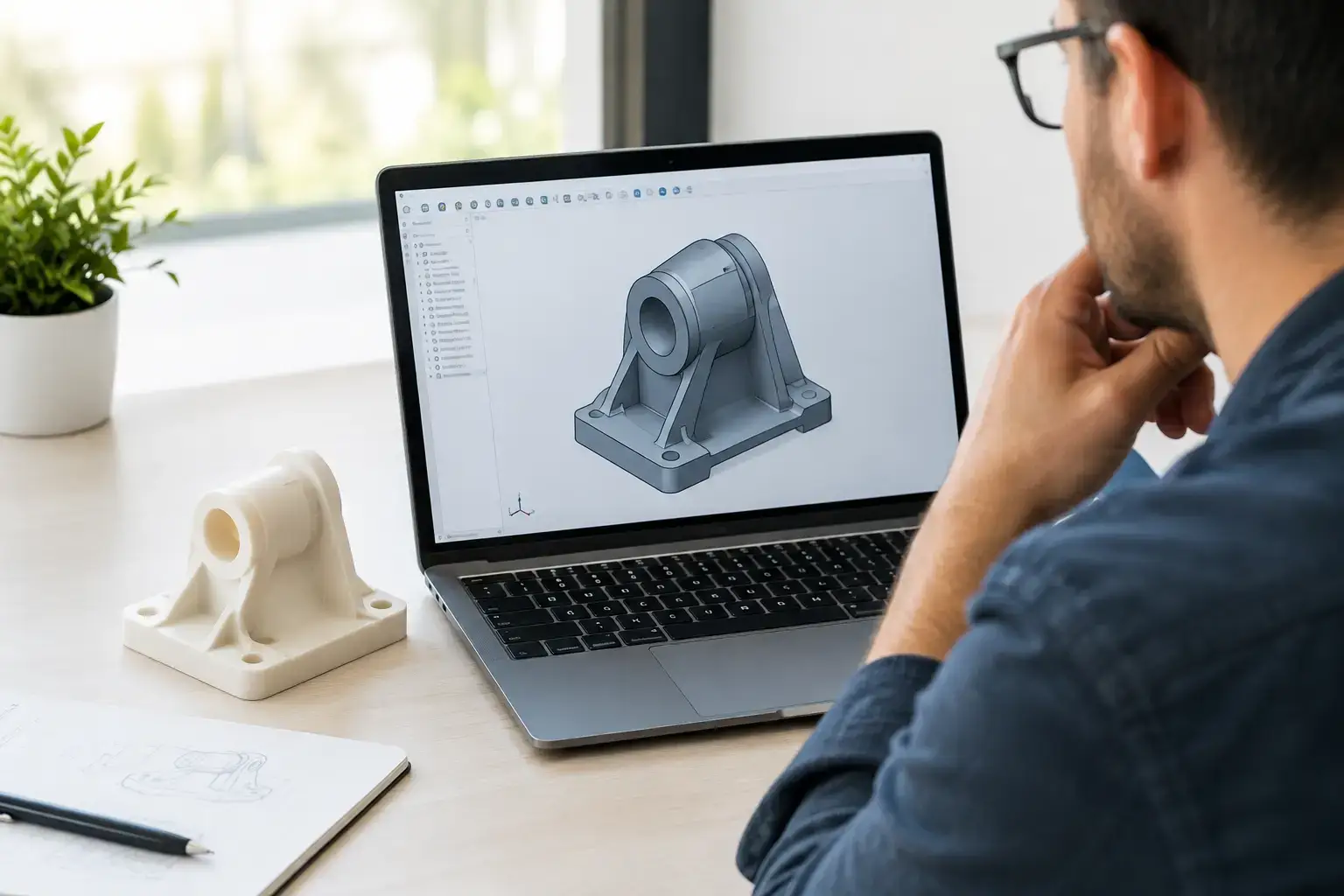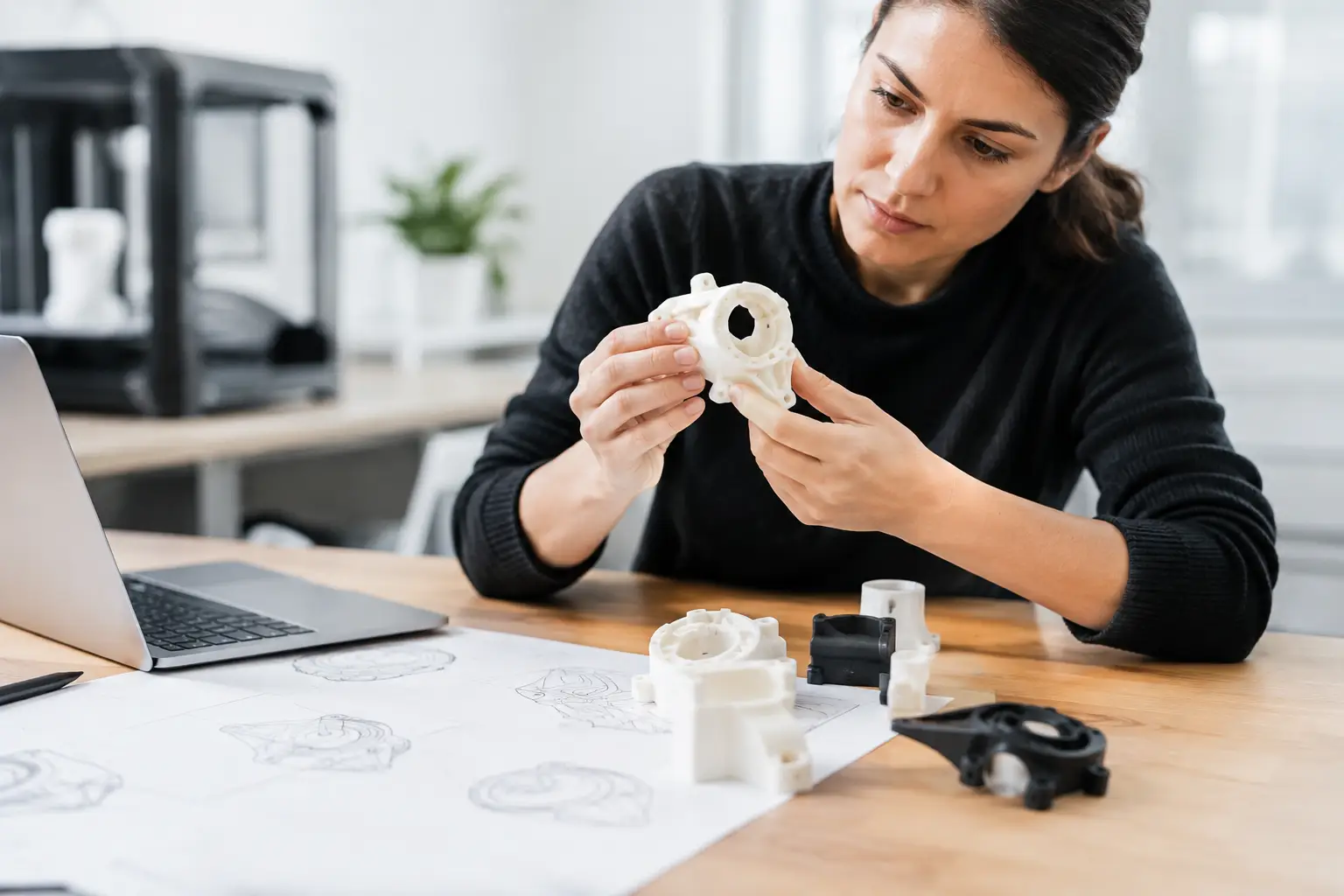
A product can look finished on a screen and still fail the moment a real person picks it up. A latch may be hard to operate, a housing may crack under load, a battery may overheat, or a part may cost far more to produce than expected. Prototype testing before manufacturing is where those expensive assumptions meet evidence.
For inventors and product founders, testing is not a delay between a great idea and production. It is the work that protects the idea, improves the product, and prevents a small design mistake from becoming thousands of unusable units. The right prototype turns uncertainty into specific engineering decisions.
What Prototype Testing Before Manufacturing Actually Proves
A prototype is more than a model that shows what a product might look like. Depending on the stage of development, it can demonstrate function, fit, user interaction, material behavior, electronic performance, assembly steps, or production feasibility. Testing determines whether those claims hold up outside a design meeting.
The question is not simply, “Does it work?” A serious evaluation asks whether it works repeatedly, safely, intuitively, and at a cost that supports the business. A prototype may perform perfectly once on a workbench but fail after 500 cycles. It may solve the intended problem but require an assembly process that makes the final unit too expensive to sell.
That distinction matters because manufacturing multiplies everything. It multiplies a good design into revenue, but it also multiplies poor tolerances, weak materials, confusing instructions, and hidden labor costs. Finding a problem before tooling and purchase orders are committed gives a team options. Finding it after production often creates rework, delays, supplier disputes, returns, and lost momentum.
Test the Risks That Can Stop the Product
Not every product needs the same test plan. A consumer kitchen tool, a connected wearable device, a medical-adjacent accessory, and an industrial component each face different requirements. The first step is identifying the risks most likely to derail commercialization.
For many physical products, testing should address four connected areas:
- Functional performance: Does the mechanism, electronic system, or moving assembly perform its intended job consistently?
- User experience: Can the target user understand, hold, operate, clean, or maintain the product without unnecessary frustration?
- Durability and safety: Does it withstand expected forces, heat, moisture, drops, repeated use, and foreseeable misuse?
- Manufacturing readiness: Can the design be produced with practical tolerances, available processes, reasonable cycle times, and predictable assembly?
These categories overlap. A product that is easier to assemble may need a different fastening method. That change can affect durability, appearance, and cost. Testing gives the product team a way to make those trade-offs intentionally rather than discovering them through customer complaints.
Functional Testing Starts With the Core Promise
Every product makes a promise. A dispenser should dispense accurately. A locking device should lock reliably. A wearable should stay comfortable and communicate dependable data. Begin by defining that core promise in measurable terms.
Instead of saying that a mechanism should feel strong, specify the expected load, cycle count, operating range, and failure condition. Instead of saying that an app-connected device should respond quickly, define acceptable response time, battery performance, connectivity range, and error behavior. Measurable requirements make prototype feedback useful because they separate opinions from performance facts.
Early prototypes do not need to be beautiful. A proof-of-concept model can focus on proving one critical mechanism or technical principle. Later prototypes should become closer to the intended product, allowing the team to evaluate fit, finish, electronics, and user interaction together.
User Testing Reveals What Designers Cannot See
Founders often know their products too well. What feels obvious to the person who created it may be unclear to someone seeing it for the first time. Put a prototype in front of representative users and watch what they do before explaining how it works.
Look for hesitation, awkward grip positions, skipped steps, excessive force, and moments when users use the product differently than intended. Ask focused questions afterward: What did they expect to happen? What was difficult? Would they trust this product? What would prevent them from using it again?
A small number of thoughtful user sessions can expose major usability issues. The goal is not to have users design the product for you. It is to learn where the design is failing to communicate its purpose or perform naturally in real conditions.
Build Prototypes in Stages, Not All at Once
One common mistake is investing heavily in a presentation-quality prototype before the highest-risk functions are proven. Another is relying on a rough proof of concept for too long and assuming it represents a manufacturable design. Both approaches can waste money.
A staged development process is usually more effective. Early models test concepts, geometry, and mechanisms quickly. Engineering prototypes test materials, electronics, mechanical performance, and integrated systems. Pre-production prototypes test the design using production-intent materials and processes as closely as practical.
The right stage depends on what you need to learn next. If the main risk is whether a mechanism can generate enough force, focus on that mechanism. If the core function is already validated but the product must withstand daily use, prioritize a more representative build and durability testing. If a manufacturer has identified concerns about part geometry or assembly, revise the design for production before ordering tooling.
This approach also supports a disciplined budget. You are not paying for polish before the product earns it. You are funding the evidence needed to make the next decision with confidence.
Manufacturing Feedback Should Shape the Test Plan
Manufacturers should not be treated as a final destination after all design decisions are made. Production expertise is valuable earlier, especially when selecting materials, planning tolerances, reducing part count, and considering moldability, machining, fastening, and assembly.
For example, a 3D-printed part may function well in testing but behave differently when injection molded. Printed materials can have different strength, surface finish, shrinkage, and directional properties. A design that works in a small prototype run may also require changes to draft angles, wall thickness, ribs, gates, or undercuts before it can be molded efficiently.
That does not mean you must wait for a final factory quote to test your product. It means prototype results should be reviewed through both an engineering and manufacturing lens. The product has to work for the customer and for the production process.
Use Test Results to Make Clear Go-or-Revise Decisions
Testing only creates value when the results lead to action. After each prototype round, document what was tested, how it was tested, what passed, what failed, and what remains unknown. Photos, measurements, videos, user observations, and revision notes create a record that helps prevent the team from repeating the same discussion after every iteration.
Then decide whether to move forward, revise, or investigate further. A failure is not automatically bad news. Some failures point to a simple adjustment in material, thickness, geometry, firmware, or assembly. Others reveal that the concept needs a more fundamental rethink. The earlier that truth appears, the less it costs to address.
This documentation can also strengthen patent-oriented development. A functional prototype and a clear description of how the product works can help inventors communicate the invention more effectively during patent discussions. Testing does not replace legal advice or a patent search, but it often clarifies what is technically distinctive and what still needs refinement.
When Professional Development Support Makes Sense
An inventor can learn a great deal with basic models and early customer feedback. But once the product involves moving mechanisms, electronics, specialized materials, safety concerns, or a path to volume manufacturing, experienced engineering support can prevent costly detours.
Industry of Concepts helps clients connect concept development, functional prototyping, engineering validation, and manufacturing preparation in one practical process. That matters when every prototype decision affects cost, patent strategy, usability, and the next funding or production decision.
The best time to test is before the product feels finished. Build the version that can teach you the most, challenge it honestly, and use what you learn to create a product worth manufacturing.