A prototype that looks convincing on a workbench can still fail where it counts: in a customer’s hands, under real loads, or on a production line. The best prototype testing methods do more than prove that an idea can work once. They expose the costly assumptions that must be fixed before you invest in tooling, inventory, patent strategy, or a product launch.
For inventors and growing businesses, testing should not be a final checkpoint. It is the process that turns a promising concept into a product you can defend, manufacture, and sell with confidence.
Start With the Question Your Prototype Must Answer
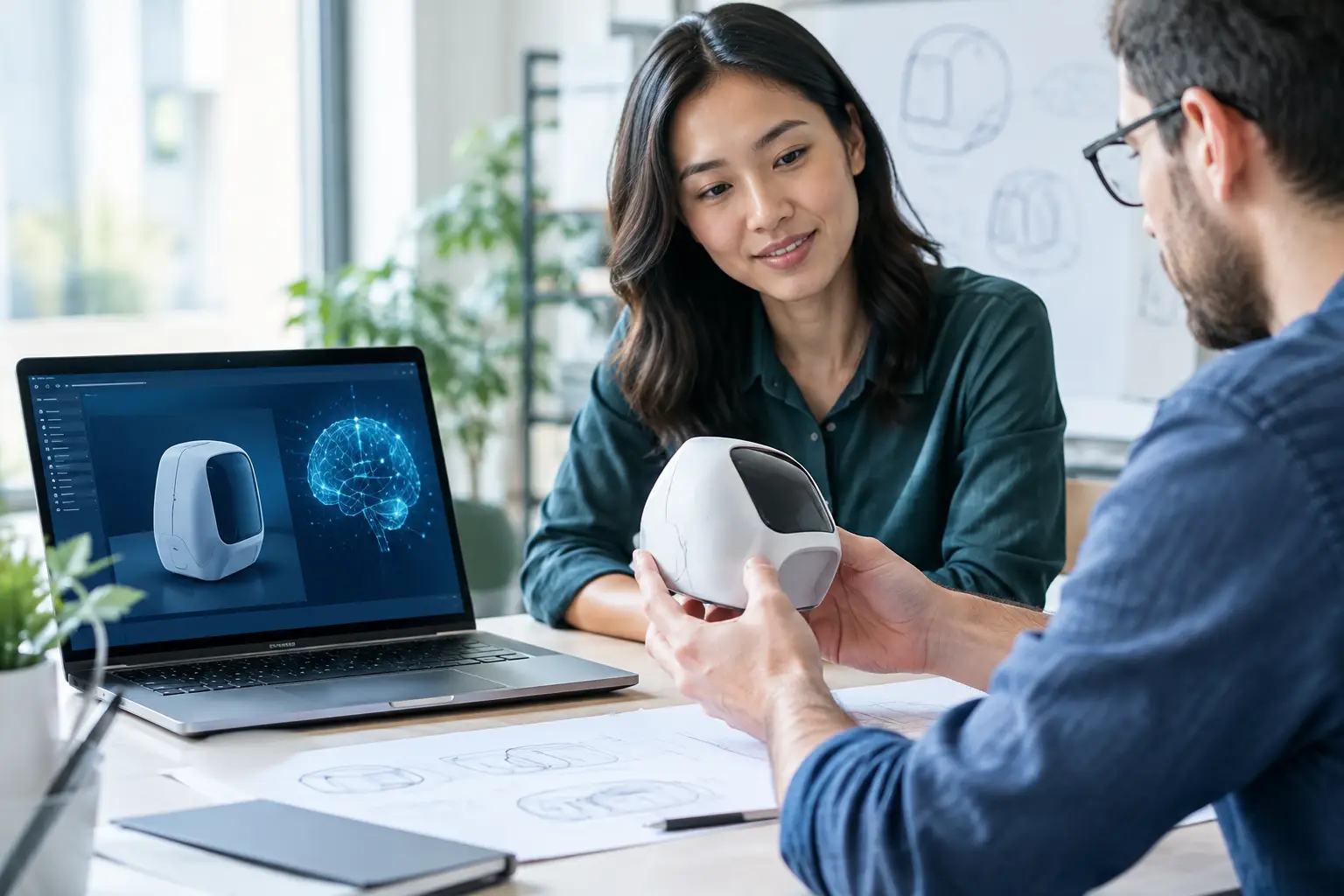
Not every prototype needs to answer every question. A rough appearance model may be enough to test size, grip, and visual appeal. A functional proof-of-concept may need to demonstrate a mechanical movement, electrical circuit, or material behavior. A later engineering prototype should be tested much more rigorously because it is closer to the product customers will buy.
Before scheduling tests, define the highest-risk assumptions. Is the concern whether users understand the product? Whether a latch survives repeated use? Whether a battery lasts long enough? Whether the part can be molded, assembled, and shipped without damage?
A useful test plan states the intended result in plain language. For example: “The release button must operate with one hand for users wearing work gloves,” or “The device must maintain accuracy after 500 operating cycles.” Clear criteria prevent a common prototype mistake: changing the design based on opinions rather than evidence.
The Best Prototype Testing Methods for Product Development
The right mix depends on your product category, development stage, budget, and the consequences of failure. A consumer accessory and a medical-adjacent device do not require the same depth of validation. Still, these methods form a practical foundation for most new product programs.
Functional Testing
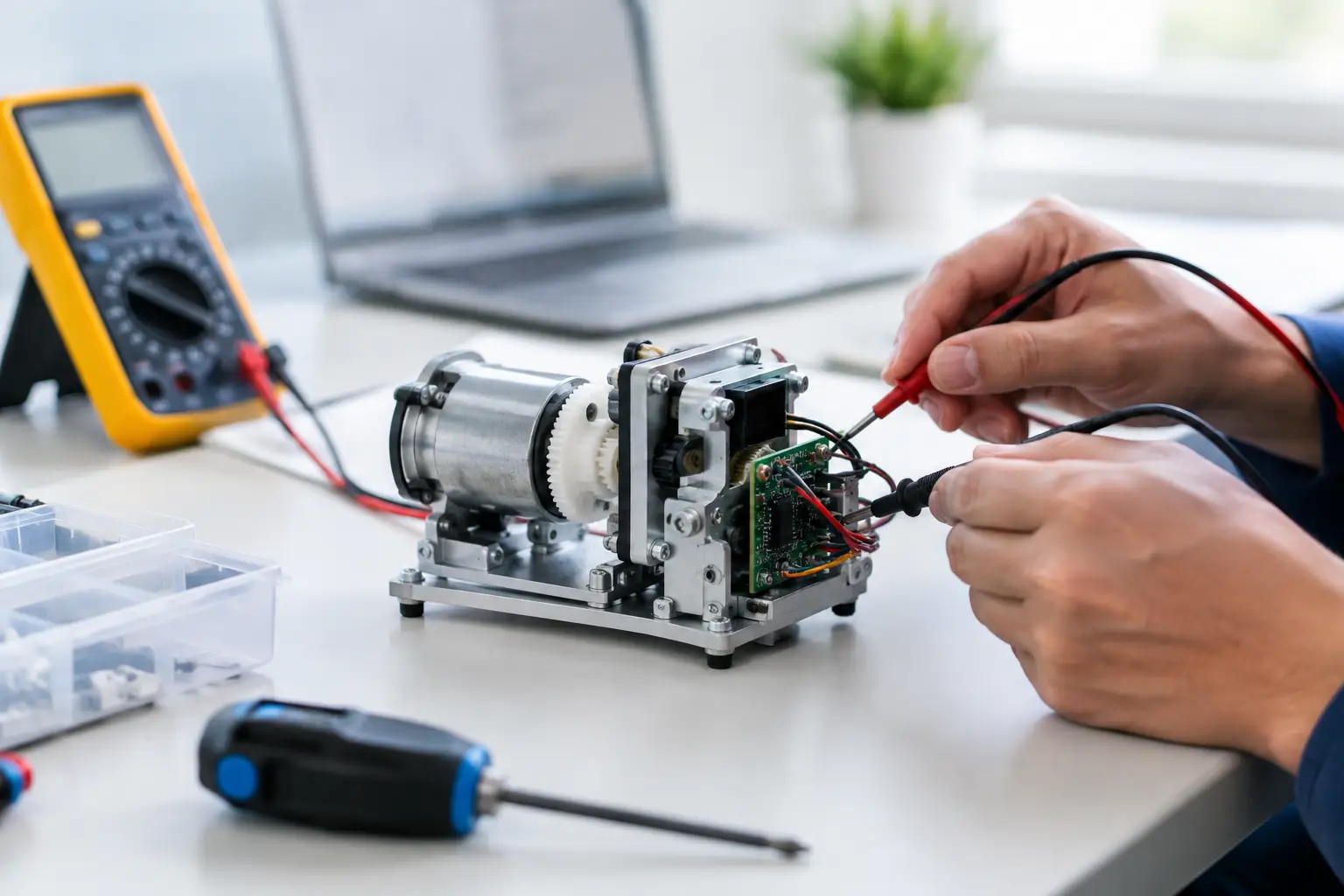
Functional testing asks the most basic and necessary question: does the prototype perform its intended job? This is where mechanical mechanisms, electronic controls, moving assemblies, sensors, and software interactions are evaluated against defined requirements.
Test the normal use case first, then deliberately test likely variations. If a product dispenses liquid, test different fill levels and viscosities. If it is battery powered, test new batteries, partially depleted batteries, and realistic operating temperatures. If it has a moving mechanism, measure force, speed, alignment, and repeatability rather than relying only on a visual demonstration.
Functional testing is especially valuable early because it reveals whether the underlying concept deserves further investment. A prototype does not need a polished finish to prove a critical function. In fact, testing core function before spending heavily on cosmetic refinements is usually the smarter path.
User and Usability Testing
Inventors know how their product is supposed to work. First-time users do not have that advantage. Usability testing places the prototype in front of people who resemble the intended customer and observes what they do without excessive instruction.
Ask participants to complete realistic tasks, such as opening the package, setting up the product, performing its primary function, cleaning it, or storing it. Watch for hesitation, incorrect hand placement, confusing controls, excessive force, and steps that users skip. A user who says they “like it” but cannot operate it correctly is providing more useful feedback through their actions than through their praise.
Five to eight representative users can uncover repeated usability issues during early testing. Broader testing may be needed when the audience is highly varied or when the product serves professional users with different workflows. The goal is not to collect compliments. It is to identify friction that could cause returns, poor reviews, support costs, or safety concerns.
Durability and Life-Cycle Testing
A product may work perfectly for ten demonstrations and fail after a month of ordinary use. Durability testing simulates repeated operation, wear, impacts, vibration, load, and other conditions the product will encounter over its useful life.
For a hinged product, cycle the hinge repeatedly. For a portable item, perform controlled drop tests. For a clamp, fastener, handle, or enclosure, apply expected loads with an appropriate safety margin. Record when performance changes, not only when the part breaks. A loose fit, increasing friction, fading marking, or declining battery performance can be just as significant as a visible fracture.
Accelerated life testing can save time by operating a prototype repeatedly under controlled conditions. However, acceleration has limits. Running a mechanism faster than normal may create heat or stresses that do not match real use. Use accelerated tests to find weaknesses, then confirm critical findings under representative conditions.
Environmental Testing
Materials and electronics behave differently in heat, cold, humidity, sunlight, dust, moisture, and vibration. Environmental testing determines whether the product stays safe and functional outside the comfortable conditions of a design studio.
The test conditions should match the product’s actual market. A kitchen tool may need heat, moisture, and cleaning chemical exposure. An outdoor product may need UV exposure, rain resistance, temperature cycling, and impact testing. A device carried in a vehicle may experience vibration and extreme temperatures that indoor products never see.
This is an area where material choices often change. A plastic that feels excellent in an early prototype may warp in heat, become brittle in cold, or degrade after exposure to cleaning agents. Discovering that before manufacturing is far less expensive than redesigning after customer complaints.
Safety and Misuse Testing
People will use products in ways that designers did not intend. They may pull, twist, drop, overload, assemble incorrectly, or give the product to a child. Safety and misuse testing examines foreseeable behavior and looks for hazards before they reach the market.
Evaluate pinch points, sharp edges, loose components, overheating, electrical faults, chemical exposure, and instability. Then consider what happens when the product is used incorrectly but predictably. If a part can be installed backward, users will eventually install it backward. If a cover can be removed without a tool, someone may remove it.
The appropriate level of formal safety testing depends on the product and its claims. Products for children, food contact applications, electrical devices, and products used around the body can carry additional requirements. Early engineering review helps identify those needs before the design becomes difficult to change.
Manufacturing and Assembly Testing
A prototype can function well while still being impractical to manufacture. Manufacturing testing evaluates whether parts can be made consistently, assembled efficiently, and inspected reliably at the intended production volume.
Review tolerances, fastening methods, part orientation, material availability, assembly sequence, and the number of manual operations required. Build several units, not just one. Variation between units often exposes tolerance stack-up, unclear assembly steps, or a design that depends too heavily on hand-fitting.
This stage may require changes that seem minor but have major cost implications. Combining two parts, adding alignment features, reducing a difficult undercut, or choosing a more available material can improve yield and lower assembly time. The objective is not simply to make a prototype work. It is to make thousands of units work consistently.
Document Results and Make Decisions
Testing without documentation creates confusion later, especially when a product has gone through multiple revisions. For each test, record the prototype version, materials, setup, conditions, measurements, observations, failures, and recommended actions. Photos and short videos can be useful when showing a mechanism issue or user interaction problem.
Separate findings into three categories: must fix before the next prototype, should improve if the budget allows, and monitor in future testing. This keeps development focused on the issues that affect safety, performance, manufacturability, or customer value.
When a failure occurs, resist the urge to patch only the visible symptom. Find the cause. A cracked housing could result from weak material, excessive assembly force, poor geometry, an internal component shifting during impact, or a combination of factors. Correct diagnosis prevents the same problem from reappearing in a more expensive version of the product.
Test Early Enough to Change Course
The most expensive testing is testing performed after the design is effectively locked. Early prototypes can be simple, but they should be purposeful. A foam model can answer ergonomic questions. A 3D-printed enclosure can reveal assembly interference. A breadboard or hand-built mechanism can prove an operating principle before custom components are ordered.
As the product matures, prototype fidelity should increase alongside the stakes. Move from concept validation to functional testing, then to user, durability, and manufacturing validation. Each round should reduce a specific risk and produce a clear decision about what happens next.
A strong prototype is not one that hides its flaws. It is one that reveals them while they are still affordable to solve. If you need help turning test results into an engineered, patent-conscious product plan, Industry of Concepts can help move the work from uncertain idea to practical execution.