A sketch, a problem worth solving, or a rough prototype can be the beginning of a valuable business. But an idea does not become a sellable product on enthusiasm alone. Product engineering is the disciplined process that turns a concept into something functional, testable, manufacturable, and ready to support your commercial goals.
For inventors and growing businesses, the challenge is rarely a lack of ideas. The challenge is knowing what to do next without wasting time, money, or ownership of the invention. The right development process gives your idea structure. It replaces guesswork with decisions based on function, materials, cost, user needs, and production realities.
What Product Engineering Actually Does
Product engineering connects the creative side of invention with the technical work required to make a product perform in the real world. It is not just creating a polished drawing or a 3D model. It means asking practical questions early: What problem does the product solve? How will someone use it? Which components are required? Can it be assembled efficiently? Will it hold up under repeated use? What will it cost to manufacture?
The answers affect every stage of development. A product may look promising in a concept sketch yet fail when its mechanism is tested. A prototype may function well but use parts that are too expensive or difficult to source at production scale. Product engineering identifies these issues while changes are still manageable.
For a new inventor, this work creates a path from a broad vision to a credible proof of concept. For an established company, it can help improve an existing product, address a manufacturing problem, or develop a new offering without adding a full internal engineering department.
From Concept to Functional Prototype
Most successful products do not emerge fully formed. They move through a sequence of informed decisions, testing, refinement, and documentation. The process should be tailored to the product, its market, and its technical complexity, but several stages are common.
Clarifying the product concept
The first goal is to define what the product must do. This sounds obvious, but many projects begin with a solution before the actual requirements are clear. A kitchen tool, medical accessory, consumer electronic device, industrial component, or children’s product will each have different constraints.
At this stage, developers establish the product’s core function, intended user, operating environment, size expectations, likely materials, safety considerations, and initial cost targets. The objective is not to eliminate creativity. It is to give creativity a useful direction.
A clear concept also helps prevent scope creep. New features can be attractive, but every feature adds cost, engineering time, potential failure points, and manufacturing considerations. The best first version is often the one that solves the central problem reliably.
Industrial design and computer modeling
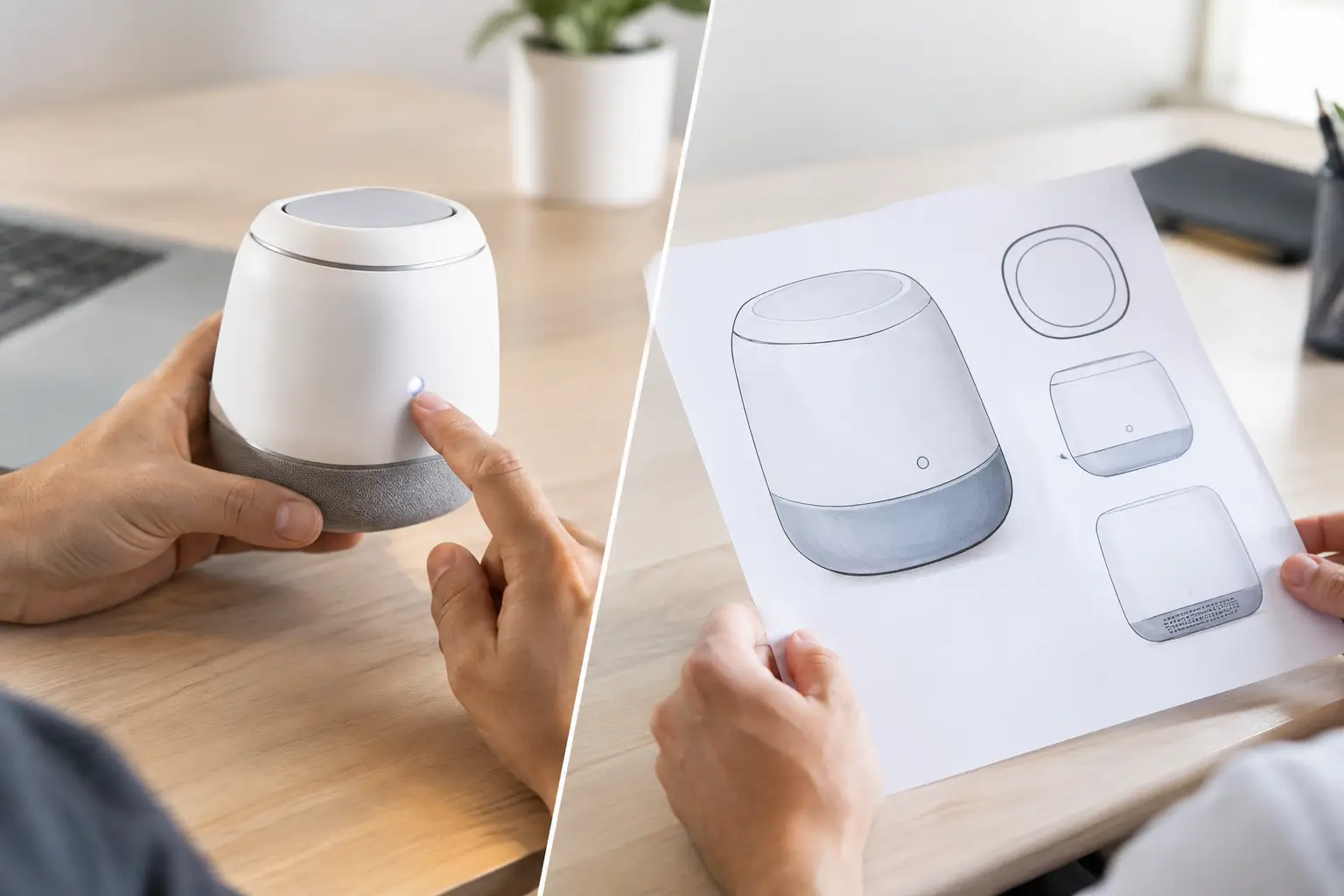
Once the concept has direction, industrial design shapes the user experience and physical form. This includes ergonomics, proportions, access points, controls, appearance, and the way a product communicates its purpose. Good design is not decoration added at the end. It can determine whether customers understand, trust, and want to use the product.
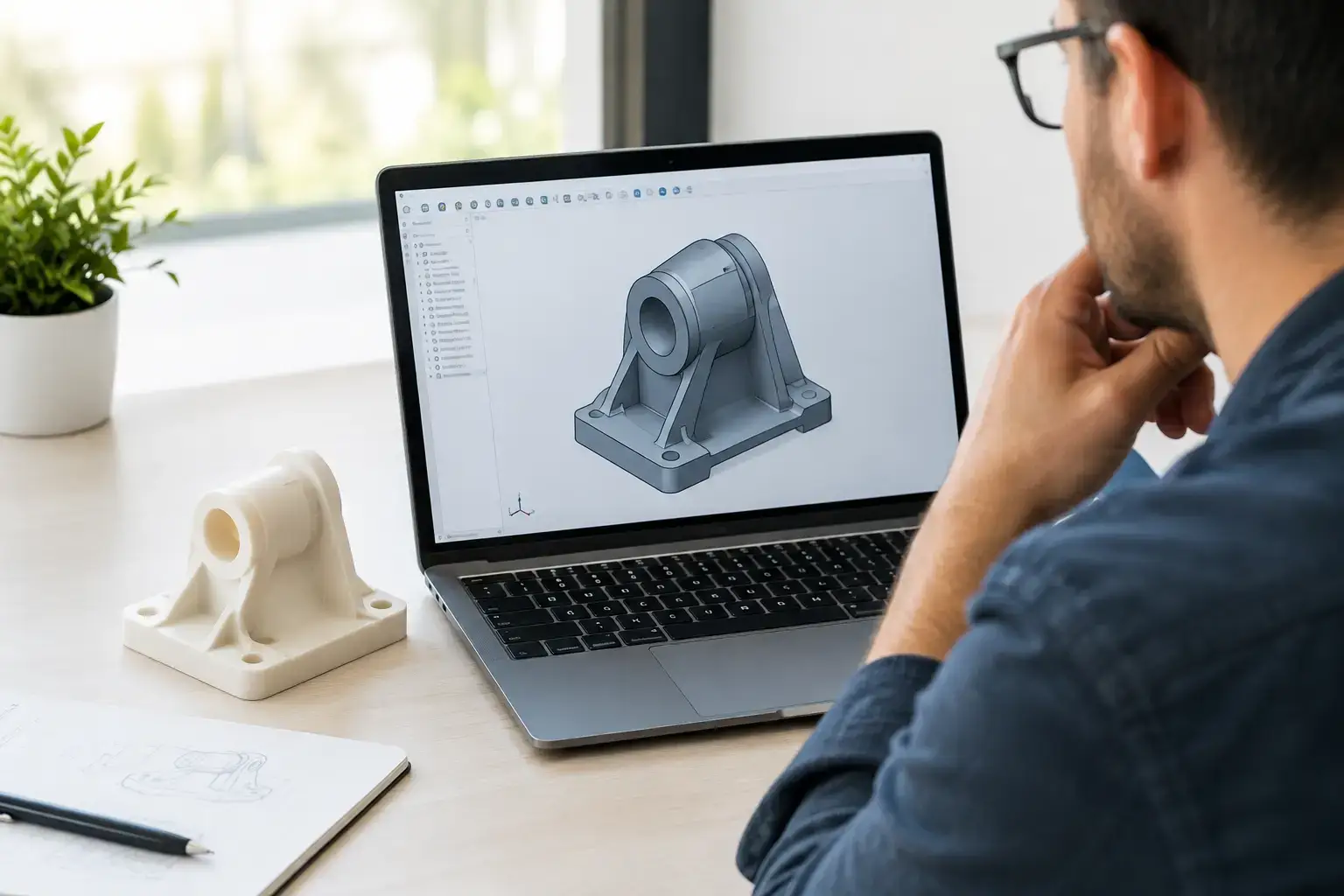
Computer-aided design then translates the concept into precise digital geometry. CAD models give engineering teams a way to examine dimensions, tolerances, assemblies, internal space, and component relationships before committing to physical production.
For electro-mechanical products, digital modeling is especially valuable. There may be a need to fit circuit boards, batteries, motors, sensors, switches, wiring, housings, fasteners, and moving parts into a limited space. A small interference inside the housing can become a major redesign if it is discovered too late.
Prototyping for answers, not appearances
A prototype is not simply a presentation piece. Its job is to answer questions. Can the mechanism work? Is the grip comfortable? Does the enclosure protect the internal components? Does the part flex, crack, leak, overheat, or wear out? Can users operate it without instructions?
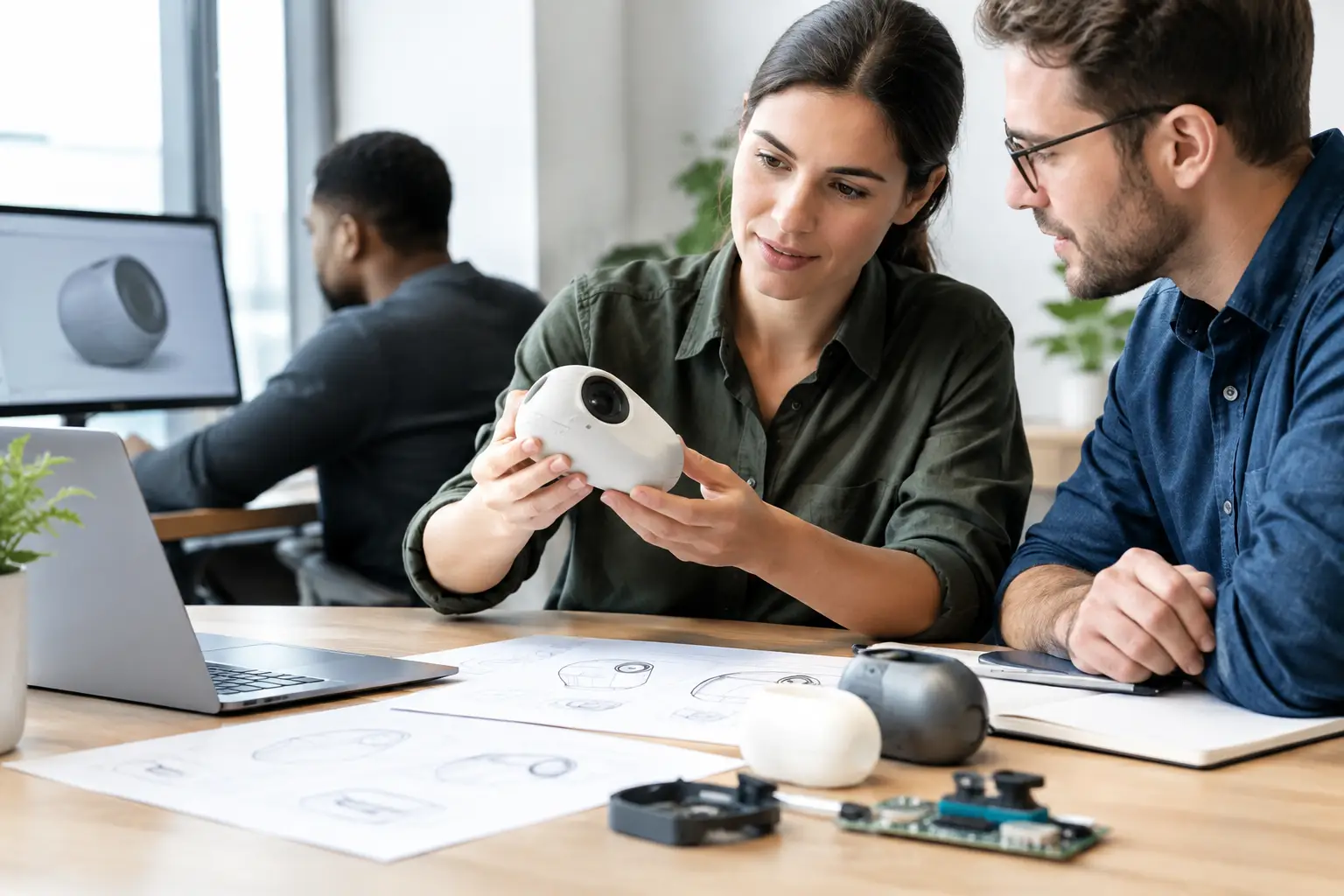
Different prototypes serve different purposes. An early proof-of-concept model may focus on one critical function. A more advanced prototype may test form, fit, electronics, or repeated use. A manufacturing-oriented prototype may evaluate assembly methods and material choices.
This is where many inventors make an expensive mistake: they try to create a final-looking prototype before proving the critical function. Appearance matters, especially when presenting to buyers or investors, but a beautiful model that cannot perform its intended job does not reduce business risk. Function first, then refinement.
Why Product Engineering Reduces Risk
Every new product contains uncertainty. The goal is not to pretend uncertainty does not exist. The goal is to uncover it early, when a change to a CAD model costs far less than a change to tooling, inventory, or a production line.
Engineering validation can reveal whether a design needs stronger materials, a different wall thickness, more reliable fasteners, better heat management, or a simpler mechanism. It can also identify opportunities to reduce part count and make assembly faster. Those improvements can protect margins long after the first units ship.
There are trade-offs in every project. A premium material may improve durability but raise unit cost. A more compact design may create difficult internal packaging. A custom component may improve performance but introduce supply-chain risk. There is rarely one perfect answer. The right answer depends on your product category, sales price, customer expectations, production volume, and launch strategy.
Experienced engineers help make those trade-offs visible. That gives founders and business owners the information needed to decide where to invest and where to simplify.
Engineering With Intellectual Property in Mind
For many inventors, the product itself is only part of the value. The other part is ownership. If your concept has a distinctive mechanism, functional feature, or novel arrangement of components, development should be approached with intellectual property considerations in mind.
A functional prototype can support clearer conversations around patent strategy because it moves the invention beyond a general idea. It shows how the concept may work, how parts interact, and where the differentiating features may exist. Documentation, drawings, and engineering decisions can also create a stronger foundation for discussions with patent professionals.
That does not mean every product needs a patent, or that a prototype guarantees patent protection. Some products are better protected through speed to market, brand, manufacturing know-how, or trade-secret practices. Still, it is wise to consider ownership before publicly sharing detailed designs, pitching broadly, or handing files to multiple vendors.
At Industry of Concepts, product development can be approached with both commercialization and patent-oriented prototype needs in view. This is valuable for inventors who want practical engineering support without losing sight of the asset they are building.
Designing for Manufacturing Before It Is Too Late
A working prototype is a major milestone, not the finish line. Producing one unit by hand is very different from producing hundreds or thousands consistently. Manufacturing engineering bridges that gap.
Design for manufacturing examines how parts will be made, assembled, inspected, packaged, and shipped. It may involve selecting processes such as injection molding, machining, sheet metal fabrication, casting, printing, or off-the-shelf component integration. The chosen process affects geometry, tolerances, finish, lead time, tooling cost, and unit economics.
For example, a part that is easy to 3D print may not be appropriate for injection molding without changes to wall thickness, draft angles, undercuts, or material selection. A prototype can use hand-installed hardware that is too slow for a production team. These are normal issues, but they should be addressed before a manufacturer receives incomplete files and starts charging for revisions.
The most practical product engineering process keeps manufacturing in the conversation from the beginning. You do not need to commit to a factory before the design is validated. You do need to avoid designing something that cannot be produced at a price your market will accept.
Choosing the Right Development Partner
The right engineering partner should do more than agree that your idea is exciting. They should ask focused questions, explain the development path, identify technical unknowns, and help you prioritize the work that will create the most progress.
Look for a team that can connect concept development, industrial design, modeling, prototyping, mechanical and electrical engineering, and manufacturing preparation. A fragmented process can work, but every handoff creates another opportunity for lost information, unexpected costs, and delays.
You should also expect honest guidance. Not every feature belongs in version one. Not every concept is ready for expensive tooling. Not every prototype needs to look production-ready. Clear advice may challenge assumptions, but it can save a project from moving forward on the wrong foundation.
Your idea deserves more than a sketch that sits in a drawer. Start with the next question that needs a real answer, build the prototype that can answer it, and let every tested decision move your product closer to the market.